A powerful depiction of Vladimir Mukhin's struggle to resuscitate an almost forgotten russian cuisine, going against the established tradition. Be prepared for stunning images of culinary creations at White Rabbit, some will leave you uneased. A fifth-generation chef, Mukhin worked in his father’s kitchen as a young man, preparing Soviet-era classics. So, like generations of youths before him, Mukhin had to rebel against the old man. He left his small hometown of Essentuki for Moscow and became obsessed with modern techniques and food from across Europe. It wasn’t until he worked as a sous chef in France, when he collaborated on a menu with chef Christian Etienne, that Mukhin realized Russian cuisine could exist within modern cooking. 'His French clients who ate it were amazed,' he says. ¡They loved his Russian cooking.'
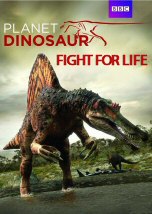
This episode focuses on the Jurassic period, a time when the first giant killers stalked the Earth and lurked in the seas; a time when the slightest advantage meant the difference between life and death. In North America the iconic allosaurus, an ambush hunter with a lethal bite, dominated. Not even the heavily-armoured stegosaurus was safe from this killer, and incredible evidence reveals a glimpse of a vicious battle between these two giants. Life in Jurassic oceans was no easier; in 2008, a fossil was dug out of a frozen island high in the Arctic. It was a colossal marine reptile, twice as big as most ocean predators, at 15 metres long and weighing about 45 tonnes. This was Predator X. Its skull alone was nearly twice the size of a tyrannosaurus rex's, and its bite force unmatched by anything in the Jurassic seas. The balance of power between predator and prey is a fine one, as prey continually evolves different ways to avoid predators. But for the most successful and enduring predators, the battle to survive has always been tipped in their favour
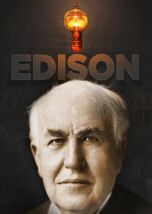
By the time he died in 1931, Thomas Alva Edison was one of the most famous men in the world. The holder of more patents than any other inventor in history, Edison had achieved glory as the genius behind such revolutionary inventions as sound recording, motion pictures, and electric light. Edison's curiosity led him to its cutting edge. With just three months of formal schooling, he took on one seemingly impossible technical challenge after another, and through intuition, persistence, and a unique team approach to innovation, invariably solved it." Driven and intensely competitive, Edison was often neglectful in his private life and could be ruthless in business. Challenged by competition in the industry he'd founded, Edison launched an ugly propaganda campaign against his rivals, and used his credibility as an electrical expert to help ensure that high-voltage electrocution became a form of capital punishment. Edison explores the complex alchemy that accounts for the enduring celebrity of America's most famous inventor, offering new perspectives on the man and his milieu, and illuminating not only the true nature of invention, but its role in turn-of-the-century America's rush into the future.
VICE makes history on a trip to North Korea to play hoops and meet with supreme leader Kim Jong-un. With NBA great Dennis Rodman and a trio of Harlem Globetrotters in tow, we traveled to the capital of Pyongyang for a tour of the city, a basketball clinic, an exhibition game, and a first-ever meeting between the leader and an American delegation.
Spy in the Huddle use innovative techniques to reveal the incredible secrets of your pets' behaviour in ways never seen before. As astonishing photography explores the wild side of our playful pets, find out why hamsters love to run in a wheel, how dogs pick up the rules of the pack and how kittens learn to be solitary hunters. Featuring incredible views of plunge-diving dogs, babysitting cats, acrobatic hamsters and a playful cat outwitted by his prey" - you'll never look at your favourite companions in quite the same way again. The latest science also reveals why budgies talk, how a cat scales a vertical wall with the help of a special claw, why hamsters stuff their faces with more food than they can eat and the real meaning behind a rabbit's hop. Our pets are also given a chance to explore their wild side as we join the free-roaming pet dogs of Cusco Peru, pet rabbits living in a natural warren and the wild-living inhabitants of Cat Island, Japan. A range of innovative techniques such as moving X-rays, thermal imagery, minicam-carrying dogs and revelatory slow-motion photography shows why our pets play and how their true wild nature is just a whisker away.
Forget the Big Bang. The real moment of creation was the Cosmic Dawn - the moment of first light. It's the moment the first stars were born, the moment that lit up the Universe, and made the first structure and the first ingredients of life. This is the scientific version of the story of Genesis. The Big Bang gets all the credit for creating our universe. But in fact, the universe it gave was dark and boring. There were no stars, no galaxies, just a vast, black fog of gas - the cosmic dark ages". But, after a hundred million years of nothing, came a dramatic moment of transformation - the Cosmic Dawn. Astronomers are now trying to witness this cosmic dawn. For the first time they have the tools to explore the very first stars of the universe and to tell the scientific story of our creation.









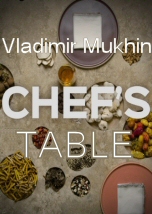





A fifth-generation chef, Mukhin worked in his father’s kitchen as a young man, preparing Soviet-era classics. So, like generations of youths before him, Mukhin had to rebel against the old man. He left his small hometown of Essentuki for Moscow and became obsessed with modern techniques and food from across Europe. It wasn’t until he worked as a sous chef in France, when he collaborated on a menu with chef Christian Etienne, that Mukhin realized Russian cuisine could exist within modern cooking. 'His French clients who ate it were amazed,' he says. ¡They loved his Russian cooking.'