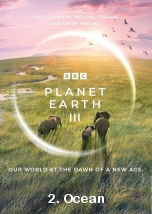
This second episode is a captivating exploration of the ocean's wonders and mysteries. It reveals how a significant part of our planet remains unexplored, primarily due to its vast water coverage. The film emphasizes the extraordinary discoveries awaiting every journey below the water's surface, with over a thousand new species identified annually. Home to 80% of all animal life on Earth, the ocean's diverse habitats host a range of surprising behaviors and life-and-death struggles, often hidden beneath a serene exterior. The shallow tropical seas, appearing as paradises, are actually arenas of intense survival battles. Predatory lionfish, with their patient hunting tactics, and clown frogfish, using a unique fishing rod-like dorsal fin as a lure, demonstrate the ocean's complex food web. The documentary also explores the kelp forests off the North American coast, revealing their role as nurseries for young horn sharks. Amidst these underwater forests lurk giant sea bass, wolf-eels, and various sharks like houndsharks and broadnose sevengills, posing significant threats to the smaller inhabitants. The episode takes viewers to the twilight and midnight zones of the ocean, unveiling alien-like creatures such as the siphonophore, glass squid, and gulper eel, adapted to the extreme conditions of deep waters. The journey concludes with the moving story of the pearl octopus, whose devotion to her eggs in the challenging deep-sea environment is both heartwarming and heartbreaking. This episode is not only a showcase of the ocean's diverse inhabitants but also a reminder of the urgent need to understand and protect this vast, mysterious, and vital part of our planet.
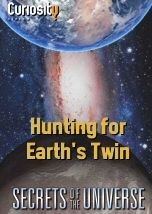
In just one generation, our ability to search for planets beyond our solar system has transformed. With modern techniques and telescopes, planetary scientists have found thousands of exoplanets in our universe, and many of them have the perfect conditions for life. Are we about to find Earth’s twin?
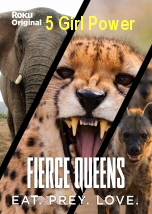
The plains of Africa, home to a powerful predator where females rule: spotted hyena. They have a reputation as dim-witted scavengers. But these fierce queens are the opposite; strong, fearless and highly intelligent. Hyenas are the girl gang of the Savannah. They hunt in packs, get first bite of their prey, and outrank every male in their group, making them some of Africa's most fierce queens.
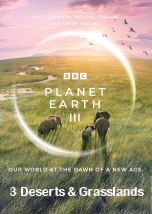
The third episode takes viewers on a riveting journey to some of the world's most extreme and breathtaking deserts and grasslands, where nature puts on its most dramatic show. It begins in the arid landscapes of Central Africa's Guelta d'Archei and the Namib Desert in Southwest Africa, places where water is scarce, and survival is a daily battle. The focus then shifts to the remarkable adaptability of creatures like ostriches, who brave the scorching heat and predators to raise their young and a handful of leopards who learned to hunt from trees on the African plains. In Australia, viewers witness the intricate courtship rituals of the spotted bowerbird, a species facing challenges due to climate change. The narrative then takes us to the vast Eurasian Steppe, home to the unique Saiga antelope, and to Brazil's Cerrado, a biodiverse grassland where the elusive maned wolf plays a crucial role in maintaining the ecosystem. The episode highlights not only the resilience and beauty of these creatures but also the fragility of their habitats, emphasizing the urgent need for conservation efforts.
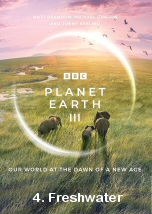
Covering one tenth of all species on the planet, Freshwater is a rich, diverse habitat filled with never-ending surprises. The fourth episode is set beneath the Yucatan Peninsula and spanning diverse locations like the rainforests of Costa Rica and the Kalahari Desert and presents a vivid exploration of how freshwater shapes life on Earth. The narrative journeys through the unique breeding rituals of gliding tree frogs in Costa Rica, the strategic hunting methods of mugger crocodiles in Sri Lanka, and the astonishing adaptations of wildlife in the Okavango Delta. It highlights the critical role of freshwater in supporting diverse ecosystems, from the teeming fish species in Lake Malawi to the perilous journey of gobies in Bioko. The episode also addresses human impact, showcasing the extensive irrigation system in Pakistan and its unintended consequences on local wildlife, like the endangered Indus river dolphin. This captivating chapter not only showcases nature's marvels but also underscores the delicate balance between human needs and wildlife conservation.
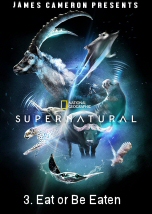
Predators and prey are in an arms race for survival. Hunters and hunted deploy hidden super- skills in the battle to eat or be eaten. Masterclasses in predatory perfection are vital to passing on skills. So when they're ready to hunt for real, the next generation is fully prepared for the battle between predator and prey. Life is a mission, survival. Animals have evolved secret weapons and hidden skills to outsmart their enemies. So in those life or death moments, it takes the most extraordinary super powers to prevail.



















The shallow tropical seas, appearing as paradises, are actually arenas of intense survival battles. Predatory lionfish, with their patient hunting tactics, and clown frogfish, using a unique fishing rod-like dorsal fin as a lure, demonstrate the ocean's complex food web. The documentary also explores the kelp forests off the North American coast, revealing their role as nurseries for young horn sharks. Amidst these underwater forests lurk giant sea bass, wolf-eels, and various sharks like houndsharks and broadnose sevengills, posing significant threats to the smaller inhabitants. The episode takes viewers to the twilight and midnight zones of the ocean, unveiling alien-like creatures such as the siphonophore, glass squid, and gulper eel, adapted to the extreme conditions of deep waters. The journey concludes with the moving story of the pearl octopus, whose devotion to her eggs in the challenging deep-sea environment is both heartwarming and heartbreaking.
This episode is not only a showcase of the ocean's diverse inhabitants but also a reminder of the urgent need to understand and protect this vast, mysterious, and vital part of our planet.