

Last Watched

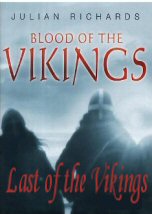
Blood Of The Vikings: Last of the Vikings

   2001    History
In the last of the series, Julian Richards uncovers new information from the battle in 1066 between Viking warlord Harald Hardrada and King Harold of England that marked the end of the Viking age in Britain. Results from a nationwide genetic survey show where in Britain the Vikings left a measurable contribution.
Series: Blood of the Vikings
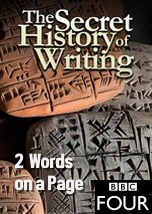
Words on a Page

   2020    History
Writing itself is 5,000 years old, and for most of that time words were written by hand using a variety of tools. The Romans were able to run an empire thanks to documents written on papyrus. Scroll books could be made quite cheaply and, as a result, ancient Rome had a thriving written culture. With the fall of the Roman Empire, papyrus became more difficult to obtain. Europeans were forced to turn to a much more expensive surface on which to write: Parchment. Medieval handwritten books could cost as much as a house, they also represent a limitation on literacy and scholarship.
No such limitations were felt in China, where paper had been invented in the second century. Paper was the foundation of Chinese culture and power, and for centuries how to make it was kept secret. When the secret was out, paper mills soon sprang up across central Asia. The result was an intellectual flourishing known as the Islamic Golden Age. Muslim scholars made discoveries in biology, geology, astronomy and mathematics. By contrast, Europe was an intellectual backwater.
That changed with Gutenberg’s development of movable type printing. The letters of the Latin alphabet have very simple block-like shapes, which made it relatively simple to turn them into type pieces. When printers tried to use movable type to print Arabic texts, they found themselves hampered by the cursive nature of Arabic writing. The success of movable type printing in Europe led to a thousand-fold increase in the availability of information, which produced an explosion of ideas that led directly to the European Scientific Revolution and the Industrial Revolution that followed.
Series: The Secret History of Writing

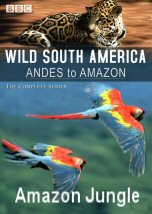
Amazon Jungle

   2005    Nature
A visit to the Amazon jungle - the world's largest rainforest and home to the widest variety of plants and animals on Earth. he diversity of life in the jungle is so great that in just two square miles scientists have counted 3,000 varieties of ants, 530 types of birds and 11 species of monkey. But despite the huge range of life that flourishes here, survival is never easy.
Series: Wild South America

The Clash of Titans

   2012    History
The most famous – and perhaps most misunderstood – episodes in the epic history of the Holy Wars that are known to history as The Crusades – the clash between Richard the Lionheart and Saladin. In July 1192, Richard the Lionheart stood poised for a strike on Jerusalem, while Saladin – mighty sultan of Islam – readied his troops inside the city, preparing for the inevitable attack. During a year-long campaign across Palestine, these two legendary leaders had fought each other to a stand-still. Thousands had perished, appalling atrocities had been perpetrated on both sides. And now they faced each other in a battle for their sacred objective.
Series: The Crusades

The Secret Life of Chaos

   2010    Science
Chaos theory has a bad name, conjuring up images of unpredictable weather, economic crashes and science gone wrong. But there is a fascinating and hidden side to Chaos, one that scientists are only now beginning to understand. It turns out that chaos theory answers a question that mankind has asked for millennia - how did we get here? In this documentary, Professor Jim Al-Khalili sets out to uncover one of the great mysteries of science - how does a universe that starts off as dust end up with intelligent life? How does order emerge from disorder? It's a mindbending, counterintuitive and for many people a deeply troubling idea. But Professor Al-Khalili reveals the science behind much of beauty and structure in the natural world and discovers that far from it being magic or an act of God, it is in fact an intrinsic part of the laws of physics. Amazingly, it turns out that the mathematics of chaos can explain how and why the universe creates exquisite order and pattern. And the best thing is that one doesn't need to be a scientist to understand it. The natural world is full of awe-inspiring examples of the way nature transforms simplicity into complexity. From trees to clouds to humans - after watching this film you'll never be able to look at the world in the same way again.

Playful Creatures

   2015    Nature
Spy in the Huddle use innovative techniques to reveal the incredible secrets of your pets' behaviour in ways never seen before. As astonishing photography explores the wild side of our playful pets, find out why hamsters love to run in a wheel, how dogs pick up the rules of the pack and how kittens learn to be solitary hunters. Featuring incredible views of plunge-diving dogs, babysitting cats, acrobatic hamsters and a playful cat outwitted by his prey" - you'll never look at your favourite companions in quite the same way again. The latest science also reveals why budgies talk, how a cat scales a vertical wall with the help of a special claw, why hamsters stuff their faces with more food than they can eat and the real meaning behind a rabbit's hop. Our pets are also given a chance to explore their wild side as we join the free-roaming pet dogs of Cusco Peru, pet rabbits living in a natural warren and the wild-living inhabitants of Cat Island, Japan. A range of innovative techniques such as moving X-rays, thermal imagery, minicam-carrying dogs and revelatory slow-motion photography shows why our pets play and how their true wild nature is just a whisker away.
Series: Pets: Wild at Heart