One of the world's biggest bands return to the scene of their Live Aid triumph a year earlier to play all their greatest hits in front of a packed Wembley Stadium. Everything is done right and to perfection here. There is a majesty in the filming and editing that is missing in the other performances. Maybe it's the energy of this awesome Wembley crowd. Shot just before sunset, the transition to night time is magic and Freddie commands! He is loved by and connected to the crowd like very few performers. The sound is stellar, Brian is in great form, the harmonies are spot on, it is incredible to realize this wall of great sound is coming mostly from a live trio.
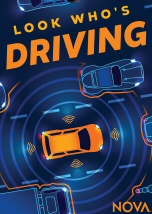
After years of anticipation, autonomous vehicles are now being tested on public roads around the world. As ambitious innovators race to develop what they see as the next high-tech pot of gold, some experts warn there are still daunting challenges ahead, including how to train artificial intelligence to be better than humans at making life-and-death decisions. How do self-driving cars work? How close are we to large-scale deployment of them? And will we ever be able to trust AI with our lives?
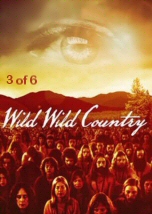
Ma Anand Sheela emerges as a provocative spokeswoman. The Rajneesh control Antelope city council and they establish a police force in the city. Bhagwan tells Sheela it is time to control Wasco County. As Election Day approaches, the Rajneeshees recruit thousands of homeless people to fortify their ranks.
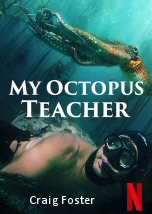
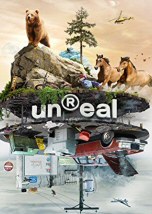
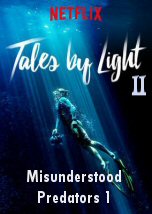
Discover our extraordinary world through a stunning cinematic experience -following the journeys of acclaimed photographers pursuing their personal projects. Their aim: changing people's perceptions through art. From the art of sacred nature, to the demons of the deep and the juxtaposition of life and death. Over the years Eric Cheng has dived with the planet's most magnificent creatures. Now he is determined to use his photography to tell the true story of the most misrepresented and demonised species.
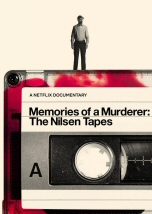
Serial killer Dennis Nilsen narrates his life and horrific crimes via a series of chilling audiotapes recorded from his jail cell. Set against the backdrop of 1980s Britain, when mass unemployment drew young men to London in search of their fortunes, only to find themselves destitute and easy prey, and weaving together interviews from police, journalists, survivors, bereaved families, and - for the first time the killer's own voice, this feature length documentary explores how Nilsen was able to get away with multiple murders and attacks, unchallenged, for five years.
Forget the Big Bang. The real moment of creation was the Cosmic Dawn - the moment of first light. It's the moment the first stars were born, the moment that lit up the Universe, and made the first structure and the first ingredients of life. This is the scientific version of the story of Genesis. The Big Bang gets all the credit for creating our universe. But in fact, the universe it gave was dark and boring. There were no stars, no galaxies, just a vast, black fog of gas - the cosmic dark ages". But, after a hundred million years of nothing, came a dramatic moment of transformation - the Cosmic Dawn. Astronomers are now trying to witness this cosmic dawn. For the first time they have the tools to explore the very first stars of the universe and to tell the scientific story of our creation.





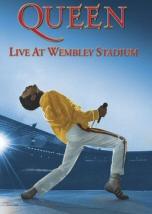

Everything is done right and to perfection here. There is a majesty in the filming and editing that is missing in the other performances. Maybe it's the energy of this awesome Wembley crowd. Shot just before sunset, the transition to night time is magic and Freddie commands! He is loved by and connected to the crowd like very few performers. The sound is stellar, Brian is in great form, the harmonies are spot on, it is incredible to realize this wall of great sound is coming mostly from a live trio.