
Last Watched

Among Believers

   2013    History
With optional Hebrew subtitles. The story of medieval Jews struggling to preserve their identity--and sometimes their lives--under the rule of Christianity and Islam. Whether labelled 'Christ-killers' by the Christians or 'dhimmi' (non-Muslim citizens of an Islamic community) by the Muslims, diaspora Jews built new lives and invented new ways of being Jewish in exile in the face of discrimination, blood-libels and persecution interspersed with periods of tolerance, protection and peaceful co-existence. Drawing on some of the documents they left behind, this episode offers a vivid portrait of Jewish bankers, merchants, doctors, poets and artists flourishing in Lincoln, Cordoba, Venice and Cairo and tells the story of their mass expulsion from Spain in 1492.
Series: The Story of the Jews
Fight for Life

   2011    Science
This episode focuses on the Jurassic period, a time when the first giant killers stalked the Earth and lurked in the seas; a time when the slightest advantage meant the difference between life and death. In North America the iconic allosaurus, an ambush hunter with a lethal bite, dominated. Not even the heavily-armoured stegosaurus was safe from this killer, and incredible evidence reveals a glimpse of a vicious battle between these two giants. Life in Jurassic oceans was no easier; in 2008, a fossil was dug out of a frozen island high in the Arctic. It was a colossal marine reptile, twice as big as most ocean predators, at 15 metres long and weighing about 45 tonnes. This was Predator X. Its skull alone was nearly twice the size of a tyrannosaurus rex's, and its bite force unmatched by anything in the Jurassic seas. The balance of power between predator and prey is a fine one, as prey continually evolves different ways to avoid predators. But for the most successful and enduring predators, the battle to survive has always been tipped in their favour
Series: Planet Dinosaur

Do You Know What Time It Is

   2008    Science
Particle physicist Prof. Brian Cox asks, 'What time is it?' It's a simple question and it sounds like it has a simple answer. But do we really know what it is that we're asking? Brian visits the ancient Mayan pyramids in Mexico where the Maya built temples to time. He finds out that a day is never 24 hours and meets Earth's very own Director of Time. He journeys to the beginning of time, and goes beyond within the realms of string theory, and explores the very limit of time. He discovers that we not only travel through time at the speed of light, but the experience we feel as the passing of time could be an illusion.

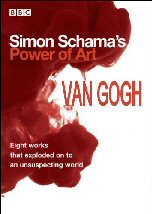
Van Gogh

   2006    Art
Born in Groot-Zundert, The Netherlands, Van Gogh spent his early life as an art dealer, teacher and preacher in England, Holland and Belgium. His period as an artist began in 1881 when he chose to study art in Brussels, starting with watercolours and moving quickly on to oils. The French countryside was a major influence on his life and his early work was dominated by sombre, earthy colours depicting peasant workers, the most famous of which is The Potato Eaters, 1885. It was during Van Gogh's studies in Paris (1886-8) that he developed the individual style of brushwork and use of colour that made his name. In 1888 he moved to Arles where the Provençal landscape provided his best-known subject matter. However, it also marked the start of his mental crisis following an argument with his contemporary Paul Gauguin. Van Gogh was committed to a mental asylum in 1889 where he continued to paint, but he committed suicide in 1890.
Series: Power of Art

Pan(dem)icking

   2021    Nature
As Covid-19 puts Britain on lockdown, Jeremy Clarkson suddenly finds that his biggest worries aren’t all related to the upcoming lambing season. 'If you're involved in food production, you are key worker. We're gonna save the nation!... I've smoked a million cigarettes and I've had pneumonia. If I get it , there's not a lot of hope... Am I panic buying? I bought five tins of sardines the other day'.
Series: Clarkson Farm

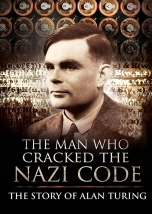
The Man Who Cracked the Nazi Code

       History
One of the main battles of the Second World War took place inside the brain of a mathematician called Alan Turing. During the war, the allies' key objective was to crack the German army's encrypted communications code. Without a doubt, the key player in the game was this interdisciplinary scientist and a long-forgotten hero.
Alan Turing's breakthroughs, his story and tragic destiny, gives us a chance to look at the Second World War from a different angle.