After years of anticipation, autonomous vehicles are now being tested on public roads around the world. As ambitious innovators race to develop what they see as the next high-tech pot of gold, some experts warn there are still daunting challenges ahead, including how to train artificial intelligence to be better than humans at making life-and-death decisions. How do self-driving cars work? How close are we to large-scale deployment of them? And will we ever be able to trust AI with our lives?
The planets of our solar system have experienced epic catastrophes throughout their long history, both raining down from outside and bubbling up from within. We'll voyage back in time to investigate the violent events that profoundly shaped the planets, including earth itself. We'll witness stunning revelations about what transformed Mars into a barren, hostile desert... The disaster that changed Venus from temperate to hellish... The impact that blew away Mercury's mantle, turning it into a planetary core... A colossal disturbance that rearranged the orbits of the gas giants... Titanic impacts on Jupiter... And how a lost moon may finally explain Saturn's rings.
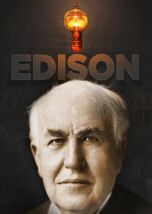
By the time he died in 1931, Thomas Alva Edison was one of the most famous men in the world. The holder of more patents than any other inventor in history, Edison had achieved glory as the genius behind such revolutionary inventions as sound recording, motion pictures, and electric light. Edison's curiosity led him to its cutting edge. With just three months of formal schooling, he took on one seemingly impossible technical challenge after another, and through intuition, persistence, and a unique team approach to innovation, invariably solved it." Driven and intensely competitive, Edison was often neglectful in his private life and could be ruthless in business. Challenged by competition in the industry he'd founded, Edison launched an ugly propaganda campaign against his rivals, and used his credibility as an electrical expert to help ensure that high-voltage electrocution became a form of capital punishment. Edison explores the complex alchemy that accounts for the enduring celebrity of America's most famous inventor, offering new perspectives on the man and his milieu, and illuminating not only the true nature of invention, but its role in turn-of-the-century America's rush into the future.
Forget the Big Bang. The real moment of creation was the Cosmic Dawn - the moment of first light. It's the moment the first stars were born, the moment that lit up the Universe, and made the first structure and the first ingredients of life. This is the scientific version of the story of Genesis. The Big Bang gets all the credit for creating our universe. But in fact, the universe it gave was dark and boring. There were no stars, no galaxies, just a vast, black fog of gas - the cosmic dark ages". But, after a hundred million years of nothing, came a dramatic moment of transformation - the Cosmic Dawn. Astronomers are now trying to witness this cosmic dawn. For the first time they have the tools to explore the very first stars of the universe and to tell the scientific story of our creation.
Spy in the Huddle use innovative techniques to reveal the incredible secrets of your pets' behaviour in ways never seen before. As astonishing photography explores the wild side of our playful pets, find out why hamsters love to run in a wheel, how dogs pick up the rules of the pack and how kittens learn to be solitary hunters. Featuring incredible views of plunge-diving dogs, babysitting cats, acrobatic hamsters and a playful cat outwitted by his prey" - you'll never look at your favourite companions in quite the same way again. The latest science also reveals why budgies talk, how a cat scales a vertical wall with the help of a special claw, why hamsters stuff their faces with more food than they can eat and the real meaning behind a rabbit's hop. Our pets are also given a chance to explore their wild side as we join the free-roaming pet dogs of Cusco Peru, pet rabbits living in a natural warren and the wild-living inhabitants of Cat Island, Japan. A range of innovative techniques such as moving X-rays, thermal imagery, minicam-carrying dogs and revelatory slow-motion photography shows why our pets play and how their true wild nature is just a whisker away.
Born in Groot-Zundert, The Netherlands, Van Gogh spent his early life as an art dealer, teacher and preacher in England, Holland and Belgium. His period as an artist began in 1881 when he chose to study art in Brussels, starting with watercolours and moving quickly on to oils. The French countryside was a major influence on his life and his early work was dominated by sombre, earthy colours depicting peasant workers, the most famous of which is The Potato Eaters, 1885. It was during Van Gogh's studies in Paris (1886-8) that he developed the individual style of brushwork and use of colour that made his name. In 1888 he moved to Arles where the Provençal landscape provided his best-known subject matter. However, it also marked the start of his mental crisis following an argument with his contemporary Paul Gauguin. Van Gogh was committed to a mental asylum in 1889 where he continued to paint, but he committed suicide in 1890.









How do self-driving cars work? How close are we to large-scale deployment of them? And will we ever be able to trust AI with our lives?