



Last Watched

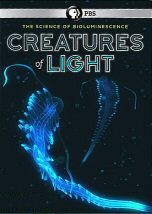
Creatures Of Light

   2016    Nature
In the dark depths of the oceans, nearly 90% of all species light up the darkness from within. These creatures flash, sparkle, shimmer, or simply glow. Whether it’s to scare off predators, fish for prey, or lure a mate, the language of light is everywhere in the ocean depths, and scientists are finally starting to decode it. Discover surprising ways to harness nature’s light—from tracking cancer cells to detecting pollution, lighting up cities, and even illuminating the inner workings of our brains.
Can We Make Life

   2018    Medicine
'It's alive!' Since Dr. Frankenstein spoke those famous words, we've been alternately enthralled and terrified by the idea of creating life in the lab. Now, a revolution in genetic engineering and thrilling innovations in synthetic biology are bringing that dream—or nightmare, as the case may be—closer to reality. New tools allow researchers to use cells to create their own DNA and edit it into existing genomes with more ease and less cost than ever before.
Along with renewed hopes for treating some genetic diseases, there's serious talk of using the newest technologies to bring long-extinct animals back from the dead – like the team hoping to resurrect the woolly mammoth. Science fiction is quickly becoming science fact. Another daring genetic experiment to bioengineer animals could prevent Lyme disease. But the power to make life comes with deep ethical questions. What are the potential rewards—and dangers—of tinkering with nature? This films explores the benefits and the burden of risk surrounding the controversial new technology.
Series: Nova Wonders

The Story of India: Freedom

   2007    History
This episode examines the British Raj and India’s struggle for freedom. Wood reveals how in South India a global corporation came to control much of the subcontinent, and explores the magical culture of Lucknow, discovering the enigmatic Briton who helped found the freedom movement. He traces the Amritsar massacre, the rise of Gandhi and Nehru, and the events that led to the Partition of India in 1947.
Series: The Story of India

The Cold War: 1945-1950

   2012    History
Directed, produced, and narrated by Oliver Stone. In this episode we will see how the equation changes: specific month-by-month causes of the Cold War emerge and it is not entirely clear who started it. Highlights include Churchill's Iron Curtain speech, the civil war in Greece and the Red Scare that prompts the rise of Joseph McCarthy, the House Un-American Activities Committee and the FBI.
Series: The Untold History of the United States

Wild Wild Country Part Three

   2018    Culture
Ma Anand Sheela emerges as a provocative spokeswoman. The Rajneesh control Antelope city council and they establish a police force in the city. Bhagwan tells Sheela it is time to control Wasco County. As Election Day approaches, the Rajneeshees recruit thousands of homeless people to fortify their ranks.
Series: Wild Wild Country

The Lost Pyramids of Caral

   2002    History
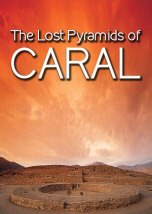
The magnificent ancient city of pyramids at Caral in Peru is a thousand years older than the earliest known civilisation in the Americas and, at 2,627 BC, is as old as the pyramids of Egypt. Many now believe it is the fabled missing link of archaeology - a 'mother city'. If so, then these extraordinary findings could finally answer one of the great questions of archaeology: why did humans become civilised?" For over a century, archaeologists have been searching for what they call a mother city. Civilisation began in only six areas of the world: Egypt, Mesopotamia, India, China, Peru and Central America. In each of these regions people moved from small family units to build cities of thousands of people. They crossed the historic divide, one of the great moments in human history. Why? To find the answer archaeologists needed to find a mother city - the first stage of city-building. Caral, is so much older than anything else in South America that it is a clear candidate to be the mother city. It also is in pristine condition. Nothing has been built on it at all. Instead laid out before the world is an elaborate complex of pyramids, temples, an amphitheatre and ordinary houses. Scientists developed a number of theories. Some said it was because of the development of trade, others that it was irrigation. Some even today believe it was all because of aliens. Gradually an uneasy consensus emerged. The key force common to all civilisations was warfare. Crucially, there is not the faintest trace of warfare at Caral; no battlements, no weapons, no mutilated bodies. Instead, Ruth's findings suggest it was a gentle society, built on commerce and pleasure. In one of the pyramids they uncovered beautiful flutes made from condor and pelican bones. They have also found evidence of a culture that took drugs and perhaps aphrodisiacs. Most stunning of all, they have found the remains of a baby, lovingly wrapped and buried with a precious necklace made of stone beads.