

Last Watched

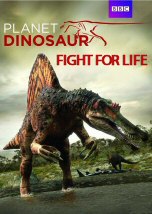
Fight for Life

   2011    Science
This episode focuses on the Jurassic period, a time when the first giant killers stalked the Earth and lurked in the seas; a time when the slightest advantage meant the difference between life and death. In North America the iconic allosaurus, an ambush hunter with a lethal bite, dominated. Not even the heavily-armoured stegosaurus was safe from this killer, and incredible evidence reveals a glimpse of a vicious battle between these two giants. Life in Jurassic oceans was no easier; in 2008, a fossil was dug out of a frozen island high in the Arctic. It was a colossal marine reptile, twice as big as most ocean predators, at 15 metres long and weighing about 45 tonnes. This was Predator X. Its skull alone was nearly twice the size of a tyrannosaurus rex's, and its bite force unmatched by anything in the Jurassic seas. The balance of power between predator and prey is a fine one, as prey continually evolves different ways to avoid predators. But for the most successful and enduring predators, the battle to survive has always been tipped in their favour
Series: Planet Dinosaur
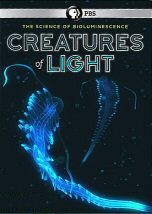
Creatures Of Light

   2016    Nature
In the dark depths of the oceans, nearly 90% of all species light up the darkness from within. These creatures flash, sparkle, shimmer, or simply glow. Whether it’s to scare off predators, fish for prey, or lure a mate, the language of light is everywhere in the ocean depths, and scientists are finally starting to decode it. Discover surprising ways to harness nature’s light—from tracking cancer cells to detecting pollution, lighting up cities, and even illuminating the inner workings of our brains.

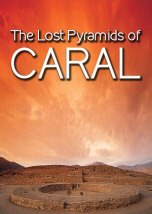
The Lost Pyramids of Caral

   2002    History
The magnificent ancient city of pyramids at Caral in Peru is a thousand years older than the earliest known civilisation in the Americas and, at 2,627 BC, is as old as the pyramids of Egypt. Many now believe it is the fabled missing link of archaeology - a 'mother city'. If so, then these extraordinary findings could finally answer one of the great questions of archaeology: why did humans become civilised?" For over a century, archaeologists have been searching for what they call a mother city. Civilisation began in only six areas of the world: Egypt, Mesopotamia, India, China, Peru and Central America. In each of these regions people moved from small family units to build cities of thousands of people. They crossed the historic divide, one of the great moments in human history. Why? To find the answer archaeologists needed to find a mother city - the first stage of city-building. Caral, is so much older than anything else in South America that it is a clear candidate to be the mother city. It also is in pristine condition. Nothing has been built on it at all. Instead laid out before the world is an elaborate complex of pyramids, temples, an amphitheatre and ordinary houses. Scientists developed a number of theories. Some said it was because of the development of trade, others that it was irrigation. Some even today believe it was all because of aliens. Gradually an uneasy consensus emerged. The key force common to all civilisations was warfare. Crucially, there is not the faintest trace of warfare at Caral; no battlements, no weapons, no mutilated bodies. Instead, Ruth's findings suggest it was a gentle society, built on commerce and pleasure. In one of the pyramids they uncovered beautiful flutes made from condor and pelican bones. They have also found evidence of a culture that took drugs and perhaps aphrodisiacs. Most stunning of all, they have found the remains of a baby, lovingly wrapped and buried with a precious necklace made of stone beads.

Do You Know What Time It Is

   2008    Science
Particle physicist Prof. Brian Cox asks, 'What time is it?' It's a simple question and it sounds like it has a simple answer. But do we really know what it is that we're asking? Brian visits the ancient Mayan pyramids in Mexico where the Maya built temples to time. He finds out that a day is never 24 hours and meets Earth's very own Director of Time. He journeys to the beginning of time, and goes beyond within the realms of string theory, and explores the very limit of time. He discovers that we not only travel through time at the speed of light, but the experience we feel as the passing of time could be an illusion.

The Cold War: 1945-1950

   2012    History
Directed, produced, and narrated by Oliver Stone. In this episode we will see how the equation changes: specific month-by-month causes of the Cold War emerge and it is not entirely clear who started it. Highlights include Churchill's Iron Curtain speech, the civil war in Greece and the Red Scare that prompts the rise of Joseph McCarthy, the House Un-American Activities Committee and the FBI.
Series: The Untold History of the United States

Planet Ocean

   2012    Nature
An elegantly filmed documentary, Planet Ocean takes us on a beautiful adventure into the strangest domains of our planet - the oceans. The film features both the magnificence and the exposure of Earth's oceans. The dangers that threaten the whole planet also threaten us. We are guided through various series of events (sailfish relying on mackerel; mackerel relying on zooplankton; zooplankton relying on marine prairie) it is not simply to demonstrate the function of a food chain, but to illustrate the way in which all life is intrinsically interconnected. What happens to our oceans happens to our selves.
Leaving Neverland

Leaving Neverland

2019  Culture
Mammals

Mammals

2024  Nature
Through the Wormhole

Through the Wormhole

2011  Science
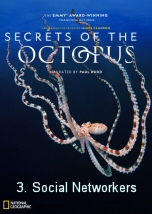
Secrets of the Octopus

Secrets of the Octopus

2024  Nature
Building Giants

Building Giants

2019  Technology
Clarkson Farm 4

Clarkson Farm 4

2025  Nature
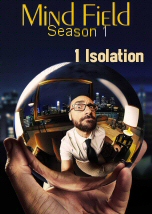
Mind Field Season 1

Mind Field Season 1

2017  Medicine
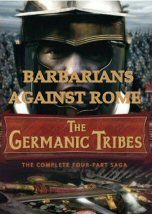
The Germanic Tribes

The Germanic Tribes

2007  History