The series Warrior Graveyard uncovers some extraordinary warrior skeletons from history. Archaeologists and forensic scientists use remains to tell the story of famous warriors of the past and unleash the full force of modern forensics upon them: battle scars, bone deformations and recoverable scraps of DNA will all be tested and explored. CGI and drama will then bring them dramatically to life, revealing a revolutionary new picture of how these warriors lived - and died. An archaeological and forensic examination of six crusaders' bones brings to life the 1179 Battle of Jacob's Ford, revealing the wounds that killed the warriors in the Holy Land. With every sword slash comes an insight into an historic day. Excavations along the Israel/ Jordan border are unearthing skeletons and rewriting the history of the First Crusade. The site at Jacob's Ford is the only known Crusader battle site with complete skeletons. To secure the road between Akkon and Damascus, King Baldwin IV of Jerusalem had a mighty castle built at the Jacob's Ford of the Jordan River in October 1178. The fortress was a thorn in the side of Sultan Saladin, so he had it stormed a year later, before it was completed. Excavations have been taking place on the site of the legendary crusader castle since the early 1990s. Archaeologists and forensic experts have examined the remains of six fallen crusaders and uncovered fascinating details about the Battle of Chastellet. The programme has secured access to the excavation and remains of some of the 80 Crusader Knights and 750 foot soldiers stationed at the fort when it was attacked and its Crusaders massacred by Saladin's army in 1179, in the battle that changed the course of history in the Middle East.
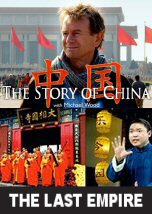
China's last empire, the Qing, lasted from 1644 to 1912. It began in violence and war as the Manchus swept down from the north, but invaders became emperors, with three generations of one family ruling the country. Among them, Michael Wood argues, was China's greatest emperor - Kangxi.
Under the Qing, China doubled in size to include Xinjiang in the far west, as well as Mongolia and Tibet, creating the essential shape of China today. The new dynasty tolerated a diversity of cultures and religions, including Islam. In Kaifeng, Michael visits a women's mosque with a female imam, a delightful scene that ends with laughter and selfies! The Qing also undertook huge cultural enterprises. At a traditional printing house where the wood blocks are hand-carved, we see how the Complete Tang Poems were reproduced - all 48,000 of them. We travel through the wintry countryside to a remote village where a hardy audience watch open-air opera in the snow and visit a painter's studio, and 'storytelling' houses in Yangzhou. In the 18th century, China was arguably the greatest economy in the world, and we get a fabulous sense of the rich culture that came with prosperity. But then came the clash with the British, in the first Opium War, when a British expedition destroyed the Qing navy and extracted territory and trading rights. We leave with a glimpse of the future. 'Every dynasty has risen and declined,' says Michael, 'and has needed new life to regenerate, and this time the catalyst was the British.' Among the ports China ceded was an almost uninhabited island, Hong Kong, one of today's greatest financial centres, and Shanghai, a small town then but now one of the greatest cities in world.
Dive with David Attenborough into a world where a single life can last a thousand years. See things no eye has ever seen, and discover the dramatic, beautiful plant life of Earth. In the first episode, Sir David Attenborough shows how more kinds of plants are crammed together in the tropical rainforests than anywhere else on Earth. The result is astonishing beauty and intense competition - a plant battleground. New filming techniques allow us to enter the plants’ world and see it from their perspective and on their timescale. From fast-growing trees to flowers that mimic dead animals, this is a journey into a magical world that operates on a different timescale to our own.
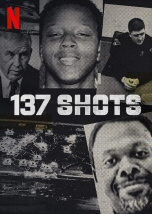
Law enforcement faces scrutiny as Americans demand justice after police violence claims multiple Black lives in Cleveland. The film examines the case in Cleveland where police officers shot at unarmed suspects in a car 137 times. Timothy Russell and Malissa Williams were the victims. While looking at policing standards within the city of Cleveland, '137 Shots' also examines the shooting of 12-year old Tamir Rice by Cleveland police officers. This film is an extremely tough thing to watch, but necessary in order to bring about awareness for change.
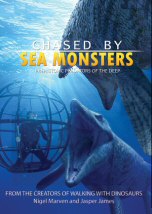
The Basilosaurus, the first of the large whale species, is not a harmless plankton eater but a fearsome high speed hunter. And most frightening of all is the Megalodon, a gargantuan ancestor of the great white that makes its modern day relative look like a tuna.
After a small plane crashes, four indigenous children struggle to survive in the Colombian Amazon jungle, relying on ancestral wisdom as an unprecedented rescue mission unfolds amid the jungle's challenges. Directed by Oscar winner Orlando von Einsiedel, this documentary tells the incredible story from the point of view of those involved in this epic rescue: the children's family, indigenous communities and leaders, and the Colombian army.












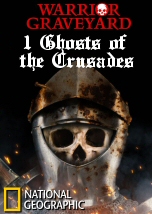



An archaeological and forensic examination of six crusaders' bones brings to life the 1179 Battle of Jacob's Ford, revealing the wounds that killed the warriors in the Holy Land. With every sword slash comes an insight into an historic day. Excavations along the Israel/ Jordan border are unearthing skeletons and rewriting the history of the First Crusade. The site at Jacob's Ford is the only known Crusader battle site with complete skeletons. To secure the road between Akkon and Damascus, King Baldwin IV of Jerusalem had a mighty castle built at the Jacob's Ford of the Jordan River in October 1178. The fortress was a thorn in the side of Sultan Saladin, so he had it stormed a year later, before it was completed.
Excavations have been taking place on the site of the legendary crusader castle since the early 1990s. Archaeologists and forensic experts have examined the remains of six fallen crusaders and uncovered fascinating details about the Battle of Chastellet. The programme has secured access to the excavation and remains of some of the 80 Crusader Knights and 750 foot soldiers stationed at the fort when it was attacked and its Crusaders massacred by Saladin's army in 1179, in the battle that changed the course of history in the Middle East.