The series Warrior Graveyard uncovers some extraordinary warrior skeletons from history. Archaeologists and forensic scientists use remains to tell the story of famous warriors of the past and unleash the full force of modern forensics upon them: battle scars, bone deformations and recoverable scraps of DNA will all be tested and explored. CGI and drama will then bring them dramatically to life, revealing a revolutionary new picture of how these warriors lived - and died. An archaeological and forensic examination of six crusaders' bones brings to life the 1179 Battle of Jacob's Ford, revealing the wounds that killed the warriors in the Holy Land. With every sword slash comes an insight into an historic day. Excavations along the Israel/ Jordan border are unearthing skeletons and rewriting the history of the First Crusade. The site at Jacob's Ford is the only known Crusader battle site with complete skeletons. To secure the road between Akkon and Damascus, King Baldwin IV of Jerusalem had a mighty castle built at the Jacob's Ford of the Jordan River in October 1178. The fortress was a thorn in the side of Sultan Saladin, so he had it stormed a year later, before it was completed. Excavations have been taking place on the site of the legendary crusader castle since the early 1990s. Archaeologists and forensic experts have examined the remains of six fallen crusaders and uncovered fascinating details about the Battle of Chastellet. The programme has secured access to the excavation and remains of some of the 80 Crusader Knights and 750 foot soldiers stationed at the fort when it was attacked and its Crusaders massacred by Saladin's army in 1179, in the battle that changed the course of history in the Middle East.
Blowing your mind, that's what Doctor Who's all about. What makes it all so fun is that while all this crazy science fiction is going on, there's actual facts. You've got space travel, you've got time travel, you've got regeneration. These are all the powerful themes of Doctor Who. And they're also the things that drive science forward.
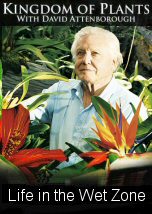
Dive with David Attenborough into a world where a single life can last a thousand years. See things no eye has ever seen, and discover the dramatic, beautiful plant life of Earth. In the first episode, Sir David Attenborough shows how more kinds of plants are crammed together in the tropical rainforests than anywhere else on Earth. The result is astonishing beauty and intense competition - a plant battleground. New filming techniques allow us to enter the plants’ world and see it from their perspective and on their timescale. From fast-growing trees to flowers that mimic dead animals, this is a journey into a magical world that operates on a different timescale to our own.
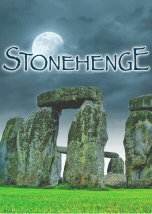
Stonehenge was shaped over centuries, but to what purpose? Was it a temple to the sun, or the moon, an astronomical calendar, or a shrine to dead ancestors? Now Stonehenge may be about to give up some of its secrets. For the first time in nearly half a century a new archaeological dig the sacred stone circle. And the men who are leading the excavation are well aware of the significance of this moment. The film exposes an investigation into a radical theory that Stonehenge, far from being a place of burial as is commonly assumed, was in fact a place of healing. The investigation takes in forensic testing of bones excavated over the past decades and hard-won permission for the first dig in 50 years at the Henge, watched live online by millions of viewers around the world. Does the theory of the healing stones bear up to modern-day forensic science?
Death is life's greatest certainty. But that may be about to change. Scientists have discovered an immortal animal that may hold the secret of endless regeneration. They're on the brink of editing our DNA so that we can cure ageing like a disease. Or is dying necessary for the survival of our species?
Rivers provide the essentials of life: fresh food and water. They often provide natural highways and enable us to live in just about every environment on Earth. But rivers can also flood, freeze or disappear altogether!Cities - Surviving the Urban Jungle Human Planet joins Sam Niang, a Laotian fisherman, as he walks a high wire strung above the raging Mekong River rapids on an extraordinary commute to work. There's also a look at the remarkable partnership between Samburu tribesmen and wild elephants in their search for water in the dried-out river beds of Northern Kenya. Plus, a father who must take his two children on a six-day trek down a frozen river - the most dangerous school run on Earth, and the ice dam busters of Ottowa with their dynamite solution to a city centre hold-up.





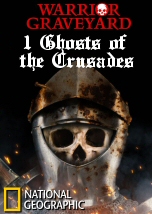




An archaeological and forensic examination of six crusaders' bones brings to life the 1179 Battle of Jacob's Ford, revealing the wounds that killed the warriors in the Holy Land. With every sword slash comes an insight into an historic day. Excavations along the Israel/ Jordan border are unearthing skeletons and rewriting the history of the First Crusade. The site at Jacob's Ford is the only known Crusader battle site with complete skeletons. To secure the road between Akkon and Damascus, King Baldwin IV of Jerusalem had a mighty castle built at the Jacob's Ford of the Jordan River in October 1178. The fortress was a thorn in the side of Sultan Saladin, so he had it stormed a year later, before it was completed.
Excavations have been taking place on the site of the legendary crusader castle since the early 1990s. Archaeologists and forensic experts have examined the remains of six fallen crusaders and uncovered fascinating details about the Battle of Chastellet. The programme has secured access to the excavation and remains of some of the 80 Crusader Knights and 750 foot soldiers stationed at the fort when it was attacked and its Crusaders massacred by Saladin's army in 1179, in the battle that changed the course of history in the Middle East.