For decades, scientists have sought to unlock the secrets of ancient DNA, a fragile genetic blueprint that rarely survives millions of years. Danish biologist Eske Willerslev had a groundbreaking idea: instead of searching for DNA in fossils or ancient tissues, he looked to frozen sediment. Initially dismissed as impossible, his work led to the recovery of genetic traces from over two million years ago, revealing lush ecosystems that existed before the Ice Age. These discoveries offer unprecedented insights into long-extinct species that thrived in warm, verdant Arctic landscapes.
Willerslev’s perseverance revolutionized DNA research, enabling scientists to reconstruct vanished ecosystems and uncover the genetic secrets of ancient worlds. By examining the DNA of past climates, researchers are paving the way to better understand Earth's deep history and adapt to current environmental challenges. This landmark breakthrough demonstrates that ancient DNA acts as a "time machine," allowing humanity to explore its distant past and draw lessons for the future.
By cracking the ancient hieroglyphic code, Jean-François Champollion gave words to a thousand-year-old, mysterious civilization - but behind his legendary feat was a mysterious brother who made it all possible. New correspondence discovered between Jean-François Champollion and his brother Jacques-Joseph now allows us to fully understand how a young, self-taught genius was able to make one of the most important discoveries of the 19th century. Without the tireless support and cleverness of his older brother, Jean-François would never have managed to solve this burning, international enigma. Through animated sequences, using their private correspondence, archives and with the help of experts, this film will go back on this one-in-a lifetime scientific, human and intellectual adventure to celebrate the bicentenary of the decoding of hieroglyphs.
25 million years ago the biggest land mammals of all time, the indricotheres, stalked the Earth. Up to seven metres tall and weighing 15 tonnes, adults were too big to be eaten by any predator of the time. Only in the first few years of its life was indricotheres vulnerable. The programme follows the fate of a calf from his traumatic birth to see whether it can survive droughts, killer hogs and hyaenodon - a predator the size of a rhino with jaws that could crush a rock.
Travelling forward in time to 30,000 years ago, it's the middle of an ice age. The landscape is dominated by mighty mammoths, living side-by-side with woolly rhinos, giant deer and two separate species of human. The programme follows the fate of a herd of mammoths in their annual struggle against the harsh ice-age conditions. Every summer they spend on the grassy plains of what will one day become the bottom of the North Sea, but every winter they are forced to head for the less exposed valleys further south. It is a journey fraught with danger: mammoths can get trapped in frozen bogs, and the herd must run the gauntlet of hunters like cave lions and the deadly Neanderthals.
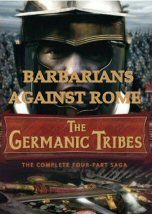
This acclaimed multi-million dollar 4 part series shows the rise of the tribes of a primitive culture on the fringe of northern Europe to become the heirs of the Roman Empire. Since the age of Caesar this Roman-Germanic conflict was characterized not only by fierce battles but also by phases of co-existence & cooperation. the Germans dug the grave of the Roman Empire, but were also the preserves of the Roman legacy.
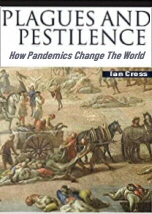
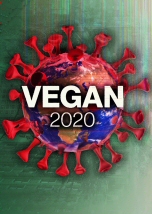
COVID-19 is far from the first pandemic to wreak havoc in the world. A long line of infectious diseases have devastated and in some cases destroyed entire societies. Almost all of them started in animals and made the jump to humans. The Black Death spread across Europe and Asia in the 14th century leaving millions dead in its wake. Between the 15th and 18th centuries, European colonists brought smallpox to the Americas, the Pacific region and to Australia. In Europe, the 17th century saw a series of major epidemics. And at the end of the First World War, more people died of the Spanish flu than on the battlefield. This documentary examines the causes of these epidemics - whether it be lack of hygiene, interaction with animals, overcrowding, or the growth of cities - and how people travelling helped to spread disease and promote pandemics. It also sheds a light on the impact these infectious diseases have had on politics and societal change. Over the centuries, scientists managed to develop treatments and medicines to help control or even eradicate infectious diseases. Virologists are facing that task again with the coronavirus, as the world frantically searches for ways to overcome a pandemic which threatens our modern way of life.









Willerslev’s perseverance revolutionized DNA research, enabling scientists to reconstruct vanished ecosystems and uncover the genetic secrets of ancient worlds. By examining the DNA of past climates, researchers are paving the way to better understand Earth's deep history and adapt to current environmental challenges. This landmark breakthrough demonstrates that ancient DNA acts as a "time machine," allowing humanity to explore its distant past and draw lessons for the future.