



Last Watched

"Man"  Sort by

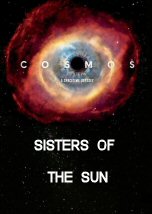
Sisters of the Sun

   2014    Science
The constellation of the Pleiades provides a vehicle for us to explore a series of paradoxes and epochal discoveries for humanity. The untold story of the modern "sisters of the sun," the early 20th century female astronomers, led by two deaf women, at Harvard who catalogued the stars. It's also the story of the young British woman who joined forces with them, her defiance of the world's leading expert, and how she taught the world what the stars are really made of.
Series: Cosmos: A Spacetime Odyssey
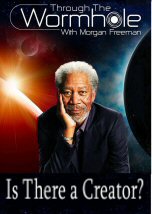

Through the Wormhole: Is There a Creator

   2011    Science
Morgan Freeman produces hosts and narrates this exploration of the greatest mysteries of the universe. The four forces governing our universe are phenomenally finely tuned, so finely that it had led many to the conclusion that someone, or something, must have calibrated them: an alien gameseter who's created our world as the ultimate SIM game for his own amusement.
Series: Through the Wormhole

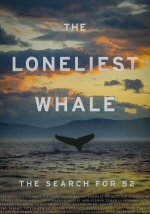
The Loneliest Whale

   2021    Nature
The film is a cinematic quest to find the '52 Hertz Whale,' which scientists believe has spent its entire life in solitude, calling out at a frequency that is different from any other whale. As we search for this elusive creature, we will explore the phenomenon of human reaction to its plight, while revealing its connection to the growing epidemic of loneliness in our interconnected world.

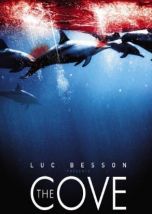
The Cove

       Nature
Using state-of-the-art equipment, a group of activists, led by renowned dolphin trainer Ric O'Barry, infiltrate a cove near Taijii, Japan to expose both a shocking instance of animal abuse and a serious threat to human health". The Taiji dolphin drive hunt is a dolphin drive hunt that takes place in Taiji, Wakayama in Japan every year from September to March. According to the Japanese Fisheries Research Agency, 1,623 dolphins were caught in Wakayama Prefecture in 2007 for human consumption or resale to dolphinariums, and most of these were caught at Taiji. The annual dolphin hunt provides income for local residents, but has received international criticism for both the cruelty of the dolphin killing and the high mercury levels of the dolphin meat

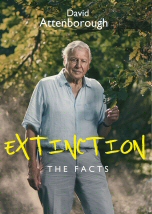
Extinction: The Facts

   2020    Nature
With a million species at risk of extinction, Sir David Attenborough explores how this crisis of biodiversity has consequences for us all, threatening food and water security, undermining our ability to control our climate and even putting us at greater risk of pandemic diseases.
Everything in the natural world is connected in networks that support the whole of life on earth, and we are losing many of the benefits that nature provides to us. The loss of insects is threatening the pollination of crops, while the loss of biodiversity in the soil also threatens plants growth.
Last year, a UN report identified the key drivers of biodiversity loss, including overfishing, climate change and pollution. But the single biggest driver of biodiversity loss is the destruction of natural habitats. Seventy-five per cent of Earth's land surface (where not covered by ice) has been changed by humans, much of it for agriculture, and as consumers we may unwittingly be contributing towards the loss of species through what we buy in the supermarket. Human activities like the trade in animals and the destruction of habitats drive the emergence of diseases. Disease ecologists believe that if we continue on this pathway, this year’s pandemic will not be a one-off event.

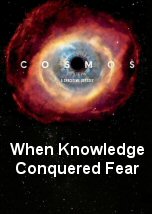
When Knowledge Conquered Fear

   2014    Science
The episode begins with Tyson describing how pattern recognition manifested in early civilization as using astronomy and astrology to predict the passing of the seasons, including how the passage of a comet was often taken as an omen. Tyson continues to explain that the origin of comets only became known in the 20th century due to the work of Jan Oort and his hypothesis of the Oort cloud. Tyson then continues to relate the collaboration between Edmond Halley and Isaac Newton in the last part of the 17th century in Cambridge. The collaboration would result in the publication of Philosophiæ Naturalis Principia Mathematica, the first major work to describe the laws of physics in mathematical terms, despite objections and claims of plagiarism from Robert Hooke and financial difficulties of the Royal Society of London. Tyson explains how this work challenged the prevailing notion that God had planned out the heavens, but would end up influencing many factors of modern life, including space flight. Tyson further describes Halley's contributions including determining Earth's distance to the sun, the motion of stars and predicting the orbit of then-unnamed Halley's Comet using Newton's laws. Tyson contrasts these scientific approaches to understanding the galaxy compared to what earlier civilizations had done, and considers this advancement as mankind's first steps into exploring the universe. The episode ends with an animation of the Milky Way and Andromeda galaxies' merging based on the principles of Newton's laws.
Series: Cosmos: A Spacetime Odyssey