Dylan Jones is in the driving seat for this authoritative four-part look back. No stone remains unturned, as he revisits the New Romantics, rap, modern dance music, hip-hop, indie jingle, synth-pop, house music and club culture. He makes the case that the 1980s was the most radical, innovative and creative decade in the history of pop because, unlike other decades, unleashed a myriad of new musical genres in just 10 years. In the first part, Dylan Jones explores how in this decade the world-conquering genres of rap, hip-hop and modern dance music were launched, while guitar-driven indie flourished in a constellation of scenes spread out across the world. And a technological revolution was changing how music was made, filling the charts with a starburst of innovative records. Meanwhile, the launch of MTV turned pop into a visual medium, allowing artists as varied as U2 and Eurythmics to take charge of how they presented themselves. Featuring interviews with Nile Rodgers, Bananarama, Primal Scream's Bobby Gillespie, Mark Ronson, Trevor Horn and Soul II Soul's Jazzie B.
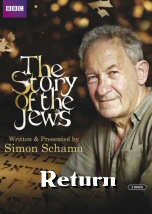
With optional Hebrew subtitles. Simon Schama's history of the Jewish experience ends with an examination of how the Holocaust and the creation of Israel have fundamentally changed what it means to be Jewish. Mixing personal recollection with epic history, Simon tells the story of the remarkable personalities and unprecedented events which turned the Zionist dream of creating a modern state of Israel into reality - and the consequences for the world. With contributions from writer David Grossman, photographer Micha Bar-Am, kibbutz founder Freddie Kahan, West Bank settler Zvi Cooper and Palestinian villager Yacoub Odeh. This film explores the tension between the high ideals and dire necessities that led to the creation of a Jewish homeland and the realities of conflict, dispossession and occupation that have followed in its wake.
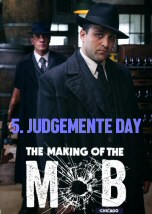
In 1927, Prohibition agent Eliot Ness narrowly escapes a hit ordered by Al Capone. Determined to prove to Capone that he's not intimidated, Ness and his team of Untouchables execute a series of high-profile raids on Capone's breweries. Over the course of a few months, they destroy more than 200,000 gallons of beer, worth a modern-day equivalent of $134 million - and the newspapers cover it all. Capone lashes out against Ness in the press. What Capone doesn't realize is that Ness and the Prohibition agents aren't the only ones trying to take him down. For the past four years, another government agency with more manpower and resources than Ness has been going after the infamous kingpin: the Internal Revenue Service.
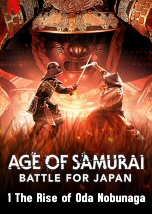
This brilliant docuseries is an exploration of the feudal Japan from 1551 to 1616 , during the final phase of the Sengoku period (The Age of Warring States), when several powerful daimyo (warlords) fought to become absolute ruler. It features reenactments of historical events and commentary by voice-over artist Hiro Kanagawa and outstanding historians. In the first episode, Oda Nobunaga becomes head of the Oda clan upon the death of his father, but this causes problems with family members who compete for control.
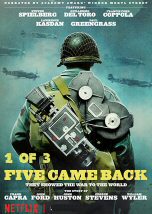
The wartime contributions of five prominent Hollywood film directors during World War II are profiled. The documentary focuses on five directors – John Ford, William Wyler, John Huston, Frank Capra, and George Stevens – whose war-related works are analysed by modern filmmakers, respectively Paul Greengrass, Steven Spielberg, Francis Ford Coppola, Guillermo del Toro, and Lawrence Kasdan. In the first episode, John Ford's The Battle of Midway was approved directly by President Franklin D. Roosevelt while Frank Capra fights to get Why We Fight made.
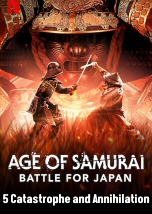
After more than a century of civil war, Toyotomi Hideyoshi has united Japan. His rivals have either sworn their allegiance, or they have been destroyed. Despite this fledgling peace, Hideyoshi now dreams of a bold and outlandish plan to make himself the most powerful man in Asia. He plans to expand his reign to China. Logistical challenges and fierce operation in Korea prove to be costly.














In the first part, Dylan Jones explores how in this decade the world-conquering genres of rap, hip-hop and modern dance music were launched, while guitar-driven indie flourished in a constellation of scenes spread out across the world. And a technological revolution was changing how music was made, filling the charts with a starburst of innovative records. Meanwhile, the launch of MTV turned pop into a visual medium, allowing artists as varied as U2 and Eurythmics to take charge of how they presented themselves. Featuring interviews with Nile Rodgers, Bananarama, Primal Scream's Bobby Gillespie, Mark Ronson, Trevor Horn and Soul II Soul's Jazzie B.