





Last Watched

"Wildlife"  Sort by

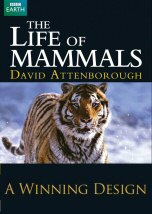
A Winning Design

   2002    Nature
A Winning Design clarifies what makes a mammal different from reptiles and birds. No, it isn't egg-laying: both the platypus and the echidna are egg-laying mammals; it's their ability to adapt. And it's this adaptability that becomes the crux of the remainder of the series. From the tiniest bat to the massive blue whale, all mammals share the ability to nurture their young on milk and regulate their own temperatures.
Series: The Life of Mammals
Nature Weirdest

   2023    Nature
We love nature and all its glorious diversity. Some creatures we admire for their deadly beauty, others because they are cute, but for some it's hard to figure out exactly why we like them so much, perhaps it's a quirk. How do you decide nature's weirdest animal? Is it the sloth that hangs upside down and moves so slowly that moss grows in its fur? Is it a sea pen that sits rooted to the seabed in endless darkness and emitting its own glow? Could it be carnivorous snails that leave the ocean to digest dead creatures on the beach, finches that drink blood, or the tarantula that keeps a frog as it's pet. But with nature's endless variety, which is the weirdest? We can't decide. Can you?

Congo

   2013    Nature
The very heart of Africa is covered in dense tropical rainforest. The animals that live here find the most ingenious ways to carve out their space in a claustrophobic landscape. Danger lurks in every shadow, but some animals thrive here, from honey-stealing chimps to birds with a lineage as old as the dinosaurs, thundering elephants and kick-boxing frogs. Here in the Congo, no matter how tough the competition, you must stand up and fight for yourself and your patch.
Series: Africa with David Attenborough

Savannah

   2013    Nature
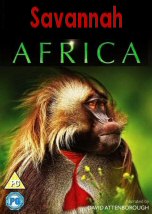
East Africa is a land which is constantly changing. To survive here, creatures must be able to deal with unpredictable twists and turns - wet turning to dry, feast to famine, cold to hot - no matter how hostile it becomes. From dense forests to snow capped peaks, steamy swamps and endless savannah, this unique and varied land is also a haven for life, supporting large animals in numbers found nowhere else on Earth. But away from the familiar, forever-travelling herds, there are a huge cast of other characters - lizards that steal flies from the faces of lions, vast dinosaur-like birds who stalk catfish through huge wetlands, and an eagle who risks everything on the arrival of ten million bats from a far off rainforest.
Series: Africa with David Attenborough

Solving the Secrets

   2012    Nature
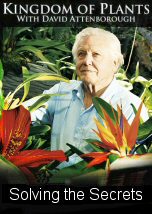
Bladderwort utricularia is a pond-dweller that is among the fastest known, its traps snapping shut in less than a millisecond. As the seasons change, David demonstrates how plants operate on a different time scale to us; how they modify their lives according to the time of year. We discover insects’ hidden links with plants, both as pests and pollinators. UV-sensitive 3D cameras reveal the invisible alter-ego of plants and their flowers’ mesmerizing patterns; a parallel-dimension of strange colours and stunning patterns through which plants communicate with them. With the aid of visual effects, David steps among the swirling vortices of plant scent; communication signals with which plants are inextricably plugged in to the natural world. And using a tuning fork, he demonstrates how plants and insects can even communicate with music. As autumn envelopes the Gardens, fungi reveal themselves not as the enemies of plants but their vital allies. In Kew’s atmospheric Fungarium, David discovers a specimen that has the power of mind control and another that lives underground where it has grown to be so big it can be counted as the largest single organism on the planet. It is 6 times bigger than Kew Gardens itself.
Series: Kingdom of Plants

Flowering

   1995    Nature
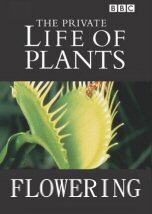
The third episode is devoted to the ways in which plants reproduce. Pollen and a stigma are the two components needed for fertilisation. Most plants carry both these within their flowers and rely on animals to transport the pollen from one to the stigma of another. To do this, they attract their couriers with colour, scent and nectar. It isn't just birds that help pollination: some mammals and reptiles also do so. However, it is mostly insects that are recruited to carry out the task. To ensure that pollen is not wasted by being delivered to the wrong flower, some species of plant have developed exclusive relationships with their visitors, and the gentian and its attendant carpenter bees is one example. Since pollen can be expensive to produce in terms of calories, some plants, such as orchids, ration it by means of pollinia and a strategically placed landing platform. Other orchids offer no reward for pollination, but instead mislead their guests by mimicking their markings and aroma, thus enticing males to 'mate' with them (Pseudocopulation). The most extreme fertilisation method is one of imprisonment, and one plant that uses it is the dead horse arum. It is often found near gull colonies, and mimics the appearance and smell of rotting flesh. Blow-flies are attracted to it, and are forced to stay the night before being allowed to depart in the morning, laden with pollen. Finally, Attenborough introduces the world's largest inflorescence: that of the titan arum.
Series: The Private Life of Plants
Life

Life

2009  Nature
Earthflight

Earthflight

2012  Nature
Prehistoric Planet

Prehistoric Planet

2022  Science
The Sky at Night

The Sky at Night

2023  Science
The Story of Maths

The Story of Maths

2008  Science
Trainwreck

Trainwreck

2025  History
Through the Wormhole

Through the Wormhole

2011  Science
Myths and Heroes

Myths and Heroes

2005  History