




Last Watched

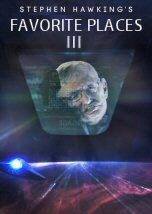
Stephen Hawking Favorite Places III

   2018    Science    HD
Commander Stephen Hawking and his space ship the SS Hawking encounter an alien A.I., then race to the edge of the universe, and plunge into an alternate Earth. It's an epic quest to discover the secret of the universe: The Theory of Everything. RIP. Stephen Hawking.
Series: Stephen Hawking's Favorite Places
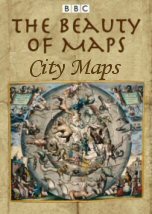

City Maps

   2010    Culture
This is the story of three maps, three 'visions' of London over three centuries. The Morgan Map of 1682 was the first to show the whole of the City of London after the Great Fire of London. In 1746 John Rocque produced at the time the most detailed map ever made of London. Like Morgan's, Rocque's map is all neo-Classical beauty and clinical precision, but the London it represented had become the opposite. In engravings of the time, such as Night, the artist William Hogarth shows a city boiling with vice and corruption. Stephen Walter's contemporary image, The Island, plays with notions of cartographic order and respectability. His extraordinary London map looks at first glance to be just as precise and ordered as his hero Rocque's but, looking closer, it includes 21st century markings such as 'favourite kebab vans' and sites of 'personal heartbreak'.
Series: The Beauty of Maps

The Power Of The Placebo

   2014    Medicine
Placebos come in all shapes and sizes, but they contain no active ingredient. They are the miracle pills that shouldn't really work at all. Now they are being shown to help treat pain, depression and even alleviate some of the symptoms of Parkinson's disease. It seems they're not acting alone. The placebo effect is intertwined with how is did the healthcare. Explores why they work, and how we could all benefit from the hidden power of the placebo.

Beyond Thinking

   2012    Culture
We live our lives pursuing happiness 'out there' as if it is a commodity. We have become slaves to our own desires and craving. Happiness isn't something that can be pursued or purchased like a cheap suit. This is Maya, illusion, the endless play of form. In the Buddhist tradition, Samsara, or the endless cycle of suffering is perpetuated by the craving of pleasure and aversion to pain. Freud referred to this as the "pleasure principle." Everything we do is an attempt to create pleasure, to gain something that we want, or to push away something that is undesirable that we don't want. Even a simple organism like the paramecium does this. It is called response to stimulus. Unlike a paramecium, humans have more choice. We are free to think, and that is the heart of the problem. It is the thinking about what we want that has gotten out of control. The dilemma of modern society is that we seek to understand the world, not in terms of archaic inner consciousness, but by quantifying and qualifying what we perceive to be the external world by using scientific means and thought. Thinking has only led to more thinking and more questions. We seek to know the innermost forces which create the world and guide its course. But we conceive of this essence as outside of ourselves, not as a living thing, intrinsic to our own nature. It was the famous psychiatrist Carl Jung who said, "one who looks outside dreams, one who looks inside awakes." It is not wrong to desire to be awake, to be happy. What is wrong is to look for happiness outside when it can only be found inside.
Series: Inner Worlds Outer Worlds

The Great Salmon Run

   2009    Nature
Every year grizzly bear families in North America depend for their survival on a spectacular natural event: the return of hundreds of millions of salmon from the Pacific Ocean to the mountain streams where they were born. The salmon travel thousands of miles to spawn and then die. The great run not only provides food for bears, but for killer whales, wolves, bald eagles, and even the forest itself. The question is: will the salmon return in time to keep hungry bears alive?
A mother grizzly and her cubs emerge from their den high in snowy Alaskan mountains. Filming from the air the team capture a TV first, following the bears as they negotiate a near vertical slope on their journey to the coast where they await the return of the salmon. Meanwhile, the salmon are making their way to the to river mouths where they must swim upstream and against the current. The programme reveals how they tackle the torrents and leap over waterfalls, a feat equivalent to a human jumping over a house. Dozens of hungry bears eagerly await the salmon that make it up river. In another TV first, underwater cameras record the ingenuity and fancy footwork they use to collect dead salmon from the bottom of deep pools.
Series: Nature Great Events

Is Luck Real

   2014    Science
Do you make your own luck, or does luck make you? Some scientists believe luck is strictly a matter of statistics and probabilities…but others believe unseen forces are at work, and randomness is built into every particle of the universe. We’ll find luck, good and bad, in casinos, basketball courts, genetics labs and the subatomic world. How much does the genetic lottery rule your fate? Are lucky streaks and unfortunate accidents merely our own minds fooling us? It’s a scientific journey that will radically revise your understanding of the laws of nature and the workings of the human brain.
Series: Through the Wormhole Season 5