




Last Watched

The Bomb

   2012    History
The series is a re-examination of some of the under-reported and darkest parts of American modern history using little known documents and newly uncovered archival material, looking beyond official versions of events to the deeper causes and implications and exploring how events from the past still have resonant themes for the present day. This episode addresses the historical backround, consequences and reasons behind the use of atomic bombs against the Japanese in the second world war.
Series: The Untold History of the United States
City Maps

   2010    Culture
This is the story of three maps, three 'visions' of London over three centuries. The Morgan Map of 1682 was the first to show the whole of the City of London after the Great Fire of London. In 1746 John Rocque produced at the time the most detailed map ever made of London. Like Morgan's, Rocque's map is all neo-Classical beauty and clinical precision, but the London it represented had become the opposite. In engravings of the time, such as Night, the artist William Hogarth shows a city boiling with vice and corruption. Stephen Walter's contemporary image, The Island, plays with notions of cartographic order and respectability. His extraordinary London map looks at first glance to be just as precise and ordered as his hero Rocque's but, looking closer, it includes 21st century markings such as 'favourite kebab vans' and sites of 'personal heartbreak'.
Series: The Beauty of Maps

The Internets Own Boy. The Story of Aaron Swartz

   2014    Culture
the rise and fall of a tech industry prodigy. Interviews with his friends and loved ones paint a portrait of Swartz as a martyr of freedom of information and hail his fight for the public's right to access tax-funded academic and scientific research, culminating in a personally devastating two-year Federal lawsuit." An avid researcher who had previously accessed otherwise private databases, Swartz, acting "in the grand tradition of civil disobedience to declare... opposition to this private theft of public culture" used MIT computers to access tax-funded research that would otherwise be held privately by for-profit publishers, an incident many viewers may remember from national headlines just a few year ago. Though neither MIT nor the digital repository Swartz accessed pressed charges, a US Attorney stepped in and filed a 13-count felony charge against Swartz, threatening him with over $1 million in fines and up to 35 years of jail time. Despite the defense of his peers, these events launched Swartz into a two-year long downward spiral of withdrawal and depression. Aaron Swartz's untimely death at the age of 26.

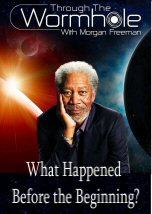
What Happened Before the Beginning

   2011    Science
Every cosmologist and astronomer agrees: our Universe is 13.7 billion years old. Using cutting-edge technology, scientists are now able to take a snapshot of the Universe a mere heartbeat after its birth. Armed with hypersensitive satellites, astronomers look back in time to the very moment of creation, when all the matter in the Universe exploded into existence. It is here that we uncover an unsolved mystery as old as time itself -- if the Universe was born, where did it come from? Meet the leading scientists who have now discovered what they believe to be the origin of our Universe, and a window into the time before time.
Series: Through the Wormhole

The Power Of The Placebo

   2014    Medicine
Placebos come in all shapes and sizes, but they contain no active ingredient. They are the miracle pills that shouldn't really work at all. Now they are being shown to help treat pain, depression and even alleviate some of the symptoms of Parkinson's disease. It seems they're not acting alone. The placebo effect is intertwined with how is did the healthcare. Explores why they work, and how we could all benefit from the hidden power of the placebo.

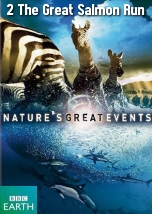
The Great Salmon Run

   2009    Nature
Every year grizzly bear families in North America depend for their survival on a spectacular natural event: the return of hundreds of millions of salmon from the Pacific Ocean to the mountain streams where they were born. The salmon travel thousands of miles to spawn and then die. The great run not only provides food for bears, but for killer whales, wolves, bald eagles, and even the forest itself. The question is: will the salmon return in time to keep hungry bears alive?
A mother grizzly and her cubs emerge from their den high in snowy Alaskan mountains. Filming from the air the team capture a TV first, following the bears as they negotiate a near vertical slope on their journey to the coast where they await the return of the salmon. Meanwhile, the salmon are making their way to the to river mouths where they must swim upstream and against the current. The programme reveals how they tackle the torrents and leap over waterfalls, a feat equivalent to a human jumping over a house. Dozens of hungry bears eagerly await the salmon that make it up river. In another TV first, underwater cameras record the ingenuity and fancy footwork they use to collect dead salmon from the bottom of deep pools.
Series: Nature Great Events