The film unlocks the secrets to an innovative concept called circularity, an economic system based on the idea that nothing should go to waste. It's a deceptively simple idea that is at the heart of nature and the natural world, but very few of us actually live this way. And yet, it has the potential to save our planet's resources and save us from the ravages of future climate change. The film tells the story of four visionaries from around the world, whose thinking shapes and informs the concept of circularity: 102-year-old inventor Dr. James Lovelock, biomimicry biologist Janine Benyus, engineer and designer Arthur Huang, and financier John Fullerton. The extraordinary experiences of these very different people changed the way they think about humanity's future. Through the deeply personal transformation of each visionary profiled, the film explores concrete solutions individuals and communities are using to move toward a more circular society, rethinking everything from our food, our cities, our financial system, even our fashion industry.
As man moves to colonize the cosmos, the realities of sexual relationships and reproduction need to be addressed. Probe the physiological, psychological and cultural challenges of sex in space.
During the Cold War, American and Soviet scientists embarked on a perilous race to create the most powerful bomb in human history. This gripping documentary unveils how both nations pushed the boundaries of science and morality, culminating in the Soviet Union’s creation of the “Tsar Bomba”—the largest and most devastating weapon ever detonated, with a blast over 3,000 times more powerful than Hiroshima. Through unexpected twists, miscalculations, and high-stakes experiments, The World’s Biggest Bomb delves into the untold stories of ambition, fear, and rivalry that shaped a critical moment in history. Witness the harrowing journey of the scientists who risked everything to harness destruction on an unimaginable scale, forever altering the course of humanity.
For generations, Monopoly has been America's favorite board game, a love letter to unbridled capitalism and — for better or worse — the impulses that make our free-market society tick. But behind the myth of the game's creation is an untold tale of theft, obsession and corporate double-dealing. Contrary to the folksy legend spread by Parker Brothers, Monopoly's secret history is a surprising saga that features a radical feminist, a community of Quakers in Atlantic City, America's greatest game company, and an unemployed Depression-era engineer. And the real story behind the creation of the game might never have come to light if it weren't for the determination of an economics professor and impassioned anti-monopolist.
Two and a half thousand years ago, the Greek philosopher Socrates worried that the wide use of writing would have a negative impact on people's minds. He said that writing would create forgetfulness, because people will not use their memories. They would trust the external written characters and not remember themselves. In a world with an ever-growing tech industry, Michael Stevens tries to find out what effect technology has on our brains. He finds Technology isn't just changing our lives, it's changing our brains. In his experiments he tests what just 10 days of gaming does to things like our spatial memory.
The digital era gives rise to unprecedented opportunity to exploit, and be exploited. Troves of child pornography are available at the click of a mouse. Who are these children - and who profits from their abuse? While facilitating the darker side of our impulses, technology is also being touted as a cure to rehabilitate predators. In this episode meet the children who are forced to perform sex acts on camera; people who use the same technology to protect kids and nab the perpetrators; plus, a pedophile who reveals the roots of his addiction.




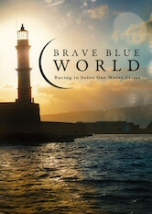









The film tells the story of four visionaries from around the world, whose thinking shapes and informs the concept of circularity: 102-year-old inventor Dr. James Lovelock, biomimicry biologist Janine Benyus, engineer and designer Arthur Huang, and financier John Fullerton. The extraordinary experiences of these very different people changed the way they think about humanity's future.
Through the deeply personal transformation of each visionary profiled, the film explores concrete solutions individuals and communities are using to move toward a more circular society, rethinking everything from our food, our cities, our financial system, even our fashion industry.