The publication of Salman Rushdie's novel The Satanic Verses in 1988 sparked a culture war in Britain between those in the Muslim community, who considered the book blasphemous and called for the book to be banned, and those defending it as an expression of freedom of speech. Protests, which began in the north of England, soon spread across the UK and to the rest of the Islamic world, culminating in February 1989 with Iran's Ayatollah Khomeini issuing a fatwa - a death sentence on the writer. Now, 30 years on, broadcaster and journalist Mobeen Azhar embarks on a journey, starting in his native Yorkshire where the protest first began, to examine the lasting effect the book has had on the Muslim community and how the events of 1989 continue to have an impact today.
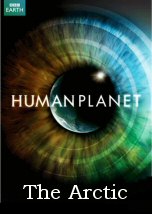
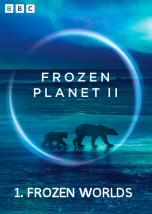
The Arctic is the harshest environment on Earth: little food grows, it's dark for months on end, and temperatures stay well below freezing for much of the year. Yet four million people manage to survive here. Human Planet tells remarkable stories of extraordinary people who make their homes in nature's deep freeze. In springtime, Amos and Karl-Frederik set out across the sea ice with their dogs to catch a real-life sea monster: a Greenland shark! Inuit mussel-gatherers venture underneath the sea ice at low tide for a perilous race against time as they gather their food. And the children of Churchill, Manitoba, set out on the most dangerous trick or treating Halloween in the world: they risk coming face-to-face with deadly polar bears on the streets of their town. Who'll get the tastiest snack?
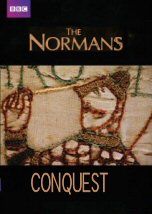
Professor Robert Bartlett explores the impact of the Norman conquest of Britain and Ireland. Bartlett shows how William the Conqueror imposed a new aristocracy, savagely cut down opposition and built scores of castles and cathedrals to intimidate and control. He also commissioned the Domesday Book, the greatest national survey of England that had ever been attempted. England adapted to its new masters and both the language and culture were transformed as the Normans and the English intermarried. Bartlett shows how the political and cultural landscape of Scotland, Wales and Ireland were also forged by the Normans and argues that the Normans created the blueprint for colonialism in the modern world.
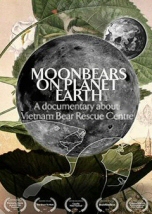
The documentary shows the daily activities performed by the local and international staff who lives and works inside the Bear Rescue Center situated in Tam Dao National park, Northern Vietnam. Interviews, original and archive footage are edited to explain life, tasks and achievements of this NGO managed by Animals Asia. In this natural sanctuary, moon bears and sun bears are rescued, treated, kept safe and nursed: they are now free from the suffering caused by the cruel tortures of bile farming and extraction process. Since thousands of years bear bile products are in use in traditional oriental medicine and even nowadays it generates around two billions dollars of illegal business. Animals Asia staff is not only assuring better living and relief for rescued bears but promotes educational awareness about the bile farming issues, employees and generates fare trades for a relevant number of people of this rural area of Vietnam.
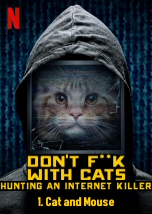
This series is about an attention-seeking criminal who ticked off the wrong people. His gruesome videos on internet drive a group of amateur online sleuths to launch a risky manhunt using internet tools that are available to everyone. This root out brings them into a dark underworld. In the first episode, a shocking online video of a man killing two kittens brings together a widespread internet group of animal lovers out for justice. Their target, meanwhile, has worse horrors planned.
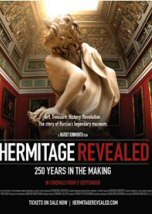
The State Hermitage Museum in St Petersburg is one of the largest and most visited museums in the world. Margy Kinmonth's film tells the story of its journey from imperial palace to state museum, investigating remarkable tales of dedication, devotion, ownership and ultimate sacrifice, showing how the collection came about, how it survived tumultuous revolutionary times and what makes the Hermitage unique today. Holding over three million objects and boasting more curators than any other museum, the Hermitage's story is Russia's history in microcosm and its art has lived to tell the tale



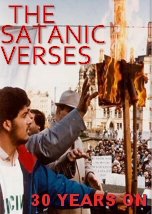



Now, 30 years on, broadcaster and journalist Mobeen Azhar embarks on a journey, starting in his native Yorkshire where the protest first began, to examine the lasting effect the book has had on the Muslim community and how the events of 1989 continue to have an impact today.