Join us on a journey into the mysterious depths of the human psyche as we investigate the strange and surprising terrain of the Mind Field. Chimps and Humans can be traced biologically back to a common ancestor. The Cognitive Tradeoff Hypothesis theorizes about the two different paths of development - particularly cognitive development - that occurred in these two species after the split. Chimps stayed in the trees and developed some extraordinary cognitive capabilities which are shown by the research work of Japanese scientists, while humans came down into the savanna and developed social capabilities and language. The hypothesis is that humans 'traded' some aspects of cognitive capabilities by re-purposing areas of the brain that had evolved in the context of other uses. Those capabilities are kept in chimps and are far surpassing that of normal humans. This is shown by the research work of scientists at the Primate Research Center connected with Kyoto University.
In the fourth episode of the series, eyewitnesses recall how those in power at Auschwitz lined their pockets with wealth stolen from Jewish inmates while also engaging in illicit affairs.
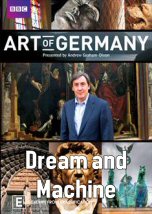
Andrew Graham-Dixon continues his exploration of German art by looking at the tumultuous 19th and early 20th centuries, and how artists were at the forefront of Germany's drive to become a single nation. Andrew travels to the north and the coastal town of Griefswald, the birthplace of Caspar David Friedrich, the most influential of the German Romantics, to discover how the Baltic coast impacted his mysterious paintings of the German landscape. He also visits Berlin and explores the art of the powerful Prussian state, which would spearhead the unification of Germany in 1871. The episode ends with the outbreak of World War I and the attempts of the artists Franz Marc and Otto Dix to rationalise the catastrophic experiences of the world's first technological war, a war driven by the Prussian innovations.
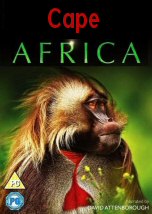
Southern Africa is a riot of life and colour because of two great ocean currents that sweep around the continent's Cape. To the east, the warm Agulhas current generates clouds that roll inland to the wettest place in southern Africa. To the west is the cold Benguela current, home to more great white sharks than anywhere else. Moisture laden fog rolls inland, supporting an incredible desert garden. Where the two currents meet, the clash of warm and cold water creates one of the world's most fabulous natural spectacles - South Africa's sardine run. This is the greatest gathering of predators on the planet, including Africa's largest, the Bryde's whale.
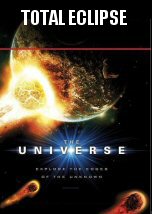
Once they were dreaded and thought to be dragons eating the sun--but modern science has dispelled mythology and we now look forward to total Solar Eclipses as one of the most spectacular phenomena in the heavens. Explore the complex movements of Earth, Moon and Sun that produce these unusual events and hear details why we may be the only intelligent beings in the known Universe to witness eclipses like we see on Earth. Man-made eclipses also figure into the science in the form of instruments called "coronagraphs." They blot out the sun and reveal its corona, uncovering secrets which, while enlightening, also warn of a disaster that could make our advanced technology crash and burn. Finally, travel into deep space, where the tiny eclipses caused by planets circling distant stars is now beginning to reveal hundreds more stars where "exoplanets" exist... perhaps even those in habitable zones like the Earth.
This award-winning series, Private Life of a Masterpiece, reveals the full and fascinating stories behind famous works of art, not just how they came to be created, but also how they influenced others and came to have a life of their own in the modern world. The works of art featured here are both instantly familiar and profoundly mysterious. Revolutionary in their conception, and iconic years after their execution, they each have their own compelling stories. For behind the beautiful canvases and sculptures are tales of political revolution, wartime escapes, massive ego clashes, social scandal, financial wrangling and shocking violence. In this fascinating series key works of art are investigated and the intricate details of their lives revealed - the history, contemporary reactions, and legacies of each are illustrated. A Sunday Afternoon on the Island of La Grande Jatte is a popular masterpiece and yet an enduring enigma. It seems to show a quiet scene in a Paris park but there are hints at the demi-monde, if you know where to look. The most remarkable aspect of this vast canvas however remains Seurat's technique his revolutionary pointillism.








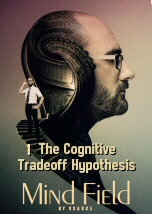



Chimps and Humans can be traced biologically back to a common ancestor. The Cognitive Tradeoff Hypothesis theorizes about the two different paths of development - particularly cognitive development - that occurred in these two species after the split. Chimps stayed in the trees and developed some extraordinary cognitive capabilities which are shown by the research work of Japanese scientists, while humans came down into the savanna and developed social capabilities and language.
The hypothesis is that humans 'traded' some aspects of cognitive capabilities by re-purposing areas of the brain that had evolved in the context of other uses. Those capabilities are kept in chimps and are far surpassing that of normal humans. This is shown by the research work of scientists at the Primate Research Center connected with Kyoto University.