Last Watched

"Ape"  Sort by

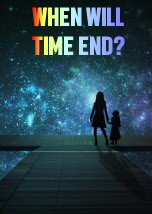
When Will Time End

   2012    Science
Discover the Eras of the Universe and the answer to this big question: When Will Time End? Once the notion that the universe started with a rapid inflation nicknamed the Big Bang became accepted by the majority of scientists, many possible fates are predicted by rival scientific hypotheses, including futures of both finite and infinite duration. The ultimate fate of the universe is dependent on the shape of the universe and what role Dark energy will play as the universe ages.
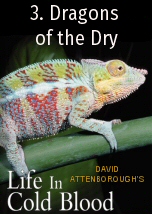
Dragons of the Dry

   2008    Nature
About 340 million years ago a brand new family of animals was evolving in the primeval swamps. They were to go one step further than the amphibians who had emerged onto dry and before them. For they would eventually completely cut their ties with water. They were the ancestors of todays lizards. They evolved scaly impermeable skins and moved up into the forests. They diversified into a multitude of different shapes and sizes. They developed signalling systems to communicate with one another. And they squabbled as animals do. For food they hunted insects that were already well established on the land in great numbers. And here without returning to water they produced their families. They powered their bodies not only with food but with the heat that they drew directly from the sun.
As they diversified so they spread into the harshest of the lands habitats. The baking waterless deserts which eventually they would come to dominate. Discover jacky lizards that wave, wrestling beaded lizards and the the world's smallest chameleon, which is no bigger than his thumbnail, and the biggest lizard in Australia.
Series: Life In Cold Blood

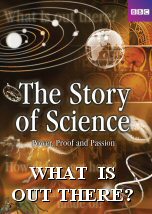
What Is Out There

   2010    History
An informative and ambitious journey exploring how the evolution of scientific understanding is intimately interwoven with society's historical path. The Story Of Science tells the forces that came together to create scientific knowledge; the practical business of making instruments and machines; the great forces of history – revolutions, voyages of discovery and artistic movements – and the dogged determination of scientists and experimenters. This is the story of how scientific ideas shaped the modern world and how science made history. Michael Mosley begins the first episode with the story of one of the great upheavals in human history - how we came to understand that our planet was not at the centre of everything in the cosmos, but just one of billions of bodies in a vast and expanding universe. He reveals the critical role of medieval astrologers in changing our view of the heavens, and the surprising connections to the upheavals of the Renaissance, the growth of coffee shops and Californian oil and railway barons. Michael shows how important the practical skills of craftsmen have been to this story and finds out how Galileo made his telescope to peer at the heavens and by doing so helped change our view of the universe forever.
Series: The Story of Science

Hidden Spain

   2020    Nature
Spain is found at the crossroads between the Mediterranean and the Atlantic, between Europe and Africa, resulting in diverse landscapes, ancient cultures and magnificent wildlife. It's a hidden Spain missed by many tourists who fail to venture outside the resorts. Worlds within worlds, the medieval towns, to farming communities, desert, mountains and forests with some of the most dramatic and diverse wildlife of the continent.

Wind

   2010    Science
Iain sets sail on one of the fastest racing boats ever built to explore the story of our turbulent relationship with the wind. Travelling to iconic locations including the Sahara desert, the coast of West Africa and the South Pacific, Iain discovers how people have exploited the power of the wind for thousands of years. The wind is a force which at first sight appears chaotic. But the patterns that lie within the atmosphere have shaped the destiny of continents, and lie at the heart of some of the greatest turning points in human history.
Series: How Earth Made Us

Words on a Page

   2020    History
Writing itself is 5,000 years old, and for most of that time words were written by hand using a variety of tools. The Romans were able to run an empire thanks to documents written on papyrus. Scroll books could be made quite cheaply and, as a result, ancient Rome had a thriving written culture. With the fall of the Roman Empire, papyrus became more difficult to obtain. Europeans were forced to turn to a much more expensive surface on which to write: Parchment. Medieval handwritten books could cost as much as a house, they also represent a limitation on literacy and scholarship.
No such limitations were felt in China, where paper had been invented in the second century. Paper was the foundation of Chinese culture and power, and for centuries how to make it was kept secret. When the secret was out, paper mills soon sprang up across central Asia. The result was an intellectual flourishing known as the Islamic Golden Age. Muslim scholars made discoveries in biology, geology, astronomy and mathematics. By contrast, Europe was an intellectual backwater.
That changed with Gutenberg’s development of movable type printing. The letters of the Latin alphabet have very simple block-like shapes, which made it relatively simple to turn them into type pieces. When printers tried to use movable type to print Arabic texts, they found themselves hampered by the cursive nature of Arabic writing. The success of movable type printing in Europe led to a thousand-fold increase in the availability of information, which produced an explosion of ideas that led directly to the European Scientific Revolution and the Industrial Revolution that followed.
Series: The Secret History of Writing
Clash of the Gods

Clash of the Gods

2009  History
Life on Our Planet

Life on Our Planet

2023  Science
The Universe

The Universe

2007  Science
Frozen Planet

Frozen Planet

2011  Nature
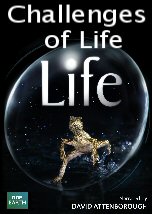
Life

Life

2009  Nature
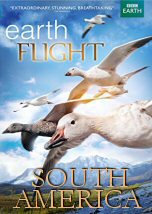
Earthflight

Earthflight

2012  Nature