





Last Watched

"Bee"  Sort by

In the Shadow of Hitler

   2010    Art
There is a tendency to deny German culture the equal reverence of Italy or Spain, and this enlightening new series provides a wonderful opportunity to explore a great, yet often neglected, artistic tradition whose influence has been just as profound. Andrew Graham-Dixon concludes his exploration of German art by investigating the dark and difficult times of the 20th century. Dominating the landscape is the figure of Adolf Hitler, failed artist, would-be architect and obsessed with the aesthetics of his 1,000-year Reich". In a series of extraordinary building projects and exhibitions, Hitler waged a propaganda war against every form of modern art as a prelude to unleashing total war on the whole of Europe. After the war the shadow of the Third Reich persisted, Germany remained divided and traumatised. How would artists deal with a past that everybody wanted to forget? Journeying through the work of Otto Dix and George Grosz and the age of the Bauhaus to the post-war painters Georg Baselitz, Hilla Becher and the conceptual artist Joseph Beuys is a long and strange journey, but the signs that art has a place at the heart of the new reunited Germany are clearly visible.
Series: The Art of Germany
How to Build a Time Machine

   2018    Science
Time travel is not forbidden by the laws of nature, but to build a time machine, we would need to understand more about those laws and how to subvert them than we do now. And every day, science does learn more. In this film Horizon meets the scientists working on the cutting edge of discovery - men and women who may discover how to build wormholes, manipulate entangled photons or build fully functioning time crystals. In short, these scientists may enable an engineer of the future to do what we have so far been only able to imagine - to build a machine that allows us travel back and forward in time at the touch of a button. It could be you! Science fiction? Watch this film.

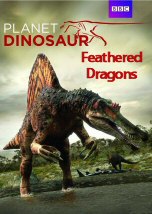
Feathered Dragons

   2011    Culture
In a late Jurassic forest in what is now China, an Epidexipteryx escapes from a juvenile Sinraptor by climbing a tree. It finds a beetle grub in the tree bark, being shown to use its elongated fingers in a similar way to a modern day aye-aye. However, its prey is stolen by another, larger Epidexipteryx, and after a brief bout of posturing, the smaller individual goes to find more food. It drops a second grub to the forest floor, where the other Epidexipteryx retrieves it, only to be killed by the juvenile Sinraptor. The episode then cuts to a desert in late Cretaceous Mongolia, where a Saurornithoides is shown brooding a nest of eggs. When it leaves the nest, an Oviraptor raids it, fleeing when the troodontid returns. The Saurornithoides is suddenly attacked and eaten by a Gigantoraptor, which then heads to compete in a breeding ritual for mates. The males use their feathers for display, a brief fight between two erupting at one point, allowing the females to choose the best suitor. The episode finally cuts to an early Cretaceous forest in China, where a Xianglong is being hunted by a Microraptor, which uses its feathers to pursue the gliding lizard in the air. A Sinornithosaurus attacks it, and after a brief chase the Microraptor manages a lucky escape. The Sinornithosaurus, alongside two other members of its species is then shown hunting a Jeholosaurus and its three young. The group brings down the parent, the narrator explaining that their possibly venomous bite allowed them to tackle animals much larger than themselves. A montage is then shown of the feathered dinosaurs featured in the programme, with the narrator saying that Microraptor not only hints at how flight might have developed, but also that dinosaurs still live amongst us today, as birds.
Series: Planet Dinosaur

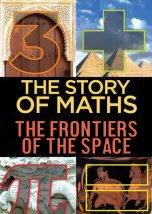
The Story of Maths The Frontiers of Space

   2008    Science
In the third episode we will see Europe by the 17th century taking over from the Middle East as the powerhouse of mathematical ideas. Great strides had been made in understanding the geometry of objects fixed in time and space. The race was on to discover the mathematics to describe objects in motion. This programme explores the work of Rene Descartes, Pierre Fermat, Isaac Newton, Leonard Euler and Carl Friedrich Gauss. Du Sautoy proceeds to describes René Descartes realisation that it was possible to describe curved lines as equations and thus link algebra and geometry. He talks with Henk J. M. Bos about Descartes. He shows how one of Pierre de Fermat’s theorems is now the basis for the codes that protect credit card transactions on the internet. He describes Isaac Newton’s development of math and physics crucial to understanding the behaviour of moving objects in engineering. He covers the Leibniz and Newton calculus controversy and the Bernoulli family. He further covers Leonhard Euler, the father of topology, and Gauss' invention of a new way of handling equations, modular arithmetic. The further contribution of Gauss to our understanding of how prime numbers are distributed is covered thus providing the platform for Bernhard Riemann's theories on prime numbers. In addition Riemann worked on the properties of objects, which he saw as manifolds that could exist in multi-dimensional space.
Series: The Story of Maths

Maracana

   2014    Culture
It tells the story of FIFA World Cup of 1950, highlighting (but also showing other nations) the path of the two teams who played the final match: Uruguay and Brazil. The high quality of the footage is amazing, the text is smart and humorous, the music has been very well chosen in order to represent both the emotions involved in each moment and the contrast between the calmness of Uruguayan preparation and the crowded days of Brazilian team." The whole story shows not only one side. While Uruguayan team acquired confidence after an initial mistrust, Brazil was by far the best team in the competition but was heavily influenced by the environment in Brazilian society, the influence of politics and the pressure of the fans. While Uruguay overcame heroically all the constraints and, led by Obdulio Varela, won a title that few people believed, Brazilians got shocked because they considered themselves champions even before the final match, and their players became stigmatized until nowadays, not being celebrated as the fantastic team they were.

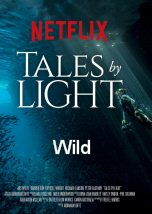
Tales by Light Wild

   2015    Art
In the fourth episode of the series, legendary nature and cultural photographer Art Wolfe captures the great brown bear with the stunning backdrop of Alaska’s mountains and glaciers, immigrating wildebeests in the plains East Africa, and the hard-to-find gorillas of Uganda.
Series: Tales by Light
Engineering the Future

Engineering the Future

2022  Technology
Prehistoric Planet

Prehistoric Planet

2022  Science
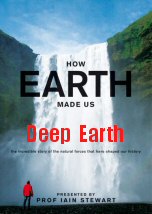
How Earth Made Us

How Earth Made Us

2010  Science
The Great Acceleration

The Great Acceleration

2020  Technology
The Last Dance

The Last Dance

2020  Culture
Bible's Buried Secrets

Bible's Buried Secrets

2011  Culture
Pets: Wild at Heart

Pets: Wild at Heart

2015  Nature