





Last Watched

"ET"  Sort by

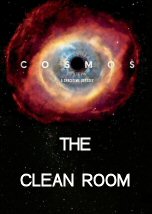
The Clean Room

   2014    Science
This episode is centered around how science, in particular the work of Clair Patterson (voiced in animated sequences by Richard Gere[33]) in the middle of the 20th century, has been able to determine the age of the Earth. Tyson first describes how the Earth was formed from the coalescence of matter some millions of years after the formation of the Sun, and while scientists can examine the formations in rock stratum to date some geological events, these can only trace back millions of years. Instead, scientists have used the debris from meteor impacts, such as the Meteor Crater in Arizona, knowing that the material from such meteors coming from the asteroid belt would have been made at the same time as the Earth. Patterson also examined the levels of lead in the common environment and in deeper parts of the oceans and Antarctic ice, showing that lead had only been brought to the surface in recent times. He would discover that the higher levels of lead were from the use of tetraethyllead in leaded gasoline resulting in government-mandated restrictions on the use of lead.
Series: Cosmos: A Spacetime Odyssey
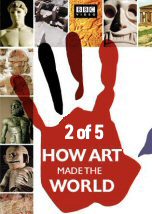
The Day Pictures Were Born

   2006    Art
Dr Nigel Spivey explores how art influences life by tracing the development of the image from cave paintings to our modern obsession with images. Dr. Spivey begins his investigation by travelling to the Cave of Altamira near the town of Santillana del Mar in Cantabria, Spain, where in 1879 a young girls exclamation of 'Papa, look, oxen!' to her father, local amateur archaeologist Marcelino Sanz de Sautuola, is explained to have meant that Maria had just become the first modern human to set eyes on the first gallery of prehistoric paintings ever to be discovered.
Series: How Art Made the World

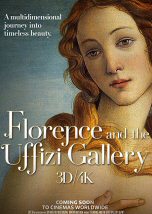
Florence and the Uffizi Gallery

       Art    3D    HD
This film is a multi-dimensional journey through the city that was once the cradle of the Italian Renaissance. Get an exclusive tour through the most beautiful and representative works of art of the period from Michelangelo and Brunelleschi, to Leonardo and Botticelli, with a detailed central chapter dedicated to the very treasure house containing their masterpieces: the Uffizi Gallery. This also includes the breathtaking 'Adoration of the Mag' by Leonardo Da Vinci, which, after several years of restoration, will be brought back to life and unveiled in this worldwide exclusive premiere on the big screen.

Life: Creatures of the Deep

   2009    Nature
Marine invertebrates are some of the most bizarre and beautiful animals on the planet, and thrive in the toughest parts of the oceans. Divers swim into a shoal of predatory Humboldt squid as they emerge from the ocean depths to hunt in packs. When cuttlefish gather to mate, their bodies flash in stroboscopic colours. Time-lapse photography reveals thousands of starfish gathering under the Arctic ice to devour a seal carcass. A giant octopus commits suicide for her young. A camera follows her into a cave which she walls up, then she protects her eggs until she starves. The greatest living structures on earth, coral reefs, are created by tiny animals in some of the world's most inhospitable waters.
Series: Life

History of the Eagles 2

   2013    History
Discover the story behind the scenes of the band's fifth studio album Hotel California, one of the best-selling albums of all time. Henley said about this work: 'They are the same themes that run through all of our work: loss of innocence, the cost of naiveté, the perils of fame, of excess; exploration of the dark underbelly of the American dream, idealism realized and idealism thwarted, illusion versus reality, the difficulties of balancing loving relationships and work, trying to square the conflicting relationship between business and art; the corruption in politics, the fading away of the Sixties dream of peace, love and understanding.
Series: History of the Eagles

Life: Mammals

   2009    Nature
Mammals dominate the planet. They do it through having warm blood and by the care they lavish on their young. Weeks of filming in the bitter Antarctic winter reveal how a mother Weddell seal wears her teeth down keeping open a hole in the ice so she can catch fish for her pup. A powered hot air balloon produces stunning images of millions of migrating bats as they converge on fruiting trees in Zambia, and slow-motion cameras reveal how a mother rufous sengi exhausts a chasing lizard. A gyroscopically stabilised camera moves alongside migrating caribou, and a diving team swim among the planet's biggest fight as male humpback whales battle for a female.
Series: Life