Will explore the strategy, deception and feats of engineering plants use to thrive in the changing weather of different seasons. In the face of conditions ranging from ice and snow to raging fires, survival is often a question of perfect timing - particularly when contending with intense competition and surprising predators. In this episode, David Attenborough travels to Finland to show one of the most extreme examples of seasonal plant life in the Arctic Circle. He also travels to California to see how climate change is affecting giant sequoias. These ancient trees like all other seasonal plants depend on the predictability of the seasons and our current changing climate threatens their survival.
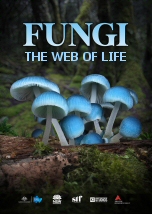
Acclaimed biologist Dr. Merlin Sheldrake seeks a rare blue mushroom in Tasmania's ancient Tarkine rainforest, revealing fungi's extraordinary abilities. Fungi may provide solutions to humanity's problems, with millions more species yet to be discovered. All life on Earth is connected by a great mystery we are only just beginning to unravel. Hidden between the world of plants and animals, another world exists… Fungi’s web of life. We’ll begin in the mysterious world of the forest floor, where fungi are the central players in nature’s story of birth, death, and rebirth to discover that life as we know it simply would not exist without them. Dr. Sheldrake will show us some the grandest and strangest organisms ever discovered, showcased through jaw-dropping time-lapse cinematography, in a landscape largely unchanged from the time of the dinosaurs. Fungi have important lessons to teach humanity about survival through cooperation. Indeed, these incredible lifeforms may hold the key to solving some of humanity’s most urgent problems. With millions more species to discover, our journey into the secret world of fungi has only just begun.
More than a film, it was conceived as a gift to the public and has been a major event all over the globe. Since World Environment Day, June 5, 2009, when it was released worldwide across all media platforms more than 400 million people have watched the film. Home is truly an astounding cinematic experience - a soulful voyage, a feast for the eyes, a thought-provoking and unforgettable journey. Directed by Yann Arthus-Bertrand
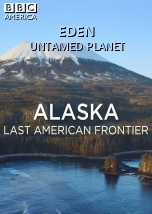
In Southeast Alaska, there's an ice-bound Eden that harbors possibly the richest temperate rainforests of all. Where the coastal mountains meet the Pacific, lays the Alexander Archipelago, a remote island chain running for almost 300 miles along the Alaskan Panhandle. This frozen frontier is one of the last great wildernesses of North America. And a stronghold for the country's highest diversity of megafauna, feasting on the abundance of fleeting summers to make it through relentless winters.
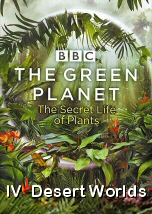
Plants that have developed to thrive in the desert, including cacti that grow in the shade of other trees and collect water in pleated trunks that expand and contract - but can also find themselves a host to other plants, like desert mistletoe. This programme also reveals how tobacco plants being eaten by caterpillars are able to summon the creatures' natural predators, and how tumbleweeds roll across the landscape, only unfurling and growing when they encounter rain.
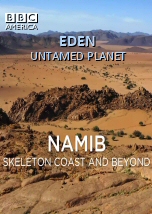
The Namib Desert is one of the oldest deserts and also one of the most diverse. With 50ºC (120ºF) temperatures and half a millimetre of rainfall annually, we see how this is possible. Half the size of Oklahoma, from its Skeleton Coast through the sea of sand to the haze of distant mountains this apparently forbidding desert hides secret water sources.



















In this episode, David Attenborough travels to Finland to show one of the most extreme examples of seasonal plant life in the Arctic Circle. He also travels to California to see how climate change is affecting giant sequoias. These ancient trees like all other seasonal plants depend on the predictability of the seasons and our current changing climate threatens their survival.