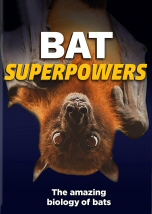
Could the source of the world’s deadliest viruses hold the secret to a healthier and longer life? Bats have a sinister reputation as potential sources for some of the deadliest disease outbreaks: Ebola, MERS, SARS, and most recently, the virus behind the COVID-19 global pandemic. Yet scientists are discovering new evidence that bats are biological marvels and may hold a key to longevity. They’re resistant to the diseases they carry and have freakishly long lifespans for their tiny size. So, what’s their secret? And what else can we learn from their peculiar biology? From caves in Thailand and Texas to labs around the globe, the films meets the scientists who are decoding the superpowers of the bat.
We inhabit a cosmos of undiscovered dimensions and paradoxical realities. We live on one level of perception, but there are others. Every once in a while, a searcher happens upon the doorway to one of these other levels. One of them discovered a paradox about reality that proved to be so profound, we have yet to understand how it could be possible. The universe, or perhaps we should say, universes have never been the same. In the counterintuitive realm of quantum mechanics, light can be two contradictory things, and somehow - no one knows how - an unseen observer can alter the nature of reality. The man who stumbled on this hole in reality and the still- unfolding technological revolution that it made possible.
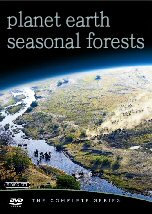
The Taiga forest, on the edge of the Arctic, is a silent world of stunted conifers. The trees may be small but filming from the air reveals its true scale. A third of all trees on Earth grow here and during the short summer they produce enough oxygen to change the atmosphere. In California General Sherman, a giant sequoia, is the largest living thing on the planet, ten times the size of a blue whale. The oldest organisms alive are bristlecone pines. At more than 4,000 years old they pre-date the pyramids. But the baobab forests of Madagascar are perhaps the strangest of all.
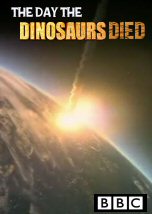
Experts suspect that the dinosaurs were wiped out after a city-sized asteroid smashed into the Gulf of Mexico causing a huge crater. But until now, they haven't had any proof. In a world first, evolutionary biologist Ben Garrod joins a multi-million pound drilling expedition into the exact spot the asteroid hit to get hard evidence of the link. The team overcomes huge obstacles as it attempts to drill 1,500 metres beneath sea level to pull up rock from the Chicxulub crater. Meanwhile, paleopathologist Professor Alice Roberts travels the globe meeting top scientists and gaining exclusive access to a mass fossil graveyard in New Jersey - believed to date from the same time the asteroid hit. Alice also treks by horseback across the remote plains of Patagonia, to see if the effects of the asteroid impact could have wiped out dinosaurs across the world - almost immediately.
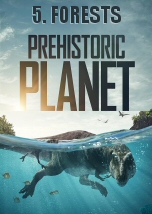
In the last episode, Austroposeidon level trees in search of fresh foliage. A herd of Triceratops journey through a cave to find an underground clay lick. A male Carnotaurus sets the stage for an extravagant display. A female Qianzhousaurus uses an autumn storm to her advantage while hunting Corythoraptor. A family of Edmontosaurus evade a forest fire, while an Atrociraptor and Ankylosaur reap its rewards. Juvenile Therizinosaurus attempt to climb up to a bee nest. Hatzegopteryx hunts Zalmoxes, and patrols the dense undergrowth and seaspray-battered coastline.
Montezuma Dan Snow journeys to the ancient heart of Mexico in search of the lost civilisation of the Aztecs and their last and greatest ruler, Montezuma II (1502-1520). Montezuma inherited an empire of five million people, stretching from present-day Mexico to Nicaragua, from his uncle. His rule was marked by incessant warfare. Enemy states were growing more powerful and conquered tribes were becoming more rebellious. Within months of taking the throne in 1502, he went changed a man of good reason into a pitiless autocrat who declared himself a god, believing that fear and ruthlessness were the only ways to stop the empire falling apart. Yet it was at the hands of Cortes and the Spanish conquistadors that Montezuma met his downfall. But what was his relationship with Cortes, and why did such a ruthless leader submit to his captors with such relative ease? As Dan Snow visits the ruins and picks through current excavations, he pieces together the evidence of a gripping story: a divine tragedy of errors, the clash of civilisations, the end of a world - and a very human God.








.jpg "Montezuma")





So, what’s their secret? And what else can we learn from their peculiar biology? From caves in Thailand and Texas to labs around the globe, the films meets the scientists who are decoding the superpowers of the bat.