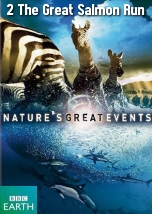
Every year grizzly bear families in North America depend for their survival on a spectacular natural event: the return of hundreds of millions of salmon from the Pacific Ocean to the mountain streams where they were born. The salmon travel thousands of miles to spawn and then die. The great run not only provides food for bears, but for killer whales, wolves, bald eagles, and even the forest itself. The question is: will the salmon return in time to keep hungry bears alive? A mother grizzly and her cubs emerge from their den high in snowy Alaskan mountains. Filming from the air the team capture a TV first, following the bears as they negotiate a near vertical slope on their journey to the coast where they await the return of the salmon. Meanwhile, the salmon are making their way to the to river mouths where they must swim upstream and against the current. The programme reveals how they tackle the torrents and leap over waterfalls, a feat equivalent to a human jumping over a house. Dozens of hungry bears eagerly await the salmon that make it up river. In another TV first, underwater cameras record the ingenuity and fancy footwork they use to collect dead salmon from the bottom of deep pools.
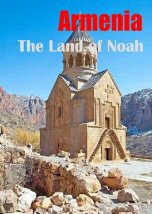
A travel across Armenia, one of the most fascinating places in Europe.
The marvelous adaptation of the Armenian people, their exemplary spiritual strength and the establishment of enduring culture have made possible the consolidation of a lineage that for millennia, has kept alive the legacy of one of the world's oldest civilizations.
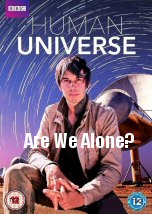
Is mankind alone, or are there aliens out there, either waiting to be discovered, or on their way to find Earth? Professor Brian Cox spends this episode asking such questions, and what he discovers may raise a few eyebrows. He begins by exploring the human race's efforts to find neighbours in outer space, including the launch of two golden discs containing a greeting from Earth in the 1970s; they are still travelling and are now the most distant man-made objects from the planet. Brian also meets members of the Search for Extra-Terrestrial Intelligence, who have been monitoring radio signals for 50 years without success, before discussing the ingredients needed to make an intelligent civilisation with astrophysicist Dr Frank Drake.
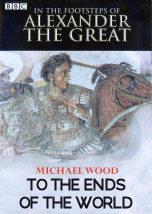
The final leg takes him from the Khyber Pass through Pakistan to the Punjab, where Alexander's army mutinied and he was forced to return across the Makran Desert to Babylon, where he died at only 32 years of age.
With optional Hebrew subtitles. Simon Schama's history of the Jewish experience plunges into the lost world of the shtetl, the Jewish towns and villages sewn across the hinterlands of Eastern Europe which became the seedbed of a uniquely Jewish culture. Shtetl culture would make its mark on the modern world, from the revolutionary politics of the Soviet Union to the mass culture of Tin Pan Alley and Hollywood. It was also the birthplaces of Hasidism, the most visible, iconic and, arguably, most misunderstood expression of Jewish faith and fervour. This chapter of the story travels from the forests of Lithuania, where Simon's own family logged wood and fought wolves, to the streets of the Lower East Side where the sons of shtetl immigrants wrote the American songbook. With grim inevitability, the story returns to Eastern Europe in 1940 - where the genocidal mechanisms of the 'final solution' were beginning to grind the shtetl world into dust and ash.
Andrew Graham-Dixon continues his exploration of German art by looking at the tumultuous 19th and early 20th centuries, and how artists were at the forefront of Germany's drive to become a single nation. Andrew travels to the north and the coastal town of Griefswald, the birthplace of Caspar David Friedrich, the most influential of the German Romantics, to discover how the Baltic coast impacted his mysterious paintings of the German landscape. He also visits Berlin and explores the art of the powerful Prussian state, which would spearhead the unification of Germany in 1871. The episode ends with the outbreak of World War I and the attempts of the artists Franz Marc and Otto Dix to rationalise the catastrophic experiences of the world's first technological war, a war driven by the Prussian innovations.


















A mother grizzly and her cubs emerge from their den high in snowy Alaskan mountains. Filming from the air the team capture a TV first, following the bears as they negotiate a near vertical slope on their journey to the coast where they await the return of the salmon. Meanwhile, the salmon are making their way to the to river mouths where they must swim upstream and against the current. The programme reveals how they tackle the torrents and leap over waterfalls, a feat equivalent to a human jumping over a house. Dozens of hungry bears eagerly await the salmon that make it up river. In another TV first, underwater cameras record the ingenuity and fancy footwork they use to collect dead salmon from the bottom of deep pools.