

Last Watched

The Social Struggle

   1995    Nature
Fourth episode examines how plants either share environments harmoniously or compete for dominance within them. Attenborough highlights the 1987 hurricane and the devastation it caused. However, for some species, it was that opportunity for which they had lain dormant for many years. The space left by uprooted trees is soon filled by others who move relatively swiftly towards the light. The oak is one of the strongest and longest-lived, and other, lesser plants nearby must wait until the spring to flourish before the light above is extinguished by leaves. Tropical forests are green throughout the year, so brute force is needed for a successful climb to the top of the canopy: the rattan is an example that has the longest stem of any plant. As its name suggests, the strangler fig 'throttles' its host by growing around it and cutting off essential water and light. Some can take advantage of a fallen tree by setting down roots on the now horizontal trunk and getting nutriment from the surrounding moss and the fungi on the dead bark. The mountain ash (eucalyptus regnans) grows so tall, that regeneration becomes a considerable problem. It is easily flammable, so its solution is to shed its seeds during a forest fire and sacrifice itself. It therefore relies on the periodic near-destruction of its surroundings in order to survive. Attenborough observes that catastrophes such as fire and drought, while initially detrimental to wildlife, eventually allow for deserted habitats to be reborn.
Series: The Private Life of Plants
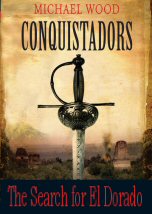
Conquistadors: The Search for El Dorado

   2002    History
Francisco de Orellana failed to find El Dorado, but discovered the Amazon. Early in 1541, a rumor swept Quito that beyond the mountains, there lay a land richer than Mexico, or even Peru - a land of gold. The ruler of this land was so rich that he covered himself with gold dust every day and washed it off every evening. He was "the golden man", El Dorado. They had tree goals: to find La Canela, the land of cinnamon: to assess new lands for colonization; and to find El Dorado. On march 1541, They marched eastwards with more that 200 Spanish troops and thousands of native servants.
Series: Conquistadors

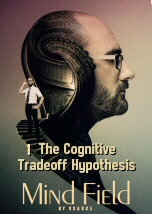
The Cognitive Tradeoff Hypothesis

   2019    Science
Join us on a journey into the mysterious depths of the human psyche as we investigate the strange and surprising terrain of the Mind Field.
Chimps and Humans can be traced biologically back to a common ancestor. The Cognitive Tradeoff Hypothesis theorizes about the two different paths of development - particularly cognitive development - that occurred in these two species after the split. Chimps stayed in the trees and developed some extraordinary cognitive capabilities which are shown by the research work of Japanese scientists, while humans came down into the savanna and developed social capabilities and language.
The hypothesis is that humans 'traded' some aspects of cognitive capabilities by re-purposing areas of the brain that had evolved in the context of other uses. Those capabilities are kept in chimps and are far surpassing that of normal humans. This is shown by the research work of scientists at the Primate Research Center connected with Kyoto University.
Series: Mind Field

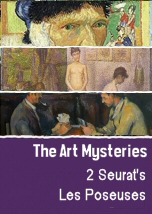
Seurat Les Poseuses

   2020    Art
Hanging in the Barnes Foundation in Philadelphia, Seurat’s Les Poseuses is probably his least-known painting. It is also a picture brimming with codes and hidden meanings. It shows three nudes in the artist’s studio, but included in the background is Seurat’s famous masterpiece, A Sunday Afternoon on the Island of La Grande Jatte. Why is it there? What is it trying to say? Why two pictures at once? Waldemar Januszczak investigates.
Series: The Art Mysteries

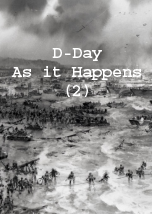
D-Day: As it Happens (2)

   2013    History
D-Day: As It Happens is a 24-hour history event to be broadcast across TV, web, mobile devices and social media, telling the story of this pivotal event in 20th-century history in a completely new way. Using newly-analysed archive footage, viewers can track the progress of seven people who were there on the day, each of them a real participant in the 1944 invasion. And they can do so moment by moment in real time, encountering the twists and turns of the fighting at the same time as the D-Day seven did, and learning their fate as the action unfolds in parallel with the present, Narrated by Peter Snow, with Channel 4 presenter and former marine Arthur Williams, and experts including former British Army officer Colonel Tim Collins and front-line journalist Lorna Ward. The second programme reveals what happened to the seven real people the event is following in real time, and also rounds up the events of D-Day.
Series: D-Day

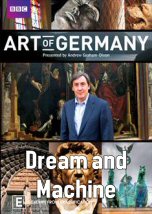
Dream and Machine

   2010    Art
Andrew Graham-Dixon continues his exploration of German art by looking at the tumultuous 19th and early 20th centuries, and how artists were at the forefront of Germany's drive to become a single nation. Andrew travels to the north and the coastal town of Griefswald, the birthplace of Caspar David Friedrich, the most influential of the German Romantics, to discover how the Baltic coast impacted his mysterious paintings of the German landscape. He also visits Berlin and explores the art of the powerful Prussian state, which would spearhead the unification of Germany in 1871. The episode ends with the outbreak of World War I and the attempts of the artists Franz Marc and Otto Dix to rationalise the catastrophic experiences of the world's first technological war, a war driven by the Prussian innovations.
Series: The Art of Germany
The Life of Mammals

The Life of Mammals

2002  Nature
Future of Work

Future of Work

2021  Technology
Prehistoric Planet

Prehistoric Planet

2022  Science
Prehistoric Planet II

Prehistoric Planet II

2023  Science
Life

Life

2009  Nature
The Sky at Night

The Sky at Night

2025  Science
Life

Life

2009  Nature