
Last Watched

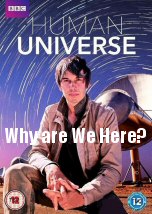
Why are We Here

   2014    Science
In episode two, Professor Brian Cox is off to India, where he assesses arguably the first evidence of rational thought in literature, the poetry of the Vedic monks. They pondered mankind's origins, realising there must have been a day with no yesterday - a day of creation - prompting the age-old question of where did the universe come from? Brian marvels that the universe seems to follow a set of rules, the laws of physics, allowing space to be considered on the grandest scale, travelling to the most distant, farthest reaches of the cosmos just by using our minds. Brian also visits Japan, and offers viewers the idea that man lives in just one of an infinite number of universes that are being made all the time.
Series: Human Universe
The Death of the Oceans

   2010    Nature
Sir David Attenborough reveals the findings of one of the most ambitious scientific studies of our time - an investigation into what is happening to our oceans. He looks at whether it is too late to save their remarkable biodiversity. Attenborough explores some of the ways in which we are affecting marine life - from over-fishing to the acidification of sea water. The film also uncovers the disturbing story of how shipping noise is deafening whales and dolphins, affecting their survival in the future.

The Lost Gardens of Babylon

   2014    History
Of the Seven Wonders of the Ancient World, the Hanging Garden of Babylon is the most elusive of these constructions of classical antiquity. While traces have been found of the Great Pyramid of Gaza, the Temple of Artemis at Ephesus, the Statue of Zeus at Olympia, the Mausoleum of Halicarnassus, the Colossus of Rhodes and the Lighthouse of Alexandria, centuries of digging have turned up nothing about the lost gardens of Babylon – until now.
Why, in the nearly 3,000 years since the gardens were presumably built, has no archeological evidence ever been found to support their existence? Is the Hanging Garden of Babylon a myth or a mystery to be solved?
Travel with Dr. Stephanie Dalley of Oxford University’s Oriental Institute and author of The Mystery of the Hanging Garden of Babylon, to one of the most dangerous places on earth, as she sets out to answer these questions and prove not only that the gardens did exist, but also identify where they most likely were located, describe what they looked like and explain how they were constructed.
Series: Secrets of the Dead

The French Revolution: Tearing Up History

   2014    Art
A journey through the dramatic and destructive years of the French Revolution, telling its history in a way not seen before - through the extraordinary story of its art. Our guide through this turbulent decade is the constantly surprising Dr Richard Clay, an art historian who has spent his life decoding the symbols of power and authority.

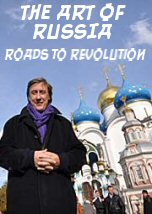
Roads to Revolution

   2009    Art
Andrew Graham-Dixon explores how Russia changed from a feudal nation of aristocratic excess to a hotbed of revolution at the beginning of the 20th century and how art moved from being a servant of the state to an agent of its destruction. From monuments that celebrate the absolutism of the tsars to the epic Russian landscape as inspiration; from the design and construction of gold and glittering palaces to the minutiae of diamond-encrusted Faberge eggs; and eventually to the stark and radical paintings of the avant-garde, the journey through Russian art history is one of extraordinary beauty and surprise.
Series: The Art of Russia

Does Time Really Exist

   2011    Science
Time is woven into the fabric of the universe as one of the dimensions in which we live our daily lives. But maybe it is only a brain state that we use to piece together events. Could it exist only in our minds? Your sense of time can be totally different than the person next to you. This and other theories illustrate that time is an illusion and does not really exist. The world's top physicists tackle this fundamental question, does time exist, and offer new ways to perceive the physical world.
Series: Through the Wormhole