Last Watched

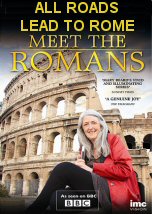
Meet the Romans: All Roads Lead to Rome

   2012    History
Professor Mary Beard looks beyond the stories of emperors, armies, guts and gore to meet the everyday people at the heart of Ancient Rome's vast empire. In this programme, Mary asks not what the Romans did for us, but what the empire did for Rome. She rides the Via Appia, climbs up to the top seats of the Colosseum, takes a boat to Rome's port Ostia and takes us into the bowels of Monte Testaccio. She also meets some extraordinary Romans: Eurysaces, an eccentric baker, who made a fortune out of the grain trade and built his tomb in the shape of a giant bread oven; Baricha, Zabda and Achiba, three prisoners of war who became Roman citizens; and Pupius Amicus, the purple dye seller making imperial dye from shellfish imported from Tunisia. This is Rome from the bottom up.
Series: Meet the Romans
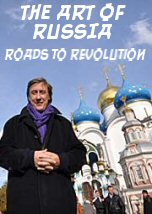
Roads to Revolution

   2009    Art
Andrew Graham-Dixon explores how Russia changed from a feudal nation of aristocratic excess to a hotbed of revolution at the beginning of the 20th century and how art moved from being a servant of the state to an agent of its destruction. From monuments that celebrate the absolutism of the tsars to the epic Russian landscape as inspiration; from the design and construction of gold and glittering palaces to the minutiae of diamond-encrusted Faberge eggs; and eventually to the stark and radical paintings of the avant-garde, the journey through Russian art history is one of extraordinary beauty and surprise.
Series: The Art of Russia

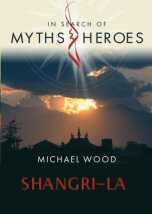
Shangri-La

   2005    History
For centuries, man has yearned for an earthly paradise, and no place better encapsulates this desire than Shangri-La - but was it ever real? The tale of an earthly paradise is among the most enduring myths in the world. From Sumerian epic to the 'islands of the blest' in Celtic literature, it has been a recurring theme through many bodies of literature and for thousands of years. Not surprisingly, then, modern people have also been drawn to the dream of a lost paradise where the ravages of time and history have been held back, where human beings live in harmony with nature, and where the wisdom of the planet is saved for future generations. In other words, to a Shangri-La.
Series: Myths and Heroes

Fightback

       Nature
Dr Iain Stewart investigates the counter-attack that was launched by the global warming sceptics in the 1990s. At the start of the 1990s it seemed the world was united. At the Rio Earth summit the world signed up to a programme of action to start tackling climate change. Even George Bush was there. But the consensus didn't last.
Iain examines the scientific arguments that developed as the global warming sceptics took on the climate change consensus. The sceptics attacked almost everything that scientists held to be true. They argued that the planet wasn't warming up, that even if it was it was nothing unusual, and certainly whatever was happening to the climate was nothing to do with human emissions of greenhouse gases. Iain interviews some of the key global warming sceptics, and discovers how their positions have changed over time.
Series: The Climate Wars

What is our future

   2014    Technology
Professor Brian Cox concludes his exploration of our place in the universe by asking what next for the ape that went to space. Our future is far from certain. In Florida, Brian joins the latest efforts to protect Earth from potential catastrophic events. He joins a team of Nasa astronauts who are training for a future mission to an asteroid - should we ever discover one coming our way - under 30 feet of water in a submerged laboratory that simulates space. It is just one example of how, for our long-term survival, space exploration may well be vital. It is a view shared by Apollo 16 astronaut Charlie Duke, who tells Brian what it was like to escape the confines of the planet. It is a dream that both Nasa and now commercial companies share as they race to get humans back into deep space.
But space travel, like every leap our civilisation has ever made, requires energy. Here too, scientists are hard at work attempting to safeguard our future. At the National Ignition Facility in California, Brian witnesses the world's most successful fusion experiment in action. He believes that if their mission succeeds, our civilisation will have unlocked a way to the stars that will not destroy the planet in the process. Brian concludes by returning to the top of the world in Svalbard, where he gains access to our civilisation's greatest treasure, locked away in a vault buried deep in the permafrost.
Series: Human universe

The Lost Gardens of Babylon

   2014    History
Of the Seven Wonders of the Ancient World, the Hanging Garden of Babylon is the most elusive of these constructions of classical antiquity. While traces have been found of the Great Pyramid of Gaza, the Temple of Artemis at Ephesus, the Statue of Zeus at Olympia, the Mausoleum of Halicarnassus, the Colossus of Rhodes and the Lighthouse of Alexandria, centuries of digging have turned up nothing about the lost gardens of Babylon – until now.
Why, in the nearly 3,000 years since the gardens were presumably built, has no archeological evidence ever been found to support their existence? Is the Hanging Garden of Babylon a myth or a mystery to be solved?
Travel with Dr. Stephanie Dalley of Oxford University’s Oriental Institute and author of The Mystery of the Hanging Garden of Babylon, to one of the most dangerous places on earth, as she sets out to answer these questions and prove not only that the gardens did exist, but also identify where they most likely were located, describe what they looked like and explain how they were constructed.
Series: Secrets of the Dead
Cosmos

Cosmos

1980  Culture
Rome

Rome

  History
Unknown

Unknown

2023  Technology
The Truth About

The Truth About

2018  Medicine
P.U.L.S.E

P.U.L.S.E

2006  Art
The Rehearsal

The Rehearsal

2022  Culture
The Germanic Tribes

The Germanic Tribes

2007  History