




Last Watched

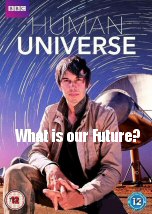
What is our future

   2014    Technology
Professor Brian Cox concludes his exploration of our place in the universe by asking what next for the ape that went to space. Our future is far from certain. In Florida, Brian joins the latest efforts to protect Earth from potential catastrophic events. He joins a team of Nasa astronauts who are training for a future mission to an asteroid - should we ever discover one coming our way - under 30 feet of water in a submerged laboratory that simulates space. It is just one example of how, for our long-term survival, space exploration may well be vital. It is a view shared by Apollo 16 astronaut Charlie Duke, who tells Brian what it was like to escape the confines of the planet. It is a dream that both Nasa and now commercial companies share as they race to get humans back into deep space.
But space travel, like every leap our civilisation has ever made, requires energy. Here too, scientists are hard at work attempting to safeguard our future. At the National Ignition Facility in California, Brian witnesses the world's most successful fusion experiment in action. He believes that if their mission succeeds, our civilisation will have unlocked a way to the stars that will not destroy the planet in the process. Brian concludes by returning to the top of the world in Svalbard, where he gains access to our civilisation's greatest treasure, locked away in a vault buried deep in the permafrost.
Series: Human universe

Zeitgeist Moving Forward

   2011    Culture
A feature length documentary work which presents a case for a needed transition out of the current socioeconomic monetary paradigm which governs the entire world society. This subject matter will transcend the issues of cultural relativism and traditional ideology and move to relate the core, empirical 'life ground' attributes of human and social survival, extrapolating those immutable natural laws into a new sustainable social paradigm called a 'Resource-Based Economy'.
Series: Zeitgeist

Ancient Greece: Democrats

   2013    History
Dr Michael Scott journeys to Athens to discover that from the very start the theatre was about more than just entertainment - it was a reaction to real events, it was a driving force in history and it was deeply connected to Athenian democracy. In fact, the story of theatre is the story of Athens.
Series: Ancient Greece

Gaia The Billion Pixel Camera

   2015    Technology
The Milky Way, our galaxy, is a magnificent sight in the night sky, but we know surprisingly little about it for certain. What is its shape? How many stars does it actually contain? What lies at its centre? The Gaia space telescope will answer these questions, being armed with the most advanced camera to leave our planet, and it will allow us to see our galaxy as we've never seen it before. The Sky at Night visits the factory in Chelmsford that made the astonishing sensor at the heart of the mission.
Series: The Sky at Night

Fightback

       Nature
Dr Iain Stewart investigates the counter-attack that was launched by the global warming sceptics in the 1990s. At the start of the 1990s it seemed the world was united. At the Rio Earth summit the world signed up to a programme of action to start tackling climate change. Even George Bush was there. But the consensus didn't last.
Iain examines the scientific arguments that developed as the global warming sceptics took on the climate change consensus. The sceptics attacked almost everything that scientists held to be true. They argued that the planet wasn't warming up, that even if it was it was nothing unusual, and certainly whatever was happening to the climate was nothing to do with human emissions of greenhouse gases. Iain interviews some of the key global warming sceptics, and discovers how their positions have changed over time.
Series: The Climate Wars

Total Eclipse

   2010    Science
Once they were dreaded and thought to be dragons eating the sun--but modern science has dispelled mythology and we now look forward to total Solar Eclipses as one of the most spectacular phenomena in the heavens. Explore the complex movements of Earth, Moon and Sun that produce these unusual events and hear details why we may be the only intelligent beings in the known Universe to witness eclipses like we see on Earth. Man-made eclipses also figure into the science in the form of instruments called "coronagraphs." They blot out the sun and reveal its corona, uncovering secrets which, while enlightening, also warn of a disaster that could make our advanced technology crash and burn. Finally, travel into deep space, where the tiny eclipses caused by planets circling distant stars is now beginning to reveal hundreds more stars where "exoplanets" exist... perhaps even those in habitable zones like the Earth.
Series: The Universe
Dark Net

Dark Net

2016  Technology
Marilyn and the Mob

Marilyn and the Mob

2026  History
In the Age of AI

In the Age of AI

2019  Technology
In Search of

In Search of

2018  Technology
Coldplay Live

Coldplay Live

2012  Art
The Big Think

The Big Think

2017  Technology