This remarkable series profiles on the major defendants of the Nuremberg war crimes trials. In the first episode, Nathaniel Parker plays the most inscrutable Nazi on trial at Nuremberg, Hitler's architect and armaments minister Albert Speer. He was the only defendant who unreservedly accepted responsibility for the Nazis' crimes. But was Speer's remorse genuine or just a clever defense strategy to get off the hook? The film tells the intriguing behind-the scenes-story of Speer's trial and his showdown with unrepentant rival, Hermann Goering.
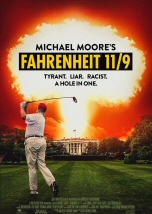
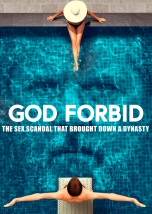
In this revealing documentary, Giancarlo Granda, former pool attendant at the Fontainebleau Hotel, shares the intimate details of his 7-year relationship with a charming older woman, Becki Falwell, and her husband, the Evangelical Trump stalwart Jerry Falwell Jr. Directed by Billy Corben, the film outlines Granda's entanglement with the Falwell's seemingly perfect lives and the overarching influence this affair had on a presidential election. The life of Jerry Falwell — the late Moral Majority televangelist who for decades helped catalyze the rightward shift of American evangelicals before his death in 2007 — is a quintessentially American story. But it’s in the next generation that the Falwell narrative becomes at once soap opera and morality tale. The film covers the graceless fall of Jerry Falwell Jr., who after the death of his father was placed in the presidency of the family’s conservative organ Liberty University. There, he seemed to remain painfully in thrall to his appetites. We hear testimony about his alleged tendency to drink on the job and discomfiting, slurry interviews between him and sympathetic media — but most crucially, we receive the testimony of Giancarlo Granda. Granda was a pool attendant at a Miami hotel when he met Falwell and his wife, Becki, in 2012. Today, he alleges that he was persuaded to have sex with Becki while Falwell watched, and that the pair engaged in an ongoing campaign of communication with him that could be described as coercive. His energies were consumed with managing their tempers and occasionally threatening behavior, and he blames the swirl of scandal around them for derailing his professional future. Plainspoken and only occasionally visibly emotional, Granda is his own best advocate as he describes a couple who, he says, craved his body and were willing to discard the rest of him.
Master Chef judge Gregg Wallace and mathematician Dr Hannah Fry take over a restaurant and invite five special guests to enjoy a dinner party with a difference, where they will be scored on the carbon footprint of every dish they choose. Food accounts for a third of all greenhouse gas emissions, so making informed choices about what we eat is more important than ever. Gregg is with the kitchen team preparing delicious dishes and uncovering tips and tricks we can all use to cook more sustainably. Hannah is working with environmental scientists to reveal the carbon footprint of every single item on the menu and uncovering the latest research that can help us enjoy the food we love that doesn't cost the Earth.
For decades, scientists have sought to unlock the secrets of ancient DNA, a fragile genetic blueprint that rarely survives millions of years. Danish biologist Eske Willerslev had a groundbreaking idea: instead of searching for DNA in fossils or ancient tissues, he looked to frozen sediment. Initially dismissed as impossible, his work led to the recovery of genetic traces from over two million years ago, revealing lush ecosystems that existed before the Ice Age. These discoveries offer unprecedented insights into long-extinct species that thrived in warm, verdant Arctic landscapes.
Willerslev’s perseverance revolutionized DNA research, enabling scientists to reconstruct vanished ecosystems and uncover the genetic secrets of ancient worlds. By examining the DNA of past climates, researchers are paving the way to better understand Earth's deep history and adapt to current environmental challenges. This landmark breakthrough demonstrates that ancient DNA acts as a "time machine," allowing humanity to explore its distant past and draw lessons for the future.
By cracking the ancient hieroglyphic code, Jean-François Champollion gave words to a thousand-year-old, mysterious civilization - but behind his legendary feat was a mysterious brother who made it all possible. New correspondence discovered between Jean-François Champollion and his brother Jacques-Joseph now allows us to fully understand how a young, self-taught genius was able to make one of the most important discoveries of the 19th century. Without the tireless support and cleverness of his older brother, Jean-François would never have managed to solve this burning, international enigma. Through animated sequences, using their private correspondence, archives and with the help of experts, this film will go back on this one-in-a lifetime scientific, human and intellectual adventure to celebrate the bicentenary of the decoding of hieroglyphs.
Life goes to extraordinary lengths to survive this immense realm. A 30 tonne whale shark gorges on a school of fish and the unique overhead heli-gimbal camera reveals common dolphins rocketing at more than 30km an hour. Descending into the abyss, deep sea octopus fly with wings and vampire squid use bioluminescence to create an extraordinary colour display. The first ever time-lapse footage taken from 2,000m down captures eels, crabs and giant isopods eating a carcass, completely consuming it within three hours.



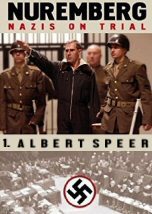





He was the only defendant who unreservedly accepted responsibility for the Nazis' crimes. But was Speer's remorse genuine or just a clever defense strategy to get off the hook? The film tells the intriguing behind-the scenes-story of Speer's trial and his showdown with unrepentant rival, Hermann Goering.