In 1971, after being rejected by Hollywood, Bruce Lee returned to his parents' homeland, Hong Kong. Over the next two years, he'd complete four iconic films that would define his legacy, a legacy cut short when he died, stunningly, in the summer of 1973. He was 32 years old. Directed by Bao Nguyen, 'Be Water' is a gripping, fascinating, intimate look at not just those final, defining years of Lee's life, but the complex, often difficult, and seismic journey that led to Lee's ultimate emergence as a singular icon in the histories of film, martial arts, and even the connection between the eastern and western worlds. The film chronicles Lee's earliest days, as the son of a Chinese opera star born while his father was on tour in San Francisco, and then raised in Hong Kong over what became an at times troubled childhood. Sent to live in America at the age of 18, he began teaching Kung Fu in Seattle, and established a following that included his future wife, Linda. His ambition ever rising, Lee eventually made his way to Los Angeles, where he strove to break into American film and television. There, despite some success as a fight choreographer and actor, it was clear Hollywood wasn't ready for an Asian leading man - and so he returned to Hong Kong to make the films that would in fact make him a legend, his international star skyrocketing just as his life was cut short. 'Be Water' is told by the family, friends, and collaborators who knew Bruce Lee best, with an extraordinary trove of archive film providing an evocative, immersive visual tapestry that captures Lee's charisma, his passion, his philosophy, and the eternal beauty and wonder of his art.
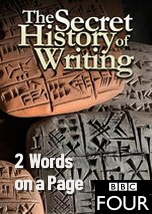
Writing itself is 5,000 years old, and for most of that time words were written by hand using a variety of tools. The Romans were able to run an empire thanks to documents written on papyrus. Scroll books could be made quite cheaply and, as a result, ancient Rome had a thriving written culture. With the fall of the Roman Empire, papyrus became more difficult to obtain. Europeans were forced to turn to a much more expensive surface on which to write: Parchment. Medieval handwritten books could cost as much as a house, they also represent a limitation on literacy and scholarship. No such limitations were felt in China, where paper had been invented in the second century. Paper was the foundation of Chinese culture and power, and for centuries how to make it was kept secret. When the secret was out, paper mills soon sprang up across central Asia. The result was an intellectual flourishing known as the Islamic Golden Age. Muslim scholars made discoveries in biology, geology, astronomy and mathematics. By contrast, Europe was an intellectual backwater. That changed with Gutenberg’s development of movable type printing. The letters of the Latin alphabet have very simple block-like shapes, which made it relatively simple to turn them into type pieces. When printers tried to use movable type to print Arabic texts, they found themselves hampered by the cursive nature of Arabic writing. The success of movable type printing in Europe led to a thousand-fold increase in the availability of information, which produced an explosion of ideas that led directly to the European Scientific Revolution and the Industrial Revolution that followed.
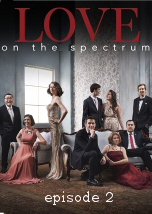
It's Valentine's Day and Maddi steps out on her first ever date with a romantic man. Kelvin works with a relationship specialist and puts his dating skills to the test. Michael is overwhelmed when he meets the woman of his dreams.
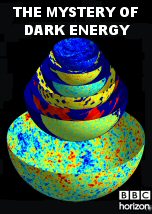
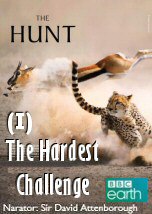
Dark energy - the mysterious force that is unexpectedly causing the universe's expansion to speed up. The effects of dark energy were discovered in 1998 but physicists still don't know what it is. Worse, its very existence calls into question Albert Einstein's general theory of relativity - the cornerstone of modern physics. The hunt for the identity of dark energy is on". Experiments on earth and in space generate data that might provide a clue, but there are also hopes that another Einstein might emerge - someone who can write a new theory explaining the mystery of the dark energy.
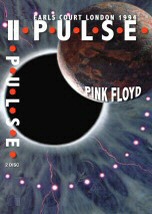
P.U.L.S.E is a Pink Floyd concert video taken from the 20 October 1994 concert at Earls Court, London. PULSE records the great psychedelic band Pink Floyd rocking out like only they can. Renowned for their hallucinatory special effects and lighting schemes, Pink Floyd goes all out at this spectacular (and very long) concert. Twenty-one of their classics are performed, including classic rock radio staples 'Dark Side of The Moon' and 'Wish You were Here". There was considerable delay in the release of the video edition of Pulse. The cause of the delays was reputed to be the continued modifications and additions to produce a high-quality release. The previous planned release date of 22 September 2005 for the two-disc DVD set was changed to 10 July 2006 for the UK and Europe, and 11 July 2006 everywhere else.
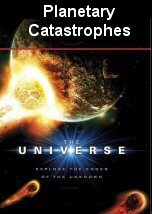
The planets of our solar system have experienced epic catastrophes throughout their long history, both raining down from outside and bubbling up from within. We'll voyage back in time to investigate the violent events that profoundly shaped the planets, including earth itself. We'll witness stunning revelations about what transformed Mars into a barren, hostile desert... The disaster that changed Venus from temperate to hellish... The impact that blew away Mercury's mantle, turning it into a planetary core... A colossal disturbance that rearranged the orbits of the gas giants... Titanic impacts on Jupiter... And how a lost moon may finally explain Saturn's rings.


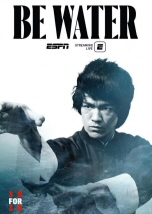



The film chronicles Lee's earliest days, as the son of a Chinese opera star born while his father was on tour in San Francisco, and then raised in Hong Kong over what became an at times troubled childhood. Sent to live in America at the age of 18, he began teaching Kung Fu in Seattle, and established a following that included his future wife, Linda. His ambition ever rising, Lee eventually made his way to Los Angeles, where he strove to break into American film and television. There, despite some success as a fight choreographer and actor, it was clear Hollywood wasn't ready for an Asian leading man - and so he returned to Hong Kong to make the films that would in fact make him a legend, his international star skyrocketing just as his life was cut short.
'Be Water' is told by the family, friends, and collaborators who knew Bruce Lee best, with an extraordinary trove of archive film providing an evocative, immersive visual tapestry that captures Lee's charisma, his passion, his philosophy, and the eternal beauty and wonder of his art.