Having explained the science behind global warming, and addressed the arguments of the climate change sceptics earlier in the series, Dr Iain Stewart concludes the series by looking at the biggest challenge now facing climate scientists - Just how can they predict exactly what changes global warming will bring? It's a journey that takes him from early attempts to model the climate system with dishpans, to supercomputers, and to the frontline of climate research today: Greenland. Most worryingly he discovers that scientists are becoming increasingly concerned that their models are actually underestimating the speed of changes already underway.
Dr Janina Ramirez shows how medieval manuscripts gave power to the king and united the kingdom in an age of plague, warfare and rebellion, discovers that Edward III used the manuscripts he read as a boy to prepare him for his great victory at the battle of Crecy and reveals how a vigorous new national identity bloomed during the 100 Years War with France. In the British Library's Royal Manuscripts collection Dr Ramirez finds out that magnificent manuscripts like the Bedford Hours, taken as war booty from the French royal family, were adapted for the education of English princes. She also explores how knowledge spread through a new form of book - the encyclopaedia.
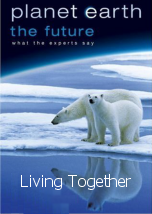
The documentary deals with the future of conservation. It begins by looking at previous efforts. The 'Save The Whales' campaign, which started in the 1960s, is seen to have had a limited effect, as whaling continues and fish stocks also decline. In the 1990s, as head of the Kenya Wildlife Service, Richard Leakey took on the poachers by employing armed units. Although it was successful in saving elephants, the policy was detrimental to the Maasai people, who were forced from their land. The need for "fortress" areas is questioned, and the recently highlighted Raja Ampat coral reef in Indonesia is an example. The more tourism it generates, the greater the potential for damage — and inevitable coastal construction. Sustainable development is viewed as controversial, and one contributor perceives it to currently be a "contradiction in terms". Trophy hunting is also contentious. Those that support it argue that it generates wealth for local economies, while its opponents point to the reducing numbers of species such as the markhor. Ecotourism is shown to be beneficial, as it is in the interests of its providers to protect their environments. However, in some areas, such as the Borneo rainforests, the great diversity of species is being replaced by monocultures. The role of both religion and the media in conservation is argued to be extremely important. Contributors to the programme admit a degree of worry about the future, but also optimism.
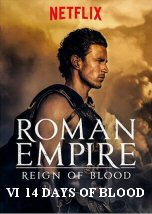
In the last episode of the series, lavish imperial games at the Colosseum are highlighted by the emperor's bloody victories, but his paranoid abuses of power lead to a final betrayal.
Sagan discusses comets and asteroids as planetary impactors, giving recent examples of the Tunguska event and a lunar impact described by Canterbury monks in 1178. It moves to a description of the environment of Venus, from the previous fantastic theories of people such as Immanuel Velikovsky to the information gained by the Venera landers and its implications for Earth's greenhouse effect. The Cosmos Update highlights the connection to global warming.
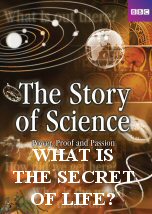
The story of how the secret of life has been examined through the prism of the most complex organism known - the human body. It begins with attempts to save the lives of gladiators in Ancient Rome, unfolds with the macabre work and near-perfect drawings of Leonardo in the Renaissance, through the idea of the 'life force' of electricity, to the microscopic world of the cell. It reveals how a moral crisis unleashed by work on the nuclear bomb helped trigger a great breakthrough in biology - understanding the structure and workings of DNA.









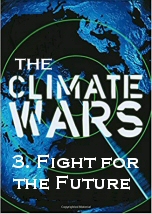


It's a journey that takes him from early attempts to model the climate system with dishpans, to supercomputers, and to the frontline of climate research today: Greenland. Most worryingly he discovers that scientists are becoming increasingly concerned that their models are actually underestimating the speed of changes already underway.