Albert Einstein, the most famous scientist of all time, was a world-renowned celebrity, greeted like a rock star when he appeared in public. An anti-war firebrand, Einstein also spoke out on issues ranging from women's rights and racism to immigration and nuclear arms control. But today, his image has been neutered into that of a charmingly absent-minded genius. He was, in fact, a powerful force for social change and a model for political activism. Using a wealth of rarely-seen archival footage, correspondence, and new and illuminating interviews, filmmaker Julia Newman makes the case that Albert Einstein's example of social and political activism is as important today as are his brilliant, groundbreaking theories.
Dylan Jones is in the driving seat for this authoritative four-part look back. No stone remains unturned, as he revisits the New Romantics, rap, modern dance music, hip-hop, indie jingle, synth-pop, house music and club culture. He makes the case that the 1980s was the most radical, innovative and creative decade in the history of pop because, unlike other decades, unleashed a myriad of new musical genres in just 10 years. In the first part, Dylan Jones explores how in this decade the world-conquering genres of rap, hip-hop and modern dance music were launched, while guitar-driven indie flourished in a constellation of scenes spread out across the world. And a technological revolution was changing how music was made, filling the charts with a starburst of innovative records. Meanwhile, the launch of MTV turned pop into a visual medium, allowing artists as varied as U2 and Eurythmics to take charge of how they presented themselves. Featuring interviews with Nile Rodgers, Bananarama, Primal Scream's Bobby Gillespie, Mark Ronson, Trevor Horn and Soul II Soul's Jazzie B.
20 years ago, two astronomers made a remarkable discovery, one which would change the way we view the universe for ever. A planet outside our solar system, orbiting a distant star - an exoplanet. Since then, we have found worlds where it rains diamonds, ones that boil at 3,000 degrees centigrade
and even a world with four suns in its sky. But the big question is -
will we ever find another Earth? As we close in on the discovery of the 2,000th planet outside our solar system, or exoplanet, we investigates the techniques that are revealing so much about these alien worlds. The documentary asks if we are really any closer to finding another world like our own - a second Earth.
Diarmaid MacCulloch's own life story makes him a symbol of a distinctive feature about Western Christianity - scepticism, a tendency to doubt which has transformed both Western culture and Christianity. In the final programme in the series, he asks where that change came from. He challenges the simplistic notion that faith in Christianity has steadily ebbed away before the relentless advance of science, reason and progress, and shows instead how the tide of faith perversely flows back in. Despite the attacks of Newton, Voltaire, the French Revolutionaries and Darwin, Christianity has shown a remarkable resilience. The greatest damage to Christianity was actually inflicted to its moral credibility by the two great wars of the 20th century and by its entanglement with Fascism and Nazism. And yet it is during crisis that the Church has rediscovered deep and enduring truths about itself, which may even be a clue to its future.
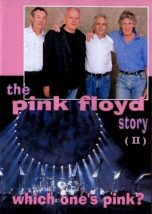
A band that has spanned 40 years pioneering everything from underground rock to the stadium extravaganza, a band that has survived tragedy and shunned celebrity and wrestled publicly with both it's success and it's audience. There have been five members of the band three of which have lead the band in different decades and that's why the question still remains, which one is pink? This film examines the band and it's history in order to discover how they became so successful.
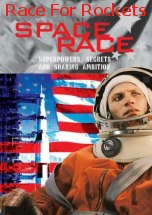
Space Race is a docu-drama chronicling the major events and characters in the American/Soviet space race. It focusses on Sergei Korolev, the Soviets' chief rocket designer, and Wernher von Braun, his American counterpart. The series was a joint effort between British, German, American and Russian production teams." In the first episode, 1944-1949, we see Wernher von Braun's work on the V-2 for the Nazis during the last years of the Second World War, his surrender to American troops and his move to the USA. We see Sergei Korolev's release from the Gulag, and how he is set to work on Soviet rockets, first attempting to copy the V-2, then building a more efficient rocket of his own.







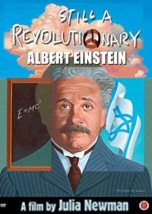






Using a wealth of rarely-seen archival footage, correspondence, and new and illuminating interviews, filmmaker Julia Newman makes the case that Albert Einstein's example of social and political activism is as important today as are his brilliant, groundbreaking theories.