









Last Watched

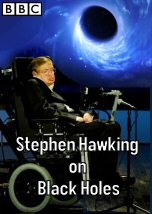
Stephen Hawking on Black Holes

   2016    Science
The film looks at the latest understanding of black holes, featuring an interview with Stephen Hawking. Black holes are one of the greatest mysteries in the universe. They behave in a way that is contrary to laws of physics and one has never actually been seen. However, the recent detection of gravitational waves, as predicted by Einstein, proves that black holes exist and provides a way to investigate their remarkable behaviour and properties.
Series: The Sky at Night

Siege of Stalingrad

   2020    History
Mid-1942, as Hitler’s forces are pushing into southern Russia to take the oilfields, he spies a city prized by his enemy Stalin – Stalingrad. If Hitler can capture this city, he can expand his empire all the way to the Urals. But what Hitler hasn’t counted on is the enormous resilience of the Soviet people; men and women willing to defend their Motherland at all costs.
What ensues at Stalingrad is one of the bloodiest battles in the history of warfare, with an estimated 2 million total casualties, and an event that turns the tide for the Germans.
Series: Greatest Events of WWII in Colour

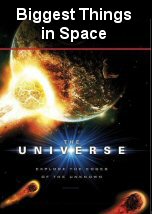
Biggest Things in Space

   2008    Science
We can't compare anything on earth to the biggest things known in space. The Cosmic Web may connect objects in the universe with threads of Dark Matter. The Lyman-alpha blob is a bubble like structure containing countless galaxies--perhaps the biggest object in the entire universe. Regions of radio-emitting gas called "radio lobes" could be even bigger. Then there are super galaxy clusters which are hundreds of galaxies merged together due to cosmic collisions. Discover which is the largest planet, star, star cluster, constellation, black hole, volcano, galaxy, explosions, moon, storm, impact crater and "void" in space.
Series: The Universe

iHuman

   2020    Technology
The documentary delves into the captivating world of Artificial Intelligence, exploring its rapid advancements, societal impact, and ethical dilemmas. Through interviews with experts, it highlights the potential for AI to learn like humans, revolutionizing our work and creations. It also raises critical questions about its regulation, the dangers of military applications, and the need for international cooperation. This thought-provoking documentary offers a deep dive into the AI revolution and the profound implications it holds for our future, making it a must-watch for anyone intrigued by the intersection of technology, ethics, and society.
iHUMAN is a political thriller about artificial intelligence, power and social control. With unparalleled access to the inside of the booming AI industry, this film shows how the most powerful and far-reaching technology of our time is changing our lives, our society and our future.

Atlas Maps

   2010    History
The Dutch Golden Age saw map-making reach a fever pitch of creative and commercial ambition. This was the era of the first ever Atlases - elaborate, lavish and beautiful. This was the great age of discovery and marked an unprecedented opportunity for mapmakers who sought to record and categorise the newly acquired knowledge of the world. Rising above the many mapmakers in this period was Gerard Mercator, inventor of the Mercator projection, who changed mapmaking forever when he published his collection of world maps in 1598 and coined the term 'Atlas'. The programme looks at some of the largest and most elaborate maps ever produced, from the vast maps on the floor of the Royal Palace in Amsterdam, to the 24 volume atlas covering just the Netherlands, to the largest Atlas in the world, The Klencke Atlas. It was made for Charles II to mark his restoration in 1660. But whilst being one of the British Libraries most important items, it is also one of its most fragile so hardly ever opened. This is a unique opportunity to see inside this enormous and lavish work, and see the world through the eyes of a King.
Series: The Beauty of Maps

Nemesis The Sun Evil Twin

   2011    Science
The theory of Némesis, a star that orbits the Sun and causes catastrophic events is explored. Nemesis is a hypothetical red dwarf or brown dwarf, originally postulated in 1984 to be orbiting the Sun at a distance of about 95,000 AU (1.5 light-years) somewhat beyond the Oort cloud, to explain a perceived cycle of mass extinctions in the geological record, which seem to occur more often at intervals of 26 million years.
Series: The Universe
The Jinx

The Jinx

2015  History
The Crime of the Century

The Crime of the Century

2021  Medicine
Mourinho

Mourinho

2026  History
Conquest of the Skies

Conquest of the Skies

2015  Nature
Zeitgeist

Zeitgeist

2007  Culture
Hidden Kingdoms

Hidden Kingdoms

2014  Nature