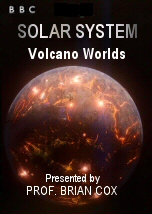
Professor Brian Cox concludes his exploration of our place in the universe by asking what next for the ape that went to space. Our future is far from certain. In Florida, Brian joins the latest efforts to protect Earth from potential catastrophic events. He joins a team of Nasa astronauts who are training for a future mission to an asteroid - should we ever discover one coming our way - under 30 feet of water in a submerged laboratory that simulates space. It is just one example of how, for our long-term survival, space exploration may well be vital. It is a view shared by Apollo 16 astronaut Charlie Duke, who tells Brian what it was like to escape the confines of the planet. It is a dream that both Nasa and now commercial companies share as they race to get humans back into deep space. But space travel, like every leap our civilisation has ever made, requires energy. Here too, scientists are hard at work attempting to safeguard our future. At the National Ignition Facility in California, Brian witnesses the world's most successful fusion experiment in action. He believes that if their mission succeeds, our civilisation will have unlocked a way to the stars that will not destroy the planet in the process. Brian concludes by returning to the top of the world in Svalbard, where he gains access to our civilisation's greatest treasure, locked away in a vault buried deep in the permafrost.
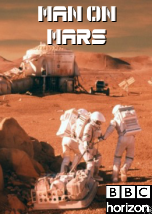
Let's go behind the scenes at NASA to discover how it is preparing for its most ambitious and daring mission: to land men - and possibly women - on the surface of Mars. It's over 40 years since Neil Armstrong made the first human footprint on the moon. But getting to the red planet would involve a journey of at least three years. Meet the scientists and engineers who are designing new rockets, new space suits and finding ways to help astronauts survive the perils of this long voyage. And it turns out that having the 'right stuff' for a mission to mars might not be quite what you expect.
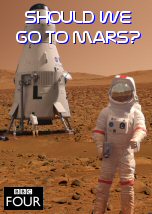
The attempt to send and land astronauts on Mars risks billions of dollars and the lives of those brave enough to attempt it. Is the possible benefit really worth the risk? And is it really achievable? Guiding us through this ethical and scientific minefield is Dr Kevin Fong. Kevin's diverse background in astrophysics, aeronautics and medicine makes him uniquely placed to understand the technical and human challenges of this perilous journey. He leads us through the journey to Mars stage by stage. For Kevin, not only is this the toughest journey we will ever attempt, it is one that he feels we ultimately must make if we are to survive as a species.
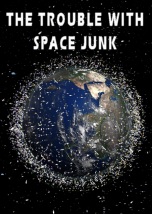
In 2014, the International Space Station had to move three times to avoid lethal chunks of space debris and there is an increasing problem of satellites mysteriously breaking down. With first-hand accounts from astronauts and experts, know the scale of the problem of space junk. Our planet is surrounded by hundreds of millions of pieces of junk moving at 17,000 miles per hour. Now the US government is investing a billion dollars to track them, and companies around the world are developing ways to clear up their mess - from robot arms to nets and harpoons. Learn the science behind the hit film Gravity and discovers the reality is far more worrying than the Hollywood fiction.
The sun gives us warmth and light. It is the fuel of life. Without the energy of the sun almost nothing grows, thrives or lives. But the sun was not put there for our benefit. It is not this big jolly ball of nice smiling down on us, wishing us all a good day. It is not our friend. The sun is a monster. A planet killer. And we don't see that side of the sun down here. But eight astronauts, with over 1,000 days in space between them, can show us how being up there helped them understand the suns bright fury.
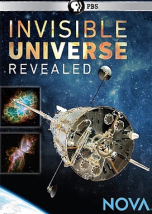
25 years ago, NASA launched one of the most ambitious experiments in the history of astronomy: the Hubble Space Telescope. In honor of Hubble's landmark anniversary, know the remarkable story of the telescope that forever changed our understanding of the cosmos and our place in it". But amazingly, when the telescope first sent images back to earth, it seemed that the entire project was a massive failure; a one-millimeter engineering blunder had turned the billion-dollar telescope into an object of ridicule. It fell to five heroic astronauts in a daring mission to return Hubble to the cutting edge of science. Hear from the scientists and engineers on the front line who tell the amazing Hubble story as never before. This single telescope has helped astronomers pinpoint the age of the universe, revealed the birthplace of stars and planets, advanced our understanding of dark energy and cosmic expansion, and uncovered black holes lurking at the heart of galaxies. For more than a generation, Hubble's stunning images have brought the beauty of the heavens to millions, revealing a cosmos richer and more wondrous than we ever imagined. Join us for the story of this magnificent machine and its astonishing discoveries.











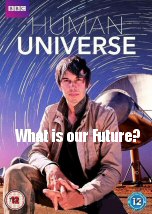




But space travel, like every leap our civilisation has ever made, requires energy. Here too, scientists are hard at work attempting to safeguard our future. At the National Ignition Facility in California, Brian witnesses the world's most successful fusion experiment in action. He believes that if their mission succeeds, our civilisation will have unlocked a way to the stars that will not destroy the planet in the process. Brian concludes by returning to the top of the world in Svalbard, where he gains access to our civilisation's greatest treasure, locked away in a vault buried deep in the permafrost.