








Last Watched

"Diet"  Sort by

Vegan 2019

   2019    Culture    HD
Widespread dietary changes are needed if we’re to combat the range of health problems associated with obesity and the environmental damage caused by industrial farming. Switching to a vegan diet is a potential solution, but selling the idea to the meat-eaters around the world is a tricky proposition.
Series: Vegan

How to Stay Young The Body

   2016    Medicine
Angela Rippon and Dr Chris van Tulleken travel the world in search of the latest science that could help us all stay young and healthy for longer. They investigate the best ways to help both our bodies and brains age better. Up first is the body, and Angela travels to Germany to join a groundbreaking study which reveals the exercise that holds off ageing the most. Chris visits America to find out about the unexpected diet that can add years to our lives. And in Ecuador we meet a seventeen-year-old who looks like a child to discover how scientists hope he may hold the key to preventing the diseases of ageing.
Series: How to Stay Young

The Insatiable Appetite

   1998    Nature
The next instalment focuses on dietary needs and how different species have evolved beaks to suit their individual requirements. The latter come in a multitude of forms. Blue tits and goldfinches have beaks akin to tweezers, with which to extract seeds, while the hawfinch's razor-like bill can deal with a cherry-stone. However, the crossbill is the only finch that can twist its mandibles in opposite directions. Jays store acorns for winter by burying them in the ground, whereas woodpeckers can keep up to 60,000 of them in one tree trunk. Sap is also desirable, and there are a variety of methods used to obtain it. The hoatzin is the only specialised leaf-eater, and accordingly has a digestive system more akin to that of cattle. Plants recruit birds to aid pollination, and offer nectar as a reward. Hummingbirds eat little else, and the sword-bill's beak is the longest of any bird in relation to its body. Insects are also highly prized, and Galapagos finches are shown to possess some ingenuity as they not only strip bark, but also use 'tools' to reach their prey. Crows are hailed as being among the most intelligent birds, and one is shown using a twig to spear a grub within a fallen log. The robin is an opportunist, and Sir Attenborough observes one seizing morsels as he digs a patch of earth. In South America, a cattle tyrant sits atop an obliging capybara and uses its vantage point to spot passing food that may be dislodged by its grazing partner.
Series: The Life of Birds

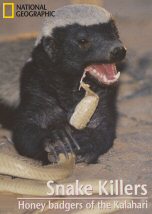
Snake Killers Honey Badgers of The Kalahari

   2007    Nature
The honey badger looks like something you might buy in pet shop and give to children, but turns out to be one of the most violent and determined creatures ever to scuttle across the face of the earth. Nothing in the badger’s world-not even the badgers themselves-are safe from its remarkable ability to create havoc and cause harm. Like a meter long skunk with the brain of a shark the Honey Badger’s metabolism compels it to eat constantly and live on the run. Its diet is admirably inclusive ranging from insects to its own young. If an animal is too big to eat then the badger will fight it anyway, indeed it is this almost supernatural tenacity that compels you respect it, as well as yielding some of the most spectacular sequences in the film. Five foot long cobra sleeping in the top of tree? No problem, the badger scoots up and bites its head off. When an ailing badger is attacked by a full size leopard it takes the leopard over an hour to finish it off. When one is bitten in the face by a snake that can kill a man, it just lies down for a while and sleeps it off.

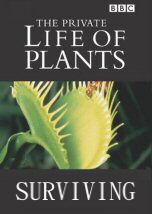
Surviving

   1995    Nature
the final episode deals with plants that live in hostile environments. Attenborough visits Ellesmere Island, north of the Arctic Circle, to demonstrate that even in a place that is unconducive to life, it can be found. Algae and lichens grow in or on rock, and during summer, when the ice melts, flowers are much more apparent. However, they must remain close to the ground to stay out of the chilling wind. In the Tasmanian mountains, plants conserve heat by growing into 'cushions' that act as solar panels, with as many as a million individual shoots grouped together as one. Others, such as the lobelia in Mount Kenya, have a 'fur coat' of dense hairs on their leaves. The saguaro cactus in the Sonoran Desert flourishes because of its ability to retain vast amounts of water, which can't be lost through leaves because it has none. Many desert dwellers benefit from an accelerated life cycle, blooming rapidly within weeks after rainfall. Conversely, Mount Roraima is one of the wettest places on Earth. It is a huge sandstone plateau with high waterfalls and nutrients are continuously washed away, so plants have to adapt their diet if they are to survive. A bladderwort is shown invading a bromeliad. Inhabitants of lakes have other problems to contend with: those that dominate the surface will proliferate, and the Amazon water lily provides an apt illustration. Attenborough ends the series with an entreaty for the conservation of plant species.
Series: The Private Life of Plants

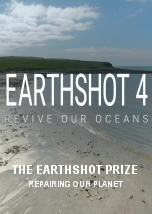
Revive Our Oceans

   2021    Nature
Seafood is a substantial part of the daily diet of over three billion people and oceans absorbs almost a third of all the greenhouse gases we emits. Buy the ocean it is not what it once was. Scenes of extraordinary ocean abundance now only exist in far-off places or in tales from the past. We urgently need to mend our relationship with our oceans and allow them to thrive once again.
Prince William, David Attenborough and Shakira find out about inspiring people and projects across the world that can help us stop damaging the oceans and enable their revival.
Series: The Earthshot Prize: Repairing Our Planet
Chimp Empire

Chimp Empire

2023  Nature
The Sky at Night

The Sky at Night

2018  Science
The Crusades

The Crusades

2012  History
Leaving Neverland

Leaving Neverland

2019  Culture
Mammals

Mammals

2024  Nature
Space

Space

2001  Science