







Last Watched

"Economics"  Sort by

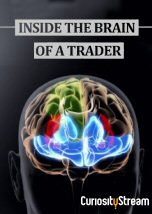
Inside the Brain of a Trader

   2017    Science
After several rogue traders stories made the headlines these last years, revealing the human factor behind the global economy, neuroscientists have started to scrutinize traders' brain and stress management. What stimulates and motivates them? How can their brain cope with such a high level of stress and competition? This film investigates further into Neuroeconomics, showing how traders are being governed by unconscious psychological and biological processes which can trigger borderline behaviours and have disastrous financial consequences on the financial markets.
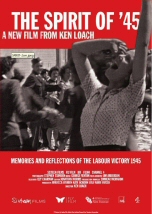
The Spirit of forty five

       Culture
The film is focused on and celebrating the radical changes in postwar Britain under the Labour government of Clement Attlee, which came to power in 1945. Relying primarily on archive footage and interviews, and without a narrative voiceover, the documentary recounts the endemic poverty in prewar Britain, the sense of optimism that followed victory in World War II and the subsequent expansion of the welfare state, founding of the National Health Service and nationalisation of significant parts of the UK's economy.
The film documents the extent to which these achievements, as the filmmaker Ken Loach sees them, have since been subject to attack in the decades that followed, particularly under the Conservative governments of Margaret Thatcher in the 1980s

How You Really Make Decisions

   2014    Medicine
The film uncovers the truth about how you really make decisions. Every day you make thousands of decisions, big and small, and behind all them is a powerful battle in your mind, pitting intuition against logic. This conflict affects every aspect of your life - from what you eat to what you believe, and especially to how you spend your money. And it turns out that the intuitive part of your mind is a lot more powerful than you may realise.

The World Set Free

   2014    Nature
This episode explores the nature of the greenhouse effect (discovered by Joseph Fourier and Svante Arrhenius), and the evidence demonstrating the existence of global warming from humanity's influence. Tyson begins by describing the long-term history of the planet Venus; based on readings from the Venera series of probes to the planet, the planet had once had an ocean and an atmosphere, but due to the release of carbon dioxide from volcanic eruptions, the runaway greenhouse effect on Venus caused the surface temperatures to increase and boiled away the oceans. Tyson then notes the delicate nature of the amount of carbon dioxide in the atmosphere can influence Earth's climate due to the greenhouse effect, and that levels of carbon dioxide have been increasing since the start of the 20th century. Evidence has shown this to be from mankind's consumption of oil, coal, and gas instead of from volcanic eruptions due to the isotopic signature of the carbon dioxide. The increase in carbon dioxide has led to an increase in temperatures, in turn leading to positive feedback loops of the melting polar ice caps and dethawing of the permafrost to increase carbon dioxide levels. Tyson then notes that humans have discovered means of harvesting solar power, such as Augustin Mouchot's solar-driven motor in the 19th century, and Frank Shuman's solar-based steam generator in the 1910's. Tyson points out that in both cases, the economics and ease of using cheap coal and oil caused these inventions to be overlooked at the time. Today, solar and wind-power systems would be able to collect enough solar energy from the sun easily. Tyson then compares the motivation for switching to these cleaner forms of energy to the efforts of the Space race and emphasizes that it is not too late for humanity to correct its course.
Series: Cosmos: A Spacetime Odyssey

When Banana Ruled

   2017    History
The saga of a handful of conquerors who built an empire in Central America and invented the methods of one of the very first multinationals. In 19th century Central America, a few entrepreneurial cowboys built an empire that enslaved populations and corrupted governments for over 100 years. The United Fruit Company thrived on unregulated capitalism; this film tells its story and that of its pioneers who feared neither God nor Man, and managed to get away with murder. Until the 1970s, that multinational set up a monopoly by combining violence, repression, corruption, environmental destruction and a formidable marketing machine. It turned an unknown fruit into an instrument of fortune and domination, and created a business model still largely used by today’s tech giants.
Using a rich trove of archival footage and documents, including letters to and from lobbyists, telegrams, vintage ads and movie clips, and gorgeous, hand-tinted stills, 'When Banana Ruled' is a story of intrigue that touches on economics, international politics, the history of business and reveals how an array of forces conquered the world through a simple fruit.

The A.I. Race

   2018    Technology
Explore how Artificial Intelligence will change your job as new research shows how much of what you do could be done by robots. From truckers to lawyers & doctors, we bring affected workers face to face with AI experts. How can we prepare for the coming changes to the world economy? We are on the precipice of another technological transformation. The last industrial revolution turned society upside down. It ultimately delivered greater prosperity and many more jobs, as well as the eight hour day and weekends. But the transition was at times shocking and violent.
The question is, can we do better this time? We don't realize that the future is not inevitable. The future is the result of the decisions we make today. These technologies are morally neutral, they can be used for good or for bad. There's immense good things they can do, they can eliminate many disease, they can help eliminate poverty, they can tackle climate change. Equally, the technology can be used for lots of bad. It can be used to increase inequality,it can be used to transform warfare. It can be used to make our lives much worse. We get to make those choices.