










Last Watched

"Gas"  Sort by

Walking with Cavemen: Savage Family

   2003    History
One and a half million years ago, a new breed of ape-man walks the land. In southern Africa, Homo Ergaster has taken the next step to becoming human. They have long, modern looking noses, which cool air as they breathe. Their hairless bodies, with millions of tiny sweat glands, mean they don't pant anymore to control their temperature - they sweat. And, above all, they have big brains - nearly two-thirds the size of ours.
Series: Walking with Cavemen
Denial

   2022    Nature
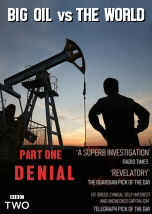
The most important story of our time. 2022 is set to be a year of unprecedented climate chaos across the planet. As the world’s leading climate scientists issue new warnings about climate change and the soaring cost of fuel highlights the world’s ongoing dependence on fossil fuels – how did we get here?
The first part tells The story of what the fossil fuel industry knew about climate change more than four decades ago. Scientists who worked for the biggest oil company in the world, Exxon, reveal the warnings they sounded in the 1970s and early 1980s about how fossil fuels would cause climate change – with potentially catastrophic effects. Drawing on thousands of newly discovered documents, the film goes on to chart in revelatory and forensic detail how the oil industry went on to mount a campaign to sow doubt about the science of climate change, the consequences of which we are living through today
Series: Big Oil vs The World

Seasonal Forests

   2007    Nature
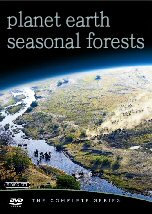
The Taiga forest, on the edge of the Arctic, is a silent world of stunted conifers. The trees may be small but filming from the air reveals its true scale. A third of all trees on Earth grow here and during the short summer they produce enough oxygen to change the atmosphere. In California General Sherman, a giant sequoia, is the largest living thing on the planet, ten times the size of a blue whale. The oldest organisms alive are bristlecone pines. At more than 4,000 years old they pre-date the pyramids. But the baobab forests of Madagascar are perhaps the strangest of all.
Series: Planet Earth

Island of Lemurs Madagascar

   2014    Nature    3D    HD
Morgan Freeman narrates Island of Lemurs: Madagascar, the incredible true story of nature's greatest explorers - lemurs. Scientist Patricia Wright has a passion for preserving the life of one particular creature: the lemur. These lively animals found in Madagascar face all sorts of threats, just like so many other animals in a world in which they are increasingly crowded out by humans. Her passion for the subject is compelling and plainly evident, but it's the silent testimony of the animals themselves that really makes the case. Countless hours of footage are trimmed down to create this tapestry depicting the lives of these creatures of remarkable intelligence and ingenuity. Their daily routines and extraordinary adventures are awesome to behold, as is the way that the community functions. A full immersion into the world of the lemurs means great insights on these unusual animals.

The World Set Free

   2014    Nature
This episode explores the nature of the greenhouse effect (discovered by Joseph Fourier and Svante Arrhenius), and the evidence demonstrating the existence of global warming from humanity's influence. Tyson begins by describing the long-term history of the planet Venus; based on readings from the Venera series of probes to the planet, the planet had once had an ocean and an atmosphere, but due to the release of carbon dioxide from volcanic eruptions, the runaway greenhouse effect on Venus caused the surface temperatures to increase and boiled away the oceans. Tyson then notes the delicate nature of the amount of carbon dioxide in the atmosphere can influence Earth's climate due to the greenhouse effect, and that levels of carbon dioxide have been increasing since the start of the 20th century. Evidence has shown this to be from mankind's consumption of oil, coal, and gas instead of from volcanic eruptions due to the isotopic signature of the carbon dioxide. The increase in carbon dioxide has led to an increase in temperatures, in turn leading to positive feedback loops of the melting polar ice caps and dethawing of the permafrost to increase carbon dioxide levels. Tyson then notes that humans have discovered means of harvesting solar power, such as Augustin Mouchot's solar-driven motor in the 19th century, and Frank Shuman's solar-based steam generator in the 1910's. Tyson points out that in both cases, the economics and ease of using cheap coal and oil caused these inventions to be overlooked at the time. Today, solar and wind-power systems would be able to collect enough solar energy from the sun easily. Tyson then compares the motivation for switching to these cleaner forms of energy to the efforts of the Space race and emphasizes that it is not too late for humanity to correct its course.
Series: Cosmos: A Spacetime Odyssey

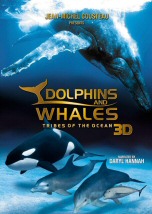
Dolphins and Whales

   2008    Nature    3D    HD
This awe-inspiring documentary film narrated by Daryl Hannah will take you from the dazzling coral reefs of the Bahamas to the warm depths of the waters of the exotic Kingdom of Tonga for a close encounter with the surviving tribes of the ocean. Through the powerful IMAX 3D theatre medium and stunning images, view their lives and habitats as never-before-seen. You will come so close to wild dolphins and belugas you will virtually touch them. You will witness the profound love of a Humpback mother for her newborn calf, and will come eye-to-eye with singing Humpback males. You will meet an orca, the mighty King of the ocean, and enjoy a wonderful moment with the gentle manatee. Explore many little-known aspects of these fascinating and fragile creatures capable of sophisticated communication and social interaction. Join this expert team of ocean explorers in an unforgettable diving experience that documents the life of these graceful, majestic yet endangered sea creatures.