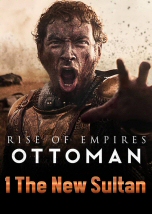
Ottoman Sultan Mehmed II wages an epic campaign to take the Byzantine capital of Constantinople. Twenty-three armies have tried to take the legendary city and all have failed. Out of the carnage, one ruler will emerge victorious and shapes the course of history for centuries. For one empire to rise, another must fall. The Ottomans, former Anatolian warlords and nomads who've built a burgeoning empire are the biggest threat to the Romans' 1100-year reign. The death of Ottoman Sultan Murad II in 1451 unleashes a chain of events that will soon bring the Ottomans and Romans to the brink of war. After claiming the Ottoman throne, Mehmed II sends an unmistakable signal to Byzantine emperor Constantine XI.
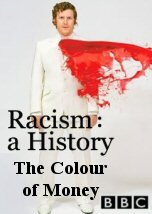
The series explores the impact of racism on a global scale and chronicles the shifts in the perception of race and the history of racism in Europe, the Americas, Australia and Asia. The first episode begins by assessing the implications of the relationship between Europe, Africa and the Americas in the 15th century. It considers how racist ideas and practices developed in key religious and secular institutions, and how they showed up in writings by European philosophers Aristotle and Immanuel Kant.
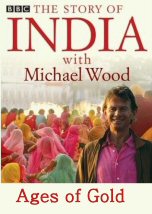
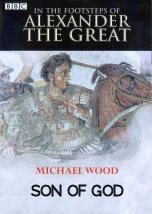
Presenter Michael Wood seeks out the achievements of the country’s golden age, discovering how India discovered zero, calculated the circumference of the Earth and wrote the world’s first sex guide, the Kama Sutra. In the south, he visits the giant temple of Tanjore and sees traditional bronze casters, working as their ancestors did 1,000 years ago.
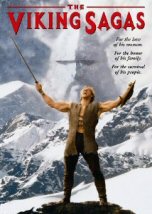
Hundreds of years ago in faraway Iceland the Vikings began to write down dozens of stories called sagas - sweeping narratives based on real people and real events. But as Oxford University's Janina Ramirez discovers, these sagas are not just great works of art, they are also priceless historical documents which bring to life the Viking world. Dr Ramirez travels across glaciers and through the lava fields of Iceland to the far north west of the country to find out about one of the most compelling of these stories - the Laxdaela Saga.
The Codex Gigas, or Devil's Bible, is the world's largest and most enigmatic medieval manuscript, said to be crafted from 160 donkey skins and weighing a staggering 165 pounds. Its chilling full-page portrait of the Devil, believed to be the result of a monk's desperate pact with dark forces, is just the beginning of its mysteries. Written in the Kingdom of Bohemia, this legendary text blends biblical scripture with forbidden demonic spells, making it both sacred and cursed. Filled with mystical medical formulas and cryptic incantations, the Codex Gigas holds mysteries that have fascinated historians for centuries. The haunting contrast between a Heavenly City and the devil's image adds to its mystique. This documentary dives deep into one of history's most mysterious artifacts, uncovering secrets that have captivated the world for generations.
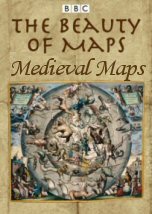
This documentary series charting the visual appeal and historical meaning of maps. The Hereford Mappa Mundi, the largest intact Medieval wall map in the world, its ambition to picture all of human knowledge in a single image is breathtaking. The work of a team of artists, the world it portrays is overflowing with life, featuring Classical and Biblical history, contemporary buildings and events, animals and plants from across the globe, and the infamous 'monstrous races' which were believed to inhabit the remotest corners of the Earth.













The Ottomans, former Anatolian warlords and nomads who've built a burgeoning empire are the biggest threat to the Romans' 1100-year reign. The death of Ottoman Sultan Murad II in 1451 unleashes a chain of events that will soon bring the Ottomans and Romans to the brink of war. After claiming the Ottoman throne, Mehmed II sends an unmistakable signal to Byzantine emperor Constantine XI.