




Last Watched

"Odyssey"  Sort by

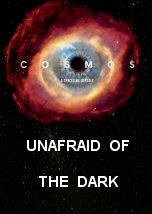
Unafraid of the Dark

   2014    Science
Tyson describes the discovery of cosmic rays by Victor Hess through high-altitude balloon trips. Swiss Astronomer Fritz Zwicky, in studying supernovae, postulated that these cosmic rays originated from these events instead of electromagnetic radiation. Also tells how Vera Rubin observed that the rotation of stars at the edges of observable galaxies did not follow expected rotational behavior leading to consider the existence of dark matter. This further led to the discovery of dark energy to account for the increasing rate of expansion of the universe. Tyson then describes the interstellar travel of the two Voyager probes. Tyson tells the Carl Sagan's role in the Voyager program, including creating the Voyager Golden Record to encapsulate humanity and Earth's position in the universe. Tyson concludes the series by emphasizing Sagan's message on the human condition in the vastness of the cosmos, and to encourage viewers to continue to explore and discover what else the universe has to offer.
Series: Cosmos: A Spacetime Odyssey

We Want The Funk

   2025    Art
Dive into a high-voltage odyssey through rhythm, rebellion, and raw groove — tracing the electrifying pulse that shaped decades of music. From deep African roots and the soul-drenched sounds of gospel and jazz, this vibrant exploration reveals how a powerful beat gave rise to a cultural revolution. Witness how icons like James Brown ignited the flame, how Parliament Funkadelic took it to the cosmos, how Labelle broke barriers, and how Fela Kuti turned rhythm into resistance. As the funk surged forward, it didn’t fade — it transformed, reshaping new wave and breathing life into hip-hop. Uncover the untold stories, the infectious energy, and the enduring legacy of a genre that refuses to sit still.

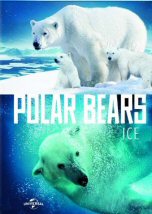
Polar Bears: A Summer Odyssey

       Nature    3D    HD
This documentary tells the story a young polar bear's epic migration through the icy waters of Hudson Bay and his subsequent adventures on land, where he must spend the ice-free season. It is his first summer alone without his mother to guide and feed him. His struggle to survive is set against the biggest environmental story of our time: climate change. The stunning images were taken with more than eight different kinds of cameras including, for the first time, a polar bear collar-cam; a remote control Truck-cam; a mini Heli-cam, and several underwater cameras.

The Immortals

   2014    Science
This episode covers the nature of how life may have developed on Earth and the possibility of life on other planets. Tyson begins by explaining how the human development of writing systems enabled the transfer of information through generations, describing how Princess Enheduanna ca. 2280 BCE would be one of the first to sign her name to her works, and how Gilgamesh collected stories, including that of Utnapishtim documenting a great flood comparable to the story of Noah's Ark. Tyson explains how DNA similarly records information to propagate life, and postulates theories of how DNA originated on Earth, including evolution from a shallow tide pool, or from the ejecta of meteor collisions from other planets. In the latter case, Tyson explains how comparing the composition of the Nakhla meteorite in 1911 to results collected by the Viking program demonstrated that material from Mars could transit to Earth, and the ability of some microbes to survive the harsh conditions of space. With the motions of solar systems through the galaxy over billions of years, life could conceivably propagate from planet to planet in the same manner. Tyson then moves on to consider if life on other planets could exist. He explains how Project Diana performed in the 1960s showed that radio waves are able to travel in space, and that all of humanity's broadcast signals continue to radiate into space from our planet. Tyson notes that projects have since looked for similar signals potentially emanating from other solar systems. Tyson then explains that the development and lifespan of extraterrestrial civilizations must be considered for such detection to be realized. He notes that civilizations can be wiped out by cosmic events like supernovae, natural disasters such as the Toba disaster, or even self-destruct through war or other means, making probability estimates difficult. Tyson describes how elliptical galaxies, in which some of the oldest red dwarf stars exist, would offer the best chance of finding established civilizations. Tyson concludes that human intelligence properly applied should allow our species to avoid such disasters and enable us to migrate beyond the Earth before the Sun's eventual transformation into a red giant.
Series: Cosmos: A Spacetime Odyssey
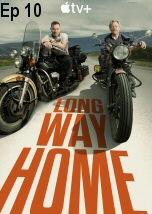
Long Way Home Ep 10

   2025    Culture
In the thrilling series finale, the journey culminates high in the Alps as our riders launch into an exhilarating paragliding flight above snow-dusted peaks, confronting the elements with sheer adrenaline. They then trade handlebars for putters on a breathtaking Swiss golf course, where each swing frames mist-shrouded valleys in the distance. A chance detour leads them to a quirky mountain artist’s hidden atelier, where kinetic sculptures seem to capture the spirit of their odyssey. As glaciers gleam and winding roads beckon, they pause to savour the bonds forged and miles conquered before embarking on the extended ride back home.
Series: Long Way Home

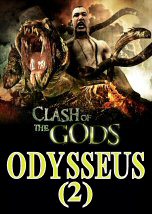
Clash of the Gods: Odysseus II

   2009    History
In part 2, we take a look at Odysseus, whom Homer made famous in "The Odyssey," including his adventures in light of astronomical and geographical evidence which bases the story on accurate real events.
Series: Clash of the Gods
Frozen Planet

Frozen Planet

2011  Nature
Leaving Neverland

Leaving Neverland

2019  Culture
The Human Body

The Human Body

1998  Medicine
Welcome to Earth

Welcome to Earth

2021  Nature
The Keepers

The Keepers

2017  Culture