Jessie Buckley narrates the extraordinary story of the first transatlantic communications cable. In 16 August 1858, a short message is telegraphed from County Kerry to Newfoundland, 3,000km away: ‘Europe and America are united by telegraph. Glory to God in the highest, on earth peace, good will towards men.’ The Morse code message is conducted along the new underwater transatlantic telegraph cable laid across the bed of the Atlantic Ocean. Sending the same message by ship would have taken at least ten days, but the transmission takes just hours and heralds the dawn of the modern communications age. The quest is driven by visionaries and pioneers. Among them are Cyrus Field, a wealthy businessman who, despite his immense success, ends his life in poverty; Samuel Morse, inventor of the telegraph and Morse code; Isambard Kingdom Brunel, the British engineer who pushes boundaries and budgets; and Belfast physicist Lord Kelvin, who calculates how to achieve what had hitherto been deemed impossible. Together, their ingenuity and relentless pursuit helps realise one of the great scientific accomplishments of their age for which Valentia, on Ireland’s remote western coast, is ground zero.
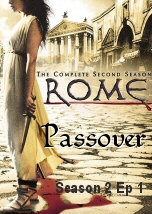
Caesar has been murdered, Mark Antony emerges from the Senate in shock, only to face Quintus Pompey and his thugs, who immediately follow him to try to kill him. Brutus returns home shaking after the murder. His mother is already plotting the return of the Roman Republic. Titus Pullo asks Eirene to marry him and she accepts. Erastes Fulmen kidnaps Lucius Vorenus' children and sister-in-law. Mark Antony proposes an amnesty to the rest of the senate to keep the peace and allow the Republic to continue. Vorenus says goodbye to Niobe while Rome says goodbye to Caesar. Vorenus and Pullo track down Fulmen to a bath house, where he tells them he killed Vorenus' family.
In the shattered streets of Gaza, four young lives unfold with raw intensity and haunting contradictions. Ayman Alyazouri and his companions navigate the chaos of relentless airstrikes, makeshift shelters, and impossible choices—while holding fast to a worldview shaped by conflict and a fervent hatred they scarcely question. Their daily struggle to find safety and meaning is captured in unflinching detail, blending scripted scenes with documentary realism to reveal the emotional cost of generations raised in perpetual war. This gripping portrait invites viewers to witness an unsettling intimacy with those who dream not of peace, but of vengeance.
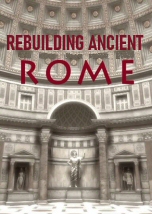
Beneath the modern streets of Rome lies a city of breathtaking scale and ambition, once the heart of an empire that shaped the world. In this 15-part journey, archaeologist Dr. Darius Arya becomes your guide into a vivid time machine, where stunning CGI reconstructions resurrect the capital in all its glory. From the steamy elegance of vast bath complexes to the roar of chariot races, from awe-inspiring temples to political halls where history was forged, each episode reveals how engineering brilliance, artistic mastery, and human will transformed humble hills into the Eternal City. This is not just a tour of ruins—it’s Rome as its citizens once knew it.
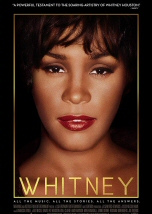
Whitney Houston broke more music industry records than any other female singer in history. With over 200 million album sales worldwide, she was the only artist to chart seven consecutive U.S. No. 1 singles. She also starred in several blockbuster movies before her brilliant career gave way to erratic behavior, scandals and death at age 48. The documentary is an intimate, unflinching portrait of Houston and her family that probes beyond familiar tabloid headlines and sheds new light on the spellbinding trajectory of Houston's life. Using never-before-seen archival footage, exclusive demo recordings, rare performances, audio archives and original interviews with the people who knew her best, filmmaker Kevin Macdonald unravels the mystery behind 'The Voice,' who thrilled millions even as she struggled to make peace with her own troubled past.
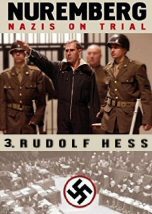
Episode three explores the mind of one of the most fanatical of all Nazis and the insight that gives into the psychology of dictatorship. Hess is brought to Nuremberg from the UK where he had flown 4 years earlier much to the bemusement of the British. Overy explains that they must have quickly realised he was not normal. In the intervening time Hess’s mental state has further deteriorated and when interviewed by Chief Interrogator Colonel John Amen proclaims amnesia. Chief Interpreter Richard Sonnenfeldt explains that they brought in Göring to confront Hess but that he too failed to make an impression. Psychopathologist Prof. Edgar Jones proposes Hess’s behaviour patterns may be his way of escaping reality as he is forced to face the extent of the atrocities and choose between accepting his part of the blame or forsaking his Führer. However, as history Professor Robert Gellatel explains it is difficult to construct a case against Hess as he was imprisoned in England when the worst of the atrocities were carried out so British Prosecutor Mervyn Griffith-Jones must argue a conspiracy charge linking the pre-1939 persecutions to the post-1939 atrocities and a crimes against peace charge proving the flight to Scotland was merely a ruse.












The quest is driven by visionaries and pioneers. Among them are Cyrus Field, a wealthy businessman who, despite his immense success, ends his life in poverty; Samuel Morse, inventor of the telegraph and Morse code; Isambard Kingdom Brunel, the British engineer who pushes boundaries and budgets; and Belfast physicist Lord Kelvin, who calculates how to achieve what had hitherto been deemed impossible. Together, their ingenuity and relentless pursuit helps realise one of the great scientific accomplishments of their age for which Valentia, on Ireland’s remote western coast, is ground zero.