The documentary, an own production, immerses the viewer in a journey that blends science and philosophy, questioning the nature of time and unveiling a 4-dimensional universe, where space and time are integrated. We are invited to consider a universe in which past, present, and future coexist, suggesting that our linear perception of time might be more of a mental construction than a physical reality. The narrative progresses by exploring how quantum particles exist in states of probability until they are observed, at which point they acquire defined properties. Then, the provocative hypothesis is presented that observation also fixes the temporal dimension of the particles. The sensation of the flow of time and the distinction between past, present, and future are introduced as mental constructions, arising from the human brain's limited capacity to process the complexity of reality. It is then proposed that the mind, by observing itself, fixes itself in the temporal dimension, thus creating the illusion of the present. Finally, the impact of these theories on free will is discussed. This documentary challenges viewers to look beyond their everyday perceptions and consider the possibility that reality is much more complex and fascinating than our immediate experiences suggest. It is an invitation to explore the limits of science, philosophy, and the mind itself in search of answers to some of the deepest questions of existence.
More information on https://www.javier-serrano.blog/Ciencia/representacion_tridimensional_del_universo.php
The BBC's definitive television history of the rise and fall of the Nazis. The Nazis - A Warning From History exposes the popular myths surrounding the rise and fall of the Third Reich. The series explores how the Nazis came to power, how they ruled, how they treated their occupied territories and, above all, how a cultured nation could be responsible for such acts of inhumanity. How could a political party as fundamentally evil and overtly racist as the Nazis come to power? This remains one of the most enigmatic questions of the last century. Acclaimed historian Laurence Rees examines what led a cultured nation at the heart of Europe to commit the atrocities it did. In so doing, he exposes popular myths and encourages understanding of the real forces that led to one of the darkest chapters in modern history. Was it simply the hypnotic power of Hitler's rhetoric? Did the Gestapo really impose themselves by terror on an unwilling population? Through interviews with witnesses and perpetrators, along with archive film and records, this six-part series unveils a more chilling reality.
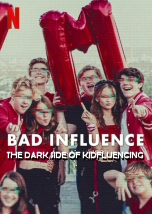
The world of child influencers may seem playful and innocent, but beneath the surface lies a reality far more unsettling. The documentary uncovers the meteoric rise of social media star Piper Rockelle and her entourage known as The Squad, exposing troubling claims of exploitation, manipulation, and mistreatment under the guidance of her mother, Tiffany Smith. Through raw and emotional testimonies from former members and their families, it reveals the psychological toll of growing up online and the blurred lines between fame and childhood. This documentary is a powerful wake-up call that questions the limits of online stardom and the urgent need to safeguard young creators.
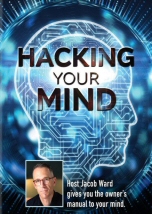
Jacob Ward travels the globe to investigate Decision Science. We imagine our conscious minds make most decisions but in reality we go through much of our lives on 'Autopilot'. And marketers and social media companies rely on it. The first part offers you the owner’s manual for this autopilot. The second part, 'Weapons of Influence', explores how politicians, social media companies and corporate marketers use big data to hack decision-making system. The third part, 'Us vs. Them', shows how this autopilot biases fuel the nation's divisions and how to overcome them. The last part, 'The Wings of Angels', explores why hacking for good is an important scientific discovery; how people can hack their own minds to improve their lives and change the world for the better.
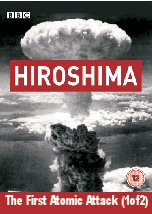
It was the defining moment of the 20th Century - the scientific, technological, military, and political gamble of the world's first atomic attack. This drama-documentary attempts to do what no other film has done before - to show what it is like to live through a nuclear explosion, millisecond by millisecond. Set in the three weeks from the first test explosion in New Mexico to the eventual dropping of the bomb, the action takes viewers into the room where the crucial political decisions are made; on board the Enola Gay on her fateful voyage; inside the bomb as it explodes; and on the streets of Hiroshima when disaster strikes. Parallel storylines interweave, unfolding the action from both US and Japanese perspectives, and revealing the tensions and conflicts in the actions and minds of people who were making history. Special effects recreate the reality of the mission - even going inside the workings of the bomb - and archive film replays the horrific aftermath.
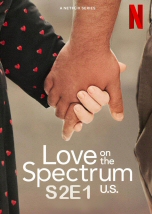
‘Love on the Spectrum’ captivates with its fresh and deeply human perspective on the complexities of romantic relationships. This reality show, following individuals on the autism spectrum as they navigate the world of dating, is a celebration of diversity and inclusiveness, offering a unique window into dating experiences seldom portrayed in mainstream media. The second season delves deeper into the personal stories of its participants, providing a narrative rich in emotions, challenges, and victories. The series stands out for its genuine, unscripted approach, breaking down prejudices and initiating important dialogues about diversity in relationships. In the first episode, James and Dani continue their search for love. David plans a sweet surprise for Abbey. Newbie Connor brings an open mind to his first speed-dating event.







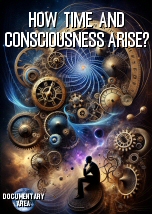




The sensation of the flow of time and the distinction between past, present, and future are introduced as mental constructions, arising from the human brain's limited capacity to process the complexity of reality. It is then proposed that the mind, by observing itself, fixes itself in the temporal dimension, thus creating the illusion of the present. Finally, the impact of these theories on free will is discussed.
This documentary challenges viewers to look beyond their everyday perceptions and consider the possibility that reality is much more complex and fascinating than our immediate experiences suggest. It is an invitation to explore the limits of science, philosophy, and the mind itself in search of answers to some of the deepest questions of existence.
More information on https://www.javier-serrano.blog/Ciencia/representacion_tridimensional_del_universo.php