Dylan Jones is in the driving seat for this authoritative four-part look back. No stone remains unturned, as he revisits the New Romantics, rap, modern dance music, hip-hop, indie jingle, synth-pop, house music and club culture. He makes the case that the 1980s was the most radical, innovative and creative decade in the history of pop because, unlike other decades, unleashed a myriad of new musical genres in just 10 years. In the first part, Dylan Jones explores how in this decade the world-conquering genres of rap, hip-hop and modern dance music were launched, while guitar-driven indie flourished in a constellation of scenes spread out across the world. And a technological revolution was changing how music was made, filling the charts with a starburst of innovative records. Meanwhile, the launch of MTV turned pop into a visual medium, allowing artists as varied as U2 and Eurythmics to take charge of how they presented themselves. Featuring interviews with Nile Rodgers, Bananarama, Primal Scream's Bobby Gillespie, Mark Ronson, Trevor Horn and Soul II Soul's Jazzie B.
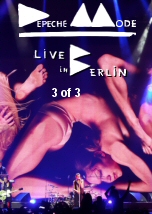
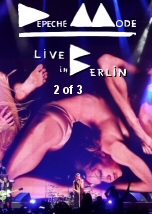
he concert not only includes performances of tracks from 'Delta Machine' but also some of their most memorable and biggest hits including 'Personal Jesus' and 'Enjoy the Silence.' Live in Berlin includes the full live show, inter-spliced with behind-the-scenes footage, multiple interviews with the band and their fans.
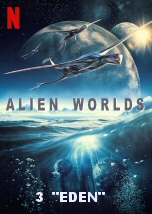
Planets beyond our solar system are known to astronomers as exoplanets. They are at trillions of miles from Earth and yet, it might be possible to detect a faint signature of life in them. From the light of the stars they orbit that passes through the atmosphere of an exoplanet, it is possible to capture the chemical fingerprint of the elements in that atmosphere. The fictional world Eden is orbiting not one star, but two. The light from its twin stars powers photosynthesis, pumping more oxygen into the atmosphere than in Earth, allowing life to thrive. Grazers are constantly alert to danger, because the canopy is home to predators perfectly evolved to live among the trees. In Episode 3, another topic are fungi and the role they could play on exoplanets. Ecologist Thomas Crowther talks about the role mycelial networks play in the Rothiemurchus forest in Scotland.
Located in Central America, Tikal is one of the largest of the ancient cities of the Mayan civilization. Occupied for more than a millennium, Tikal, founded in the 8th century BC and nestled in the jungle of Guatemala, will have up to 12,000 structures and reach over 2 million inhabitants. This episode shows its extraordinary pyramid-temples, designed with human power alone. Thanks to new technologies, the ancient Mayan city is revealed there, entirely reconstituted in 3D synthetic images.
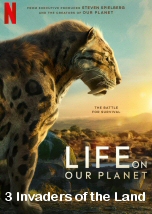
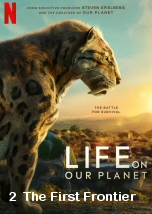
The second episode of the series immerses the viewer in a fascinating journey through the history of life on our planet, focusing on the evolution and adaptation of life in the seas. It begins billions of years ago, when the Earth was an inhospitable place and life was impossible on the surface due to a hostile environment. The documentary highlights how, beneath the waves, life began to flourish, protected from storms and other elements of nature. It addresses the development of photosynthesis by plankton and how this led to a significant change in the Earth's atmosphere, allowing the emergence of animal life. This visually stunning narrative chronicles the evolution of various forms of marine life, from the earliest complex life forms to the appearance of the first fish and cephalopods. The documentary shows how marine life has influenced terrestrial life, emphasizing the impact of the 'greening' of planet Earth.

















In the first part, Dylan Jones explores how in this decade the world-conquering genres of rap, hip-hop and modern dance music were launched, while guitar-driven indie flourished in a constellation of scenes spread out across the world. And a technological revolution was changing how music was made, filling the charts with a starburst of innovative records. Meanwhile, the launch of MTV turned pop into a visual medium, allowing artists as varied as U2 and Eurythmics to take charge of how they presented themselves. Featuring interviews with Nile Rodgers, Bananarama, Primal Scream's Bobby Gillespie, Mark Ronson, Trevor Horn and Soul II Soul's Jazzie B.