






Last Watched

"Wind"  Sort by

Rapidly Evolving Human

   2018    Science    HD
We humans often like to think we're the end of the line when it comes to evolution. But if we rewind through our short time on Earth as a species, and the many changes that have occurred to us along the way, we find we're still very much a work in progress. Renowned geneticist and author Spencer Wells reveals how changes in our genetic code have fuelled major changes in our appearance and capabilities over time, and why scientists believe we're continuing to rapidly evolve today. By understanding these changes, we are better prepared for the future.
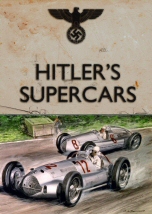
Hitler Supercars

   2020    Culture
The film tells the story of the ill-fated Nazi Land Speed record attempts. This is a story of engineering excellence, Grand Prix racing, Nazi propaganda, celebrity, and an intense rivalry which would leave a speed record unbroken for 79 years and one of Nazi Germany's best racing drivers dead. During the rise of the Third Reich two German car manufacturers were ordered to build the most high performance vehicles the world had ever seen. What followed was a rivalry that would reap Grand Prix victories, international domination that was a propaganda coup, and provide world fame to its drivers who risked their lives smashing speed records that would stand for 79 years. All under the direct orders of the Fuhrer himself.
Bugatti and Alfa Romeo dominated racing before 1934. But the years from 1934 to 1939 were six tumultuous years in which Grand Prix racing was dominated by the German Auto Union, the arranged marriage of Audi, Horch, Wanderer, and DKW, and Mercedes-Benz teams and provided a spectacle of speed, sound and fury never previously attained and never since matched. There are few periods of racing that have excited as much interest, event attendance and sophistication of equipment as the era of the Silver Cars. They were so far ahead of their time that many of their accomplishments were not duplicated until Mercedes went racing again in the early 1950s. There is also something about men who faced the challenges of staying in a cockpit of a highly sophisticated machine capable of 200 mph with no safety systems. They were giants and among them were Italian Tazio Nuvolari and two greatest German pilots of the thirties, Rudolf Caracciola of Mercedes and Auto Union's Bernd Rosemeyer who duelled with faster, more innovative and sleeker machines, developed in wind tunnels.
This special documentary charts the rise of Nazi Germany's dominate 'Silver Arrow' Grand Prix and Speed Record cars of the 1930's. Leading motor racing and World War 2 experts James Holland, Richard Williams, Eberhard Reuss and Chris Routledge tell the story of the Nazi funded Auto Union and Mercedes Benz 'National Racing Cars'. Hitler's Supercars interweaves the rise of the Third Reich with the racing exploits it funded and what propaganda messages these racing cars where sending.

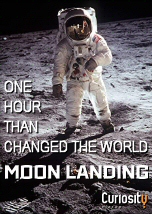
One Hour That Changed World: Moon Landing

   2022    Technology
The Moon Landing celebrates the historic 50th anniversary of Apollo 11, in a fresh and distinctive style. This inspiring documentary subverts usual conventions by beginning with the momentous event, exploring the preceding dramatic sixty minutes in granular detail.
Packed with surprising details which reveal a whole new perspective on the story of how humans landed on the moon, this documentary rewinds one hour before Neil Armstrong's famous footstep to reveal a whole untold story, hidden in the forensic moment-by-moment details driven by powerful footage from the time and authentic audio recordings from the capsule and the command module and mission control in Houston. In the last 60 minutes, the Apollo mission could fall apart. Without dazzling on-the-spot ingenuity, a 240,000-mile helpline to Houston, and almost unnatural abilities to remain calm under incredible pressure, the first step onto another world might not happen at all.

Rebuilding Notre-Dame: The Next Chapter

   2022    Art
Three years after the devastating fire, Lucy Worsley has exclusive access to the Cathedral of Notre-Dame de Paris at a key turning point of the restoration. Work to rebuild and restore the monument is being ramped up in a bid to meet the ambitious deadline to reopen it to the public in 2024. Scaffolding now fills the interior of the cathedral, giving Lucy and the team unprecedented close-up access to every inch of the structure. Lucy meets scientists, historians and craftspeople working to return the 850-year-old Gothic masterpiece to its former glory.
The fire coated Notre-Dame with tons of toxic lead dust, so specialists are now decontaminating the site. Unique access to the stunning rose windows allows Lucy and the stained-glass historians to uncover the mysteries of these enigmatic 13th-century works of art. An unforeseen legacy of the fire threatens to destroy the remaining vaulting, so the team must develop an ingenious solution to save the stonework. The loss of the roof during the fire reveals hundreds of large iron staples embedded in the stone along the top of the walls. And the incredible task of sourcing and cutting two-thousand perfect oaks gets underway to rebuild the world's most complex medieval timber structure - Notre-Dame's extraordinary roof and spire.

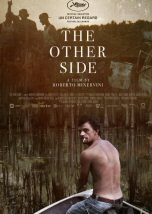
The Other Side

   2015    Culture
In an invisible territory at the margins of society lives a wounded community who face the threat of being forgotten by political institutions and having their rights as citizens trampled. Disarmed veterans, taciturn adolescents, drug addicts trying to escape addiction through love; ex-special forces soldiers still at war with the world; floundering young women and future mothers; and old people who have not lost their desire to live. Through this hidden pocket of humanity, renowned documentarian Roberto Minervini opens a window to the abyss of today's America.

The World Set Free

   2014    Nature
This episode explores the nature of the greenhouse effect (discovered by Joseph Fourier and Svante Arrhenius), and the evidence demonstrating the existence of global warming from humanity's influence. Tyson begins by describing the long-term history of the planet Venus; based on readings from the Venera series of probes to the planet, the planet had once had an ocean and an atmosphere, but due to the release of carbon dioxide from volcanic eruptions, the runaway greenhouse effect on Venus caused the surface temperatures to increase and boiled away the oceans. Tyson then notes the delicate nature of the amount of carbon dioxide in the atmosphere can influence Earth's climate due to the greenhouse effect, and that levels of carbon dioxide have been increasing since the start of the 20th century. Evidence has shown this to be from mankind's consumption of oil, coal, and gas instead of from volcanic eruptions due to the isotopic signature of the carbon dioxide. The increase in carbon dioxide has led to an increase in temperatures, in turn leading to positive feedback loops of the melting polar ice caps and dethawing of the permafrost to increase carbon dioxide levels. Tyson then notes that humans have discovered means of harvesting solar power, such as Augustin Mouchot's solar-driven motor in the 19th century, and Frank Shuman's solar-based steam generator in the 1910's. Tyson points out that in both cases, the economics and ease of using cheap coal and oil caused these inventions to be overlooked at the time. Today, solar and wind-power systems would be able to collect enough solar energy from the sun easily. Tyson then compares the motivation for switching to these cleaner forms of energy to the efforts of the Space race and emphasizes that it is not too late for humanity to correct its course.
Series: Cosmos: A Spacetime Odyssey
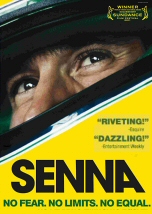
Senna

Senna

2010  Culture
Vietnam in HD

Vietnam in HD

2011  History
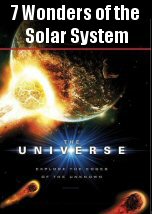
The Universe

The Universe

2010  Science
Life In Cold Blood

Life In Cold Blood

2008  Nature
Dinosaur Planet

Dinosaur Planet

2003  Science
Prehistoric Planet

Prehistoric Planet

2022  Science