










Last Watched

"Ant "  Sort by

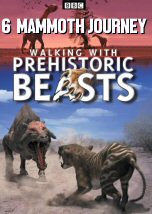
Mammoth Journey

       Science
Travelling forward in time to 30,000 years ago, it's the middle of an ice age. The landscape is dominated by mighty mammoths, living side-by-side with woolly rhinos, giant deer and two separate species of human. The programme follows the fate of a herd of mammoths in their annual struggle against the harsh ice-age conditions. Every summer they spend on the grassy plains of what will one day become the bottom of the North Sea, but every winter they are forced to head for the less exposed valleys further south. It is a journey fraught with danger: mammoths can get trapped in frozen bogs, and the herd must run the gauntlet of hunters like cave lions and the deadly Neanderthals.
Series: Walking with Prehistoric Beast

How Do I Decide

   2015    Medicine
The human brain is the most complex object we’ve discovered in the universe, and every day much of its neural circuitry is taken up with the tens of thousands of decisions we need to make. ‘How do I decide?’ is a journey through the unseen world of decisions, and how they get made. Decisión-making is what allows us to navigate a course through life. Discover how important emotions are in making decissions and, as we learn more about our own brains, we can break away from slavery to our impulses. Neuroscience shows that you're made up of multiple competing drives and by understanding how choices battle it out in the brain, we can learn how to make better decisions.
Series: The Brain with David Eagleman

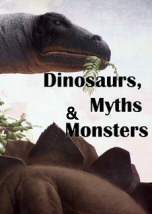
Dinosaurs Myths and Monsters

   2011    Science
From dinosaurs to mammoths, when our ancient ancestors encountered the fossil bones of extinct prehistoric creatures, what did they think they were? Just like us, ancient peoples were fascinated by the giant bones they found in the ground. Historian Tom Holland goes on a journey of discovery to explore the fascinating ways in which our ancestors sought to explain the remains of dinosaurs and other giant prehistoric creatures, and how bones and fossils have shaped and affected human culture.
In Classical Greece, petrified bones were exhibited in temples as the remains of a long-lost race of colossal heroes. Chinese tales of dragons may well have had their origins in the great fossil beds of the Gobi desert. In the Middle Ages, Christians believed that mysterious bones found in rock were the remains of giants drowned in Noah's Flood.
Tom encounters a medieval sculpture that is the first known reconstruction of a monster from a fossil, and learns about the Native Americans stories, told for generations, which contained clues that led bone hunters to some of the greatest dinosaur finds of the nineteenth century.

Electric Cars: Are they Really Worth it

   2025    Technology
The future of transportation is no longer a distant dream — it's here, and it's electric. But beneath the sleek designs and zero-emission promises lies a more complex reality. From hidden environmental costs to the fierce battle for battery materials, and from government incentives to powerful oil lobbies, this gripping investigation peels back the glossy surface to reveal the full story behind the electric revolution. Experts, insiders, and whistleblowers offer unprecedented insights into the true cost — and potential — of going electric. Fast-paced, eye-opening, and often surprising, this journey challenges everything you thought you knew about the cars of tomorrow.

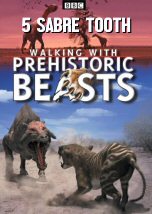
Sabre Tooth

       Science
Back one million years ago, South America was a continent of exotic oversized creatures found nowhere else on Earth - huge terror birds, giant ground sloths and spiky-tailed relatives of the armadillo as big as cars. The deadliest animal of them all was smilodon, the largest of the sabre-tooth cats, with canines like carving knives. The programme follows the fortunes of an individual male, Half Tooth. Ousted from his clan by a pair of rival males, his life suddenly becomes a struggle to survive in this alien world.
Series: Walking with Prehistoric Beast

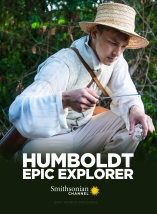
Humboldt Epic Explorer

   2020    History
In 1799, the German scientist Alexander von Humboldt embarked on a perilous journey of discovery across South America. It would take him to the deepest jungle near the Orinoco and to the heights of the Andes. His aim was twofold: to conduct the first scientific survey of South America and to discover how the natural world actually works — at a time when most scientists believed that the world was created less than 6,000 years ago. He later became a leading scientific figure and champion of the abolitionist movement in the US.
This extremely visual docudrama follows Humboldt’s extraordinary path. Travelling in Humboldt’s footsteps is historian Andrea Wulf, whose book on Humboldt became a worldwide bestseller. For good reason, since Humboldt’s ideas on the planet’s fragile web of life are as important today as they were 220 years ago.