What happens when a machine makes life-or-death decisions? This documentary explores the dangers of artificial intelligence in military application. To behold the fascinating military technology shown here is to witness the birth of a terrible beauty that could annihilate us all. The documentary is not only chilling, it makes this dark side of artificial intelligence seem inevitable. It is also an essential chronicle to get a general idea of how artificial intelligence is being applied not only in warfare, but also in other areas of our society.
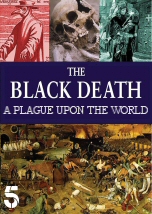
In an enthralling documentary, Dan Snow and archaeologist Raksha Dave delve into the catastrophic impact of the Black Death on Britain 700 years ago, a pandemic that extinguished around half of the population, or three million people. The duo embarks on a journey to trace the origins and merciless spread of the plague, starting from its arrival on Britain's South coast in June 1348, through the bustling trade routes that brought the disease to Melcombe Regis, Dorset. Their investigation takes them to various hotspots of the outbreak, including the Old Operating Theatre in London and Wildwood Animal Sanctuary in Kent, where they explore the role of rats in dispersing the bubonic plague. Through dramatic reconstructions and visits to places like Nottingham University's biomedical laboratories, they uncover the rapid spread and deadly impact of the plague, offering a month-by-month account of how it ravaged the country, decimating cities, towns, and villages alike. The documentary not only showcases the horrific symptoms and desperate attempts at cures through brutal medical practices of the time but also leverages cutting-edge research to explain why the Black Death remains the deadliest pandemic in history. The personal stories of victims, from princes to paupers, are brought to light, revealing the indiscriminate nature of the disease. Dan's visit to Canterbury Cathedral and Raksha's investigation into the recent discovery of mass graves beneath a tranquil London square underline the widespread desperation and devastation. Their journey through the history of the Black Death, culminating in the discovery of its indiscriminate toll and the unveiling of mass graves in London, not only sheds light on the darkest chapters of British history but also ignites a profound understanding of the tragedy, making a compelling case for why this documentary is a must-watch for anyone interested in the profound impacts of pandemics on human society.
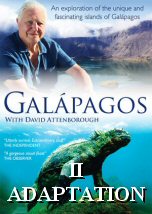
Once life arrived in the Galapagos, it exploded into unique and spectacular forms. David Attenborough investigates the driving forces behind such evolutionary innovations. We learn that life must be able to adapt quickly in these ever-changing volcanic landscapes. It has resulted in species found nowhere else in the world, such as giant whale sharks and marine iguanas that can spit sea-salt from their noses, dandelion seeds that grow into tree-sized plants and spiders that can blend perfectly into the darkness. Adaptation has been the key to survival in these islands so far, but the story of life in the Galapagos doesn’t end here. The catalyst that triggers these explosions of life remains in place.
We offer the complete second series of “Ancient Apocalypse” in a single video. In this series, journalist Graham Hancock travels to the Americas to search for evidence supporting his hypothesis: that an advanced civilization was lost to history during the cataclysms that marked the apocalyptic end of the last Ice Age, between 12,800 and 11,600 years ago. Each episode investigates new discoveries being made in the American hemisphere, which until recently has been largely under-explored by archaeologists interested in humanity’s origins. Graham reveals new findings and speculates about how those findings might suggest the existence of a globe-traveling advanced civilization that left traces of itself in ancient cultures. In episode one, evidence from New Mexico’s White Sands desert confirms the presence of people in the Americas long before it was possible to migrate across the Bering Straits that formed a land bridge during the lowered sea-levels of the Ice Age. The series takes us to multiple locations in the US, Mexico, Brazil, Peru and Easter Island to investigate when people first arrived in the “New World” and how they made the journey. The findings give Graham reason to question the accepted timeline of human history. During his journey, Graham interviews highly regarded archaeologists and historians as well as indigenous elders, who share their unique knowledge of the sites and their oral histories. Hollywood actor, Keanu Reeves, also joins Graham across the series, discussing, among other things, his insights into storytelling as an act of preserving culture. Experts in the series include American archaeologist Dr. Chris Davis, Brazilian palaeontologist Dr. Alceu Ranzi, and archaeo-botanist Dr. Sonia Cardinali of Rapa Nui, Easter Island, among others.
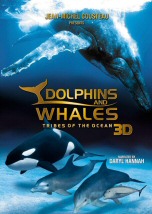
This awe-inspiring documentary film narrated by Daryl Hannah will take you from the dazzling coral reefs of the Bahamas to the warm depths of the waters of the exotic Kingdom of Tonga for a close encounter with the surviving tribes of the ocean. Through the powerful IMAX 3D theatre medium and stunning images, view their lives and habitats as never-before-seen. You will come so close to wild dolphins and belugas you will virtually touch them. You will witness the profound love of a Humpback mother for her newborn calf, and will come eye-to-eye with singing Humpback males. You will meet an orca, the mighty King of the ocean, and enjoy a wonderful moment with the gentle manatee. Explore many little-known aspects of these fascinating and fragile creatures capable of sophisticated communication and social interaction. Join this expert team of ocean explorers in an unforgettable diving experience that documents the life of these graceful, majestic yet endangered sea creatures.
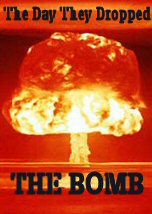
August 6th 1945 marked the start of a terrifying new episode in human history. This documentary marks the 70th anniversary of the day when the world's first atomic bomb was dropped on the Japanese city of Hiroshima by a Boeing B-29 USAF Superfortress bomber, nicknamed Enola Gay after the pilot's mother". Up to 80,000 people - 30 per cent of the population - were killed by the blast and resulting firestorm and over 70,000 were injured. This documentary gives a minute-by-minute account of what happened on that fateful day, through the testimony of people who were there and rarely-seen archive footage from the time. Made on location in Hiroshima and the USA, it features unique interviews with eyewitnesses who have seldom, if ever, spoken about the experience. Several of them are no longer alive, they include the last surviving member of the crew of the Enola Gay - navigator Dutch Van Kirk who died in July 2014.








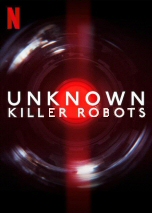



The documentary is not only chilling, it makes this dark side of artificial intelligence seem inevitable. It is also an essential chronicle to get a general idea of how artificial intelligence is being applied not only in warfare, but also in other areas of our society.