










Last Watched

The Home

   2014    Nature
To survive, animals need somewhere to live, a place that provides the necessities of life, shelter from the elements and a refuge from enemies. Good homes are rare and competition can be intense – finding a home is one thing, but defending it is quite another.
Series: Life Story


Alien Planets Revealed

   2014    Science
It's a golden age for planet hunters: recently, they've discovered more than 750 planets orbiting stars beyond our sun. Some of them, like a planet called Kepler-22b, might even be able to harbor life. What would that life look like? Combining startling animation with input from expert astrobiologists, Alien Planets Revealed takes viewers on a journey of the imagination as we 'build' aliens from the ground up. What chemical building blocks will make up their genetic code? How will life get started and how will the exotic environment on a planet like Kepler-22b drive evolution? Bringing the creative power of veteran animators together with the latest discoveries in astrobiology, Alien Planets Revealed provides a glimpse of the creatures we might one day encounter beyond our solar system.

The Island

   2020    History
Jeffrey Epstein brokers a plea deal that's unprecedented in its leniency, and a survivor opens up about the horrors she endured on his private island. Epstein Jeffrey shared his island with a lot of powerful and well-known figures, both politically and financially.
Series: Jeffrey Epstein: Filthy Rich

The Rise of Oda Nobunaga

   2021    History
This brilliant docuseries is an exploration of the feudal Japan from 1551 to 1616 , during the final phase of the Sengoku period (The Age of Warring States), when several powerful daimyo (warlords) fought to become absolute ruler. It features reenactments of historical events and commentary by voice-over artist Hiro Kanagawa and outstanding historians.
In the first episode, Oda Nobunaga becomes head of the Oda clan upon the death of his father, but this causes problems with family members who compete for control.
Series: Age of Samurai: Battle for Japan

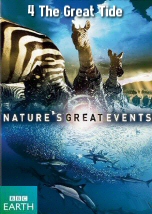
The Great Tide

   2009    Nature
A mighty army of dolphins, sharks, whales, seals and gannets hunt down the billions of sardines along South Africa's east coast each winter. This is the Sardine Run: an underwater Armageddon, the greatest gathering of predators anywhere on the planet, and the most spectacular event in the world's oceans. From intimate moments of the creatures caught up in the run, to the dramatic finale of this spectacular event, The Great Tide is an action-packed feeding-frenzy, filmed underwater, on the ocean's surface, and in the air.
However, in recent years the sardine run has become less predictable, perhaps due to the warming effects of climate change. If the sardine run does not happen, the lives of the animals caught up in the drama hang in the balance. Pioneering a unique boat stabilised camera mount for surface filming, Nature's Great Events crew capture all the high octane action as the predators compete for sardines, filmed with aerial, underwater and above water cameras. Super slow motion cameras also capture the very moment gannets plunge into the water, hitting it at sixty miles an hour.
A violent winter storm is the trigger for the sardines to begin their desperate dash. They are followed by a super-pod of 5,000 dolphins and further up the coast more predators gather. A shoal of sardines 15 miles long is pushed into the shallows and aerial shots show thousands of sharks gathering to feed on them. The climax to the sardine run is a spectacular feeding frenzy as the dolphins round the sardines up into balls on which all the predators feast. Gannets rain down in their thousands, sharks pile in scattering the fish and a Bryde's whale lunges in taking great mouthfuls of sardines.
Series: Nature Great Events

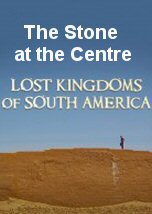
The Stone at the Centre

   2013    History
Deep in the Bolivian Andes at the height of 13,000ft stands Tiwanaku, the awe-inspiring ruins of a monolithic temple city. Built by a civilisation who dominated a vast swathe of South America, it was abandoned 1,000 years ago. For centuries it has been a mystery - how did a civilisation flourish at such an altitude and why did it vanish? Jago Cooper journeys through Bolivia's spectacular landscape to investigate the origins of Tiwanaku and finds evidence of an ancient people with amazing understanding of their environment, whose religion was based on collective effort and ritual beer drinking.
Series: Lost Kingdoms of South America