
Last Watched

The Cost of Free

   2010    Technology
In the third programme of the series, Aleks gives the lowdown on how, for better and for worse, commerce has colonized the web - and reveals how web users are paying for what appear to be 'free' sites and services in hidden ways. Joined by some of the most influential business leaders of today's web, including Eric Schmidt (CEO of Google), Chad Hurley (CEO of YouTube), Bill Gates, Martha Lane Fox and Reed Hastings (CEO of Netflix), Aleks traces how business, with varying degrees of success, has attempted to make money on the web. She tells the inside story of the gold rush years of the dotcom bubble and reveals how retailers such as Amazon learned the lessons. She also charts how, out of the ashes, Google forged the business model that has come to dominate today's web, offering a plethora of highly attractive, overtly free web services, including search, maps and video, that are in fact funded through a sophisticated and highly lucrative advertising system which trades on what we users look for. Aleks explores how web advertising is evolving further to become more targeted and relevant to individual consumers. Recommendation engines, pioneered by retailers such as Amazon, are also breaking down the barriers between commerce and consumer by marketing future purchases to us based on our previous choices. On the surface, the web appears to have brought about a revolution in convenience. But, as companies start to build up databases on our online habits and preferences, Aleks questions what this may mean for our notions of privacy and personal space in the 21st century
Series: The Virtual Revolution
Microscopic Universe

   2012    Science
The key to understanding the universe seems to be understanding its smallest components. But the quantum realm bears little resemblance to the universe we know. Image a particle that can be many places at the same time and communicate changes instantly across vast distances, even to the other side of the Universe. Shrinking down billions of times, into the realm of atoms and sub-atomic particles, takes us into a bizarre world of paradoxes and multiverses. Explore with us quantum physics and the potential applications in computer science.
Series: The Universe

Are Black Holes Real

   2018    Science    HD
Various eminent scientists explain the current knowledge of Black Holes and try to answer the question, do they really exist? New discoveries are challenging everything we know about black holes -- astronomers are beginning to question if they even exist. The latest science tries to explain how they work & what they look like, despite the fact we've never actually seen one.
The two great theories of Einstein's General Relativity and Quantum Mechanics don't work together to explain Black Holes which is a big problem. Other theoretical constructs such as Gravastars and Planck stars have been postulated but proving their existence is just as difficult as that of Black Holes. So where next?
Series: How the Universe Works Season 6

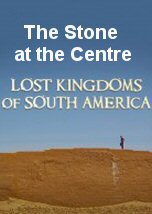
The Stone at the Centre

   2013    History
Deep in the Bolivian Andes at the height of 13,000ft stands Tiwanaku, the awe-inspiring ruins of a monolithic temple city. Built by a civilisation who dominated a vast swathe of South America, it was abandoned 1,000 years ago. For centuries it has been a mystery - how did a civilisation flourish at such an altitude and why did it vanish? Jago Cooper journeys through Bolivia's spectacular landscape to investigate the origins of Tiwanaku and finds evidence of an ancient people with amazing understanding of their environment, whose religion was based on collective effort and ritual beer drinking.
Series: Lost Kingdoms of South America

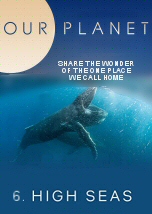
The High Seas

   2019    Nature    HD
Far from land, where few of us ever venture, is the ocean beyond the boundary of any country. Largely ungoverned, wild, and lawless. Venture into the deep, dark and desolate oceans that are home to an abundance of beautiful - and downright strange - creatures.
Series: Our Planet

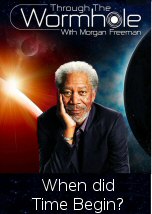
When Did Time Begin

   2014    Science
We float along the river of time. But does that river have a source? Where did time come from? Some believe time and space are one thing, and the Big Bang started the cosmic clock. Others believe the universe existed for almost half a million "years" before light could move and time began. Still others say time is older than our universe. But what if time itself is an illusion? Incredible new experiments may hold the answer. One groundbreaking experiment gives us the power to punch holes in time…and another may create a machine that operates outside time’s boundaries!
Series: Through the Wormhole Season 5
Leaving Neverland

Leaving Neverland

2019  Culture
Life

Life

2009  Nature
Our Planet

Our Planet

2019  Nature
How to Grow a Planet

How to Grow a Planet

2012  Science
Capitalism A Love Story

Capitalism A Love Story

2009  Culture
Walking with Dinosaurs

Walking with Dinosaurs

2025  Science