
















Last Watched

"Technology"  Sort by

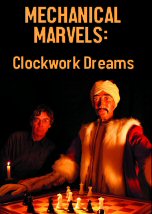
Mechanical Marvels: Clockwork Dreams

   2013    Technology
Professor Simon Schaffer presents the amazing and untold story of automata - extraordinary clockwork machines designed hundreds of years ago to mimic and recreate life. The film brings the past to life in vivid detail as we see how and why these masterpieces were built. Travelling around Europe, Simon uncovers the history of these machines and shows us some of the most spectacular examples, from an entire working automaton city to a small boy who can be programmed to write and even a device that can play chess". All the machines Simon visits show a level of technical sophistication and ambition that still amazes today. As well as the automata, Simon explains in great detail the world in which they were made - the hardship of the workers who built them, their role in global trade and the industrial revolution and the eccentric designers who dreamt them up. Finally, Simon reveals that to us that these long-forgotten marriages of art and engineering are actually the ancestors of many of our most loved modern technologies, from recorded music to the cinema and much of the digital world.

Arrival

   2010    Science
Sir Attenborough's journey begins in a forest near his childhood home in Leicester, where a fossil discovery transformed our understanding of the evolution of complex life. Travelling to the fog bound coastline of Newfoundland and the Australian outback, Sir Attenborough unearths the earliest forms of animal life to exist on Earth. These bizarre and wonderful creatures are brought to life with the help of cutting edge scientific technology and photorealistic visual effects. From the first animal forms that moved to the first mouths that ate, these were creatures that evolved the traits and tools that allow all animals, including ourselves, to survive to this day.
Series: First Life

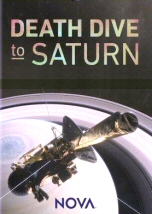
Death Dive to Saturn

   2019    Science
Almost everything we know today about the beautiful giant ringed planet comes from Cassini, the NASA mission that launched in 1997 and arrived at Saturn in 2004. Since then, the space probe has been beaming home miraculous images and scientific data, revealing countless wonders about the planet, its rings and 62 moons - including some that could harbor life. When the mission approached its final days, it attempted one last set of daring maneuvers - diving between the innermost ring and the top of Saturn's atmosphere.
Aiming to skim less than 2000 miles above the cloud tops, no spacecraft has ever gone so close to Saturn, and hopes were high for incredible observations that could solve major mysteries about the planet's core. But such a daring maneuver comes with many risks and is no slam dunk. In fact, slamming into rocks in the rings is a real possibility. Join NASA engineers for the tense and triumphant moments as they find out if their bold re-programming has worked, and discover the wonders that Cassini has revealed over the years.

The Tesla Experiment

   2014    Culture
Ancient Aliens explores the controversial theory that extraterrestrials have visited Earth for millions of years. From the age of the dinosaurs to ancient Egypt, from early cave drawings to continued mass sightings. In this episode researchers discuss the possibility that the great technological developments made by inventor Nikola Tesla were inspired by extraterrestrials
Series: Ancient Aliens

Arctic Ice Hotel

   2019    Technology
Deep inside the arctic circle, this team of elite engineers Is embarking on an epic endeavor. They're attempting to build a unique structure, one of the largest snow and ice hotels in the world. Constructed from more than 15,000 tons of snow and ice, spanning over 26,000 square feet, they are pushing to complete this ambitious build in an unheard-of six weeks.
Engineers brave the cold and nights of the Arctic Circle to build the Ice Hotel. Using cutting-edge tech, they'll construct this modern marvel in just six weeks.
Series: Building Giants

The Wehrmacht The Blitzkrieg

   2007    History
What was the Wehrmacht? A group of obedient yeasayers? A murdering band of thugs? An army of millions of abused young men? This series in 5 parts provides differentiated and conclusive answers based on the latest historical and comprehensive investigative research, bringing many new facts to light – among them documents proving for the first time ever, what many among the officers actually thought. Blitzkrieg, the lightning war, in German incorporate modern weapons and vehicles as a method to help avoid the stalemate of trench warfare and linear warfare in future conflicts. The first practical implementations of these concepts coupled with modern technology were instituted by the Wehrmacht in the opening theatres of World War II. The strategy was particularly effective to Germany in the invasions of Western Europe and initial operations in the Soviet Union. These operations were dependent on surprise penetrations, general enemy unpreparedness and an inability to react swiftly enough to German offensive operations.
Series: The Wehrmacht