




Last Watched

Who Will We Be

   2015    Medicine
In ‘Who will we be?’ Dr. David Eagleman journeys into the future, and asks what’s next for the human brain, and for our species. We stand at a major turning point, one where we might take control of our own development. We face a future of uncharted possibilities in which our relationship with our own body, our relationship with the world, the very basic nature of who we are is set to be transformed. For thousands of generations, humans have lived the same life cycle over and over. We are born, we control a fragile body, we experience a limited reality, and we die. But science and technology are giving us tools to transcend that evolutionary story. Our brains don't have to remain as we have inherited them. We are capable of extending our reality, of inhabiting new bodies, and possibly shedding our physical forms altogether. And we are discovering the tools to shape our own destiny. Who we become is up to us.
Series: The Brain with David Eagleman

Simon and Garfunkel: The Concert in Central Park

       Art
The film is the long-awaited reunion concert of the renowned folk pop music duo, more than a decade after their separation as musical performers. It was recorded on the 19th September 1981 at a free benefit concert on the Great Lawn in Central Park, New York City, where the pair performed in front of an audience reported at the time as 500,000 people. The film includes two songs that had not appeared on the album.
Rolling Stone called the concert 'one of the finest performances, one that vividly recaptured another time, an era when well-crafted, melodic pop bore meanings that stretched beyond the musical sphere and into the realms of culture and politics.'

The Trouble with Space Junk

   2015    Technology
In 2014, the International Space Station had to move three times to avoid lethal chunks of space debris and there is an increasing problem of satellites mysteriously breaking down. With first-hand accounts from astronauts and experts, know the scale of the problem of space junk. Our planet is surrounded by hundreds of millions of pieces of junk moving at 17,000 miles per hour. Now the US government is investing a billion dollars to track them, and companies around the world are developing ways to clear up their mess - from robot arms to nets and harpoons. Learn the science behind the hit film Gravity and discovers the reality is far more worrying than the Hollywood fiction.

The Empire of Reason

   2017    History
Al-Khalili travels to northern Syria to discover how, a thousand years ago, the great astronomer and mathematician Al-Biruni estimated the size of the earth to within a few hundred miles of the correct figure. He discovers how medieval Islamic scholars helped turn the magical and occult practice of alchemy into modern chemistry. In Cairo, he tells the story of the extraordinary physicist Ibn al-Haytham, who helped establish the modern science of optics and proved one of the most fundamental principles in physics - that light travels in straight lines. Prof Al-Khalili argues that these scholars are among the first people to insist that all scientific theories are backed up by careful experimental observation, bringing a rigour to science that didn't really exist before.
Series: Science and Islam

Giants

   2000    Science
Be prepared to fight your way past all kinds of computer animation. Somehow Patrick Moore's The Sky at Night manages to convey just as much excitement with little more than a couple of diagrams and the presenter's hyperactive enthusiasm. The series cover the history of the solar system and humanity's age-old desire to learn its secrets. Far beyond the inner planets of rock and iron lie the gas giants. Discover the most distant and alien worlds in our Solar System and the moment of genius that allowed scientists to explore them.
Series: The Planets

Can Alzheimer Be Stopped

   2016    Medicine
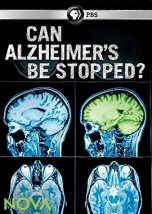
Join investigators as they untangle the cause of Alzheimer’s and race to develop a cure. Alzheimer’s disease strikes at the core of what makes us human: our capacity to think, to love, and to remember. The disease ravages the minds of over 40 million victims worldwide, and it is one of the greatest medical mysteries of our time. Join investigators as they gather clues and attempt to reconstruct the molecular chain of events that ultimately leads to dementia". Follow key researchers in the field who have helped to develop the leading theories of the disease. Along the way, meet individuals from all walks of life who will reveal what it’s like to struggle with Alzheimer’s. Among them, members of a unique Colombian family who have learned that their genetic predisposition all but guarantees early onset Alzheimer’s. Yet there may be hope. Join these courageous patients participating in clinical trials, and then go behind the scenes of the major drug trials to see how researchers target and test therapies that may slow and even prevent Alzheimer’s
Meet the Romans

Meet the Romans

2012  History
Get Gotti

Get Gotti

2023  History
Ancient Greece

Ancient Greece

2013  History
Magic Numbers

Magic Numbers

2018  Science
Out of the Cradle

Out of the Cradle

2019  History